A $11,000 ticket and a banned flag: the two Americas inside the 2026 World Cup
A US fan pays nearly $11,000 for a single World Cup final ticket while Iranian supporters defy FIFA's flag ban inside the stadium — two moments that capture the contradictions of a tournament pitched as a global showcase.
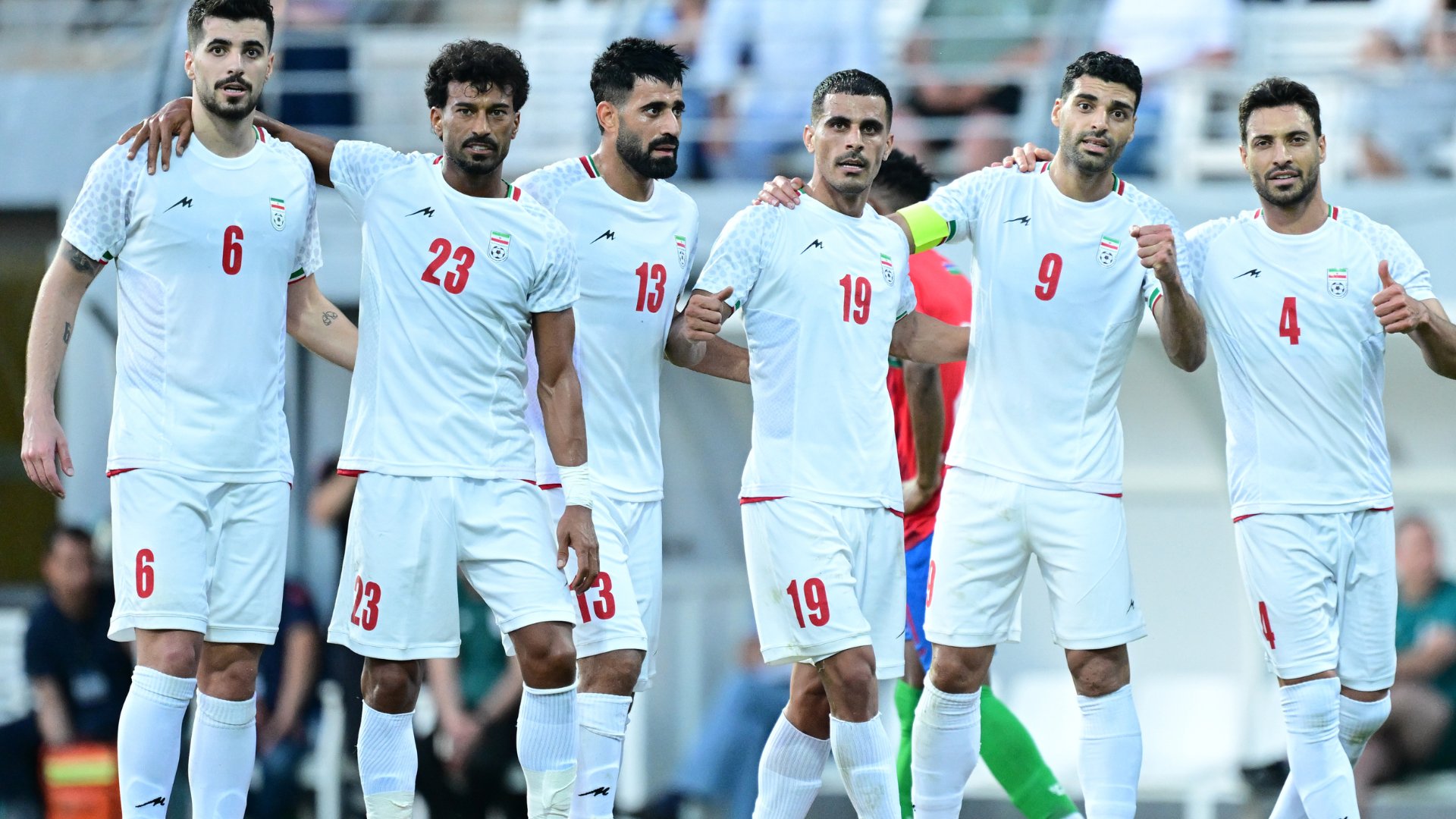
Two snapshots from the 2026 FIFA World Cup, both filed within 24 hours of one another, capture the gap between what the tournament is selling and what it has actually become on the ground.
In one, a US-based fan has reportedly spent nearly $11,000 — roughly ₹9 lakh — on a single ticket to the final, walking away from a planned luxury trip to make the match happen. In another, fans inside a host venue have openly defied a FIFA prohibition on Iran's pre-revolutionary flag, turning a routine group-stage fixture into a quiet political act. The first story is about access; the second is about identity. Together, they sketch the two Americas inside this World Cup: the consumer and the citizen.
The price of getting in
The ticketing story, carried by LiveMint on 15 June 2026, is not really about one fan. It is about the architecture FIFA has built around its showpiece final. The fan in question reportedly gave up a luxury travel plan and paid close to $11,000 for a single seat — a figure that puts the World Cup final in the same bracket as the most expensive live sporting experiences on the calendar, ahead of premium seats at the Super Bowl and broadly comparable to courtside NBA or major-championship golf pricing at the top of the secondary market.
That price is a function of demand, but it is also a function of design. FIFA's ticketing tiering, hospitality bundles, and dynamic-pricing rules on resale platforms have, across the build-up to this tournament, pushed face-value seats for knockout games into four-figure territory and the final into five. For a US host market where the average household's discretionary sports spend is measured in the low hundreds of dollars, $11,000 is a category of commitment usually reserved for suites, not seats.
The counter-narrative inside FIFA's preferred framing is that the final is a once-in-a-generation event on home soil, that supply is finite, and that the hospitality packages effectively subsidise cheaper seats elsewhere in the tournament. Both points are true, and both are beside the point for a fan who has now converted a luxury holiday into a single line item. The dominant framing — that the World Cup is broadly accessible — holds in aggregate and frays at the edges.
The flag in the stands
The second story, filed by The Indian Express in the early hours of 16 June 2026, is a different kind of news. According to the report, fans at a World Cup match openly displayed Iran's pre-revolutionary flag — the lion-and-sun standard used before the 1979 Islamic Republic — in defiance of a FIFA prohibition. The display, carried out inside the stadium, is a small but legible act of dissent against both FIFA's house rules and, by implication, the current Iranian state, whose own supporters' flags and symbols have a sanctioned place inside host venues.
FIFA's flag policy, in its public form, is framed as a security and neutrality measure: keep political symbols out of the stands, treat every national federation's approved flag the same. The complication, as the Indian Express report makes plain, is that the line between "national" and "political" flags is not always a clean one, and that the pre-revolutionary standard carries an explicit political meaning for the regime it predates. Allowing the tricolour but not the lion-and-sun is, in practice, a political choice dressed as an administrative one.
The counterpoint worth taking seriously is that tournament organisers of any flavour face real operational pressure to keep displays inside venues legible to broadcasters, sponsors and security services. A flag with multiple recognised claimants is, from a logistics standpoint, a headache. But the optics of a global federation declining to adjudicate which Iranian flag is the Iranian flag, while still adjudicating, leaves a residue that is harder to manage than the rule itself.
What the two stories share
Read separately, these are anecdotes. Read together, they point at the same underlying tension. The 2026 World Cup has been sold — by FIFA, by host cities, by sponsors — as the most inclusive and accessible tournament in the competition's history, with matches spread across 11 US cities, a high proportion of low-priced seats in earlier rounds, and a fan-id programme aimed at broadening the travelling base. The ticketing economics of the final and the flag incident at an earlier fixture are both small holes in that narrative.
The structural frame, stripped of the academic vocabulary that usually clouds this kind of argument, is straightforward: when a global sporting event is run as a commercial operation on a scale that requires sovereign-level cooperation, the gaps between its marketing language and its on-the-ground behaviour become political facts in their own right. The $11,000 ticket is the price of the commercial model. The banned flag is the price of the governance model. Both are the tournament's, not the fans'.
Stakes and what remains unclear
If the trajectory continues into the knockout rounds, the practical stakes are concrete. Higher all-in prices for the final price out a generation of US fans who watched the 1994 tournament as children, while the flag disputes signal that FIFA's neutral-venue posture will be tested again — possibly by supporters of other teams whose state flags are themselves contested. The longer-term stakes are reputational: a tournament that markets itself as a global commons while operating as a tiered luxury product invites the kind of coverage it does not want.
What remains genuinely uncertain, on the evidence available, is whether either story scales. The $11,000 ticket is one fan's choice; it is not yet evidence of a market-clearing price. The flag defiance is one reported incident; the sources do not specify how broadly the rule was enforced, how many displays were confiscated, or whether FIFA opened proceedings against the Iranian federation in response. A fuller picture will require FIFA's own post-match communications, which had not been published at the time of writing.
This article treats the two stories as a single ledger rather than parallel notes, on the working assumption that what is happening at the edges of a mega-event usually tells you more about the event than the centre does.