The chair, the G7, and the theatre of peace
A photograph of a man on a chair told the world what the G7 communiqués wouldn't: that Ukraine's leader still has to perform for the cameras — and that peace, if it comes, will be staged in someone else's studio.
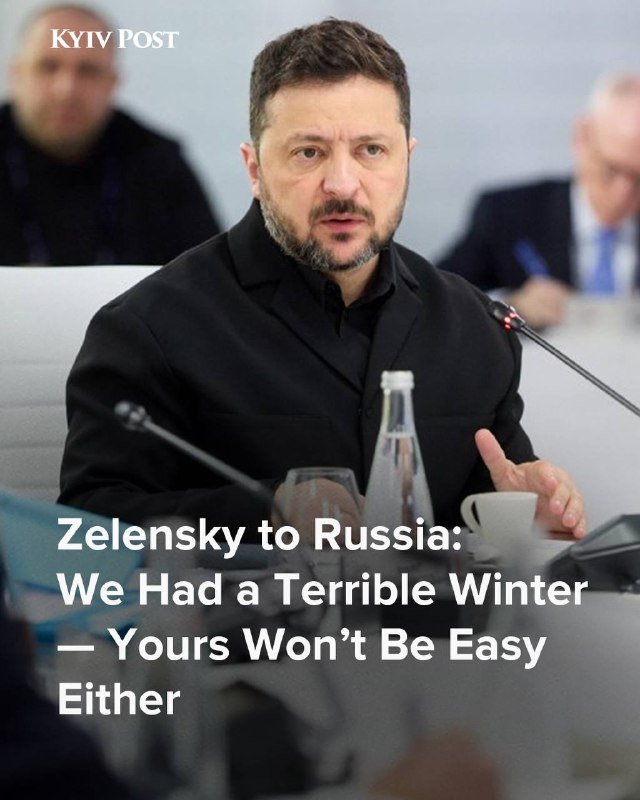
It is the photograph that will outlast the communiqué. On 16 June 2026, at the G7 summit in the Canadian Rockies, President Volodymyr Zelensky of Ukraine, on camera, climbed onto a chair to bring himself level with Donald Trump, the American president, who happens to be a foot taller. Within minutes, the image was everywhere, and the G7's careful language about "just and lasting peace" had to compete with the sight of a wartime leader resorting to a footstool to be seen as an equal in the room.
Theatre is the job. Zelensky knows it. He was, before he was a politician, one of the most successful comic actors in the post-Soviet space, and he has spent four years of full-scale invasion turning that training into an instrument of statecraft: the olive-green knit, the five-a-side press conferences, the lines delivered to the camera rather than to the back row. The summit photo, however, captured something less comfortable. It captured the asymmetry of a war that Ukraine cannot end without American consent, and a peace that the White House increasingly wants to package as Trump's own.
The image and what it actually shows
Pro-Russian accounts, including the X account @sprinterpress, framed the photograph as a stunt, Zelensky "raising a chair to appear taller than Trump." That reading is uncharitable and almost certainly wrong. Zelensky is around 170 centimetres; Trump is closer to 190. The optics of any bilateral are stacked against the smaller man, and the chair was a practical fix. But the image travelled because it played into two narratives that G7 diplomacy could not quite suppress. The first is the war-weariness story now lodged in the American right: that Ukraine is a costly dependency, that Zelensky is a showman, that the bill at the bottom of the receipt no longer pays for itself. The second is the opposite story, the one told from Kyiv: that Ukraine is ready to stop fighting, and has been ready for some time, and is waiting on a partner who keeps moving the goalposts.
Hours before the photo-op, Zelensky told journalists that Ukraine was "ready for the end of the war and a ceasefire already today." The line, carried by Ukrainian war correspondent Andriy Tsaplienko and syndicated through Telegram, was meant to put the diplomatic ball back into Russia's court. The South China Morning Post, reporting from the summit, paraphrased the follow-up: Trump used the same meeting to urge Russia to "make a deal" with Ukraine. Read together, the two statements amount to a synchronised press conference in which the invader and the invaded both claim to want peace, and the burden of proof falls on the third party in the room — the one who controls the arms shipments.
The Russian counter-frame
The Kremlin's preferred story is simpler still. Moscow did not need to lobby for the chair photograph; it just needed to point at it. Russian state media and the network of Telegram channels aligned with the defence ministry have spent the past year arguing that the war is a NATO proxy conflict that the United States could end with a phone call. The G7 was useful to that framing because it put Zelensky in a room with Trump and made the dependence visible. When Trump told reporters to urge Russia to "make a deal," the line was read in Moscow as a signal that Washington was, at last, preparing to lean on Kyiv rather than on the Kremlin. Whether that reading is correct matters less than the fact that it is now the operating assumption of the Russian foreign-policy establishment.
The Ukrainian counter to this is the one Zelensky keeps making, in different registers. In a softer interview carried by Clash Report on 16 June, the Ukrainian president was asked whether he missed being an actor, whether he missed being a good father, when he had last cried. He answered that the tears could wait, that the hardest moments came when he had to give orders that sent mothers' and fathers' children home in coffins. The interview is plainly designed for a Western audience that has been numbed by the war and is now being courted by both sides. Its function is to remind viewers that the man on the chair is also the man signing the casualty notifications.
The structural problem the summit could not solve
Strip away the photographs and the press scrum, and the G7 produced no breakthrough on the central question of the war: whether the United States will continue to underwrite Ukraine's defence on terms set in Kyiv, or whether it will demand a settlement on terms set in Washington. The European allies in the room have the will but not the industrial depth to substitute for American supply. Ukraine has the manpower and the motivation but not the air-defence interceptors or the long-range strike capacity to compel Moscow to negotiate seriously. Russia has the territory and the patience, and is content to wait for the political weather in Washington and Brussels to change.
The chair photograph is, in that sense, a small but accurate diagram of the whole war. Ukraine is improvising against an opponent with more material and a patron with more leverage. The G7's job was to make the asymmetry invisible. The camera made it visible. The communiqué that follows, full of language about sovereignty and territorial integrity, will not change the underlying geometry.
The stakes for the rest of the year
If Trump follows the line he used on 16 June and pushes Moscow to "make a deal," the next move belongs to Vladimir Putin. A serious Russian offer would be the first step toward a settlement. A bad-faith counter-proposal, or silence, would be the first step toward a grinding summer of attritional fighting in Donetsk and Kherson oblasts, and an autumn in which the American political conversation turns, as it has twice before, to the question of whether Kyiv is a money pit. If, on the other hand, Trump uses the leverage of the same sentence to lean on Zelensky to accept terms that amount to a frozen conflict, the G7's rhetoric about sovereignty will be revealed as decorative, and the European allies will face the choice between stepping up materially or watching the post-1945 security architecture tilt toward something they do not recognise.
The honest reading is that none of this is settled, and the chair photograph, memorable as it is, is the wrong place to look for an answer. It tells us what we already knew. The interesting question is whether the G7's final communiqué, the one being drafted in back rooms in Banff and Ottawa as this piece is filed, contains language on security guarantees that the United States is actually prepared to honour. On the evidence of 16 June 2026, it does not yet.
This publication has reported from the G7 the way it has reported from the war itself: leaning on the Ukrainian and Western-wire record first, treating Russian-aligned channels as counter-claim material with explicit caveats, and resisting the temptation to read the chair photograph as a verdict on either Zelensky's leadership or the war's trajectory.
Wire provenance
This editorial synthesis draws on the following public wire/social posts:
- https://t.me/Tsaplienko
- https://t.me/ClashReport
- https://t.me/ClashReport