Zelenskyy rebuffs Moscow summit, sets terms for Putin meeting as Patriot industrial talks with Trump advance
Volodymyr Zelenskyy has publicly ruled out travelling to Moscow for a meeting with Vladimir Putin, naming Turkey, Switzerland or a Middle East venue as acceptable alternatives, while pressing ahead with Donald Trump on licensing for the production of Patriot air-defence systems.
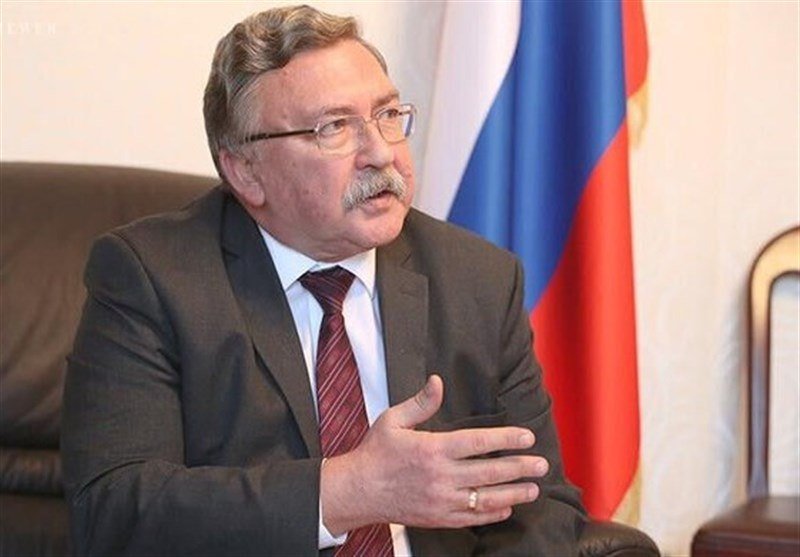
At 12:30 UTC on 16 June 2026, President Volodymyr Zelenskyy drew a public red line around the next phase of any direct contact with the Kremlin: he will not travel to Moscow to sit down with Vladimir Putin, and if a meeting occurs it will take place in Turkey, Switzerland, or a Middle Eastern capital. The remarks, carried in English-language wire snippets by Euronews and amplified in Ukrainian by outlets including UNIAN and the Telegram channel Pravda_Gerashchenko, double as a domestic-political message and a negotiating signal: the Ukrainian side is willing to talk, but on terrain it does not treat as Russian.
The framing matters because the location of any eventual Zelenskyy–Putin sit-down has been a quiet proxy for who owns the diplomatic process. A Moscow venue would symbolically place Ukraine in the position of visitor to the aggressor; Ankara, Bern, or a Gulf capital keeps the encounter on what Kyiv considers neutral ground. By naming the alternatives himself, Zelenskyy has pre-empted a venue argument before one begins.
The terms Kyiv is setting
Zelenskyy's stipulation is procedural, not merely logistical. The wording reported across the thread — "I will not go to meet Putin in Moscow, I don't play these games, we can meet in Turkey, Switzerland or the Middle East, but he doesn't want to stop the war yet" — packages a refusal, an offer and a diagnosis in a single sentence. The offer is conditional; the diagnosis implies that the obstacle to a meeting is not seating-chart logistics but Russian intent.
That formulation also tells Western capitals, and the United States in particular, that Kyiv reads the moment as a window rather than a finish line. If Putin is not yet prepared to halt hostilities, the argument goes, then summits risk becoming photo opportunities that legitimise the current battlefield reality. Holding out for a venue, and for a signal of Russian seriousness, keeps the diplomatic pressure concentrated on Moscow rather than on Ukraine.
Patriot licences and the industrial track
In parallel, Zelenskyy disclosed that he and US President Donald Trump have agreed their teams will work on licensing arrangements for the production of Patriot air-defence systems, a step Zelenskyy said carries explicit backing from across the G7. The channel Pravda_Gerashchenko reported the exchange at 12:21 UTC and again at 11:40 UTC, emphasising the G7 framing and the parallel condemnation by G7 members of Russian attacks on Ukrainian civilian infrastructure.
Patriot is the visible pillar of Ukraine's long-range air defence and the most politically charged item on Kyiv's wish list. Moving from deliveries of finished systems to licensed in-country or allied production is a different order of commitment. It implies a multi-year industrial pipeline, training cohorts that outlast any single administration in Washington, and a defence-supply relationship that becomes structurally harder to unwind. Zelenskyy's invocation of the G7 — rather than the United States alone — is a deliberate broadening of the political base underneath that commitment, so that any future rollback by one government would carry an explicit multilateral cost.
The counter-read is also straightforward. Industrial licences of this kind take years to translate into interceptors on launchers. They do not address the present bombardment of Ukrainian cities, and they do not, on their own, alter the arithmetic of the front. They are an investment in deterrence and in Ukrainian sovereignty over its own air-defence architecture. The two tracks — refusing a Moscow summit, and deepening the industrial relationship with Washington and the G7 — are meant to be read together: diplomacy with conditionality, and defence with durability.
Why the location argument is doing real work
In contests where neither side accepts the other's institutional legitimacy, the symbolic surface of diplomacy carries weight. Hosting in Moscow would place the Ukrainian head of state inside the capital of the state that occupies Ukrainian territory, including territories Russia claims to have annexed; Russian state media would treat the visit as recognition of that claim by implication, even if Kyiv issued disclaimers. Refusing the venue is, in effect, a refusal to absorb that cost on Moscow's behalf.
The named alternatives are not random. Turkey has been the site of previous Ukraine–Russia talks, including the 2022–23 Istanbul process, and Ankara has a working channel with both sides. Switzerland has a long-standing offer of good offices under the formula it has used for Ukraine-related diplomacy since 2022. A Middle Eastern venue — a Gulf capital in practice — would introduce a regional host and an additional set of intermediaries. Each of those choices shifts the optics away from a bilateral meeting on Russian soil and toward a process that other states are visibly underwriting.
The structural frame: industrial licences as the new anchor
The deeper story is where the diplomatic weight is migrating. The Trump administration's stated preference for direct leader-to-leader deal-making has not produced a visible Russian concession; what it has produced, in this readout, is a quiet pivot toward industrial integration between Ukraine and the Western defence base. Patriot licensing sits inside a wider pattern of European industrial-policy responses to the war, from ammunition production to artillery and drone manufacturing. Each step chips away at the assumption that Ukraine's defence rests on a single decision in Washington or a single resupply vote in Congress.
A more sceptical reading sees the licence announcement as a hedge. It signals to European audiences that the United States remains engaged on a long horizon, regardless of the ups and downs of presidential diplomacy with Moscow. It also raises the operational bar: licensed production is a project measured in years, and the immediate requirement is interceptors for a summer of continued bombardment. Both readings can be true at once, and Zelenskyy's decision to surface them together is itself the message.
Stakes and what remains uncertain
If the venue line holds, the next move falls to Moscow: either accept one of the named locations, or accept the political cost of a visible refusal to meet. If the Patriot licence process moves from announcement to contracts, Kyiv gains a structural air-defence capacity that does not depend on a single supplier's political calendar. The combined effect is to make the present war more expensive for Russia to sustain, diplomatically and industrially, while keeping the door open to a meeting on terms that do not require Ukraine to validate the invasion by walking into it.
Several things remain genuinely open. The thread material does not specify which of the three named venues is Kyiv's preference, nor whether the Trump and Zelenskyy teams have set a timetable for the licence work. The Russian side has not, in the source material, responded on the record to the venue condition. And the scale of the Patriot production commitment — annual interceptor output, geographic footprint, percentage of the system built outside US territory — is not disclosed in the reporting. Those are the questions the next seventy-two hours will start to answer.
Desk note: Monexus is leading on the conditionality of the meeting — venue as a proxy for legitimacy — and on the industrial-licence track as the structural underlay of the diplomatic exchange, rather than treating the headline as a stand-alone travel itinerary.
Wire provenance
This editorial synthesis draws on the following public wire/social posts:
- https://t.me/euronews/
- https://t.me/uniannet/
- https://t.me/Pravda_Gerashchenko/
Follow the event.
These dated source records provide context. They do not retrospectively verify this archive article.
A dated voting record is evidence of one decision. Use the original UN record before turning it into an alignment label.
Visual explainer · historical vote of 2022-03-02 →