The 2026 NBA Playoffs Were Settled by a Familiar Cast — and One Quiet Shift at the Top
The Knicks are champions. The postseason All-NBA list that followed tells a familiar story about the league's top tier — with a subtle hint that the hierarchy is no longer quite as stable as it looks.
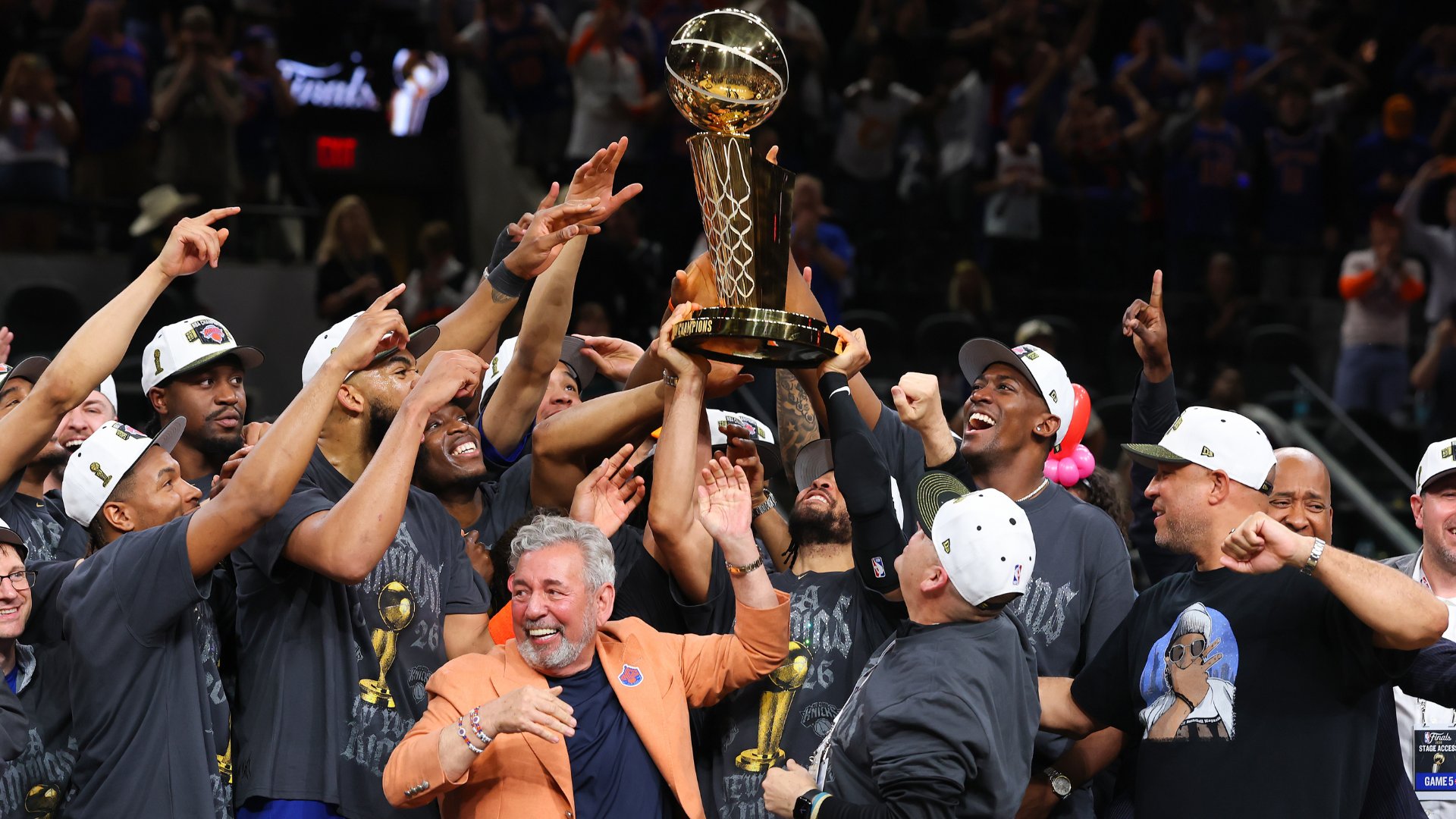
The 2025-26 NBA season closed on 17 June 2026 with the New York Knicks as world champions, and within hours ESPN had published its All-NBA Playoff Team — a ten-name list of the postseason's most impactful players. The headline tells a familiar story: the league's MVP conversation and its championship trophy ended up in roughly the same place. The detail underneath it tells a more interesting one.
For most of the spring, the season's narrative tracked two men: Shai Gilgeous-Alexander, the reigning MVP whose Oklahoma City Thunder entered the playoffs as favourites, and Nikola Jokić, the Denver centre whose individual brilliance has now outlasted three different supporting casts. ESPN's first team — Gilgeous-Alexander and Jokić at the top of the ballot, joined by Boston's Jayson Tatum, Milwaukee's Giannis Antetokounmpo and a fifth name to be filled by the final's resolution — is the shape most observers would have predicted in February.
The coronation in New York
The Knicks' title is the franchise's first since 1973 and only its third overall. The 53-year gap was the longest active championship drought in the four major North American men's leagues before Tuesday night's clincher. ESPN's postseason awards slate, published after the final whistle, treated the result as the organising fact of the postseason: New York's stars were not merely participants in the All-NBA conversation but the reason there was one. Jalen Brunson, the guard around whom the entire roster has been built, and Karl-Anthony Towns, the centre acquired in the 2024 trade that defined the front office's win-now window, anchored the offence across the conference rounds.
That the Knicks could win it all without a regular-season MVP on the roster is, in itself, the story of the bracket. The MVP award, by rule, is a regular-season trophy; postseason play is a separate audit. ESPN's team, by design, rewards both. The result is a list that lets a regular-season dominant player and a champion coexist without forcing a verdict.
The familiar faces on the second team
ESPN's second team — Anthony Edwards of Minnesota, Tyrese Haliburton of Indiana, Donovan Mitchell of Cleveland, Domantas Sabonis of Sacramento, and Evan Mobley, also of Cleveland — reads like a portrait of the league's next decade. Five players, none older than 30 at the end of this season, each of them either already an All-Star or visibly tracking toward one. The Cavaliers' double representation reflects a regular season in which Cleveland won more games than any team in the East and reached the conference finals before falling.
The presence of Edwards at the top of that tier is the more telling signal. Two postseasons ago he was a rising star in name only; in 2025-26 he was the offensive engine of a Minnesota team that pushed the eventual champions deeper into the bracket than the pre-series odds suggested. ESPN's selection is a quiet acknowledgement that the league's individual hierarchy has begun to rotate.
The structural frame: stability at the top, churn beneath
The postseason awards are a useful lens on the league's competitive geometry because they surface two layers at once. The first team — Gilgeous-Alexander, Jokić, Tatum, Antetokounmpo and the Knicks' leading performer — is a list of players whose places at the summit have been stable for at least three seasons. The second team is a list of players who are about to displace them, and the gap between the two lists is narrower than it was a year ago.
That structure — a fixed ceiling above a churning floor — is the league's defining economic fact. Star power concentrates revenue and television attention; the salary cap, the designated-player exception and the league's marketing investments all push in the same direction. Yet the on-court product still turns on a dozen or so players, and that dozen is wider than it was when Stephen Curry last lifted the trophy.
What the list does not say
Two things are worth flagging as uncertainty rather than fact. First, the exact composition of ESPN's first team is the product of editorial judgement rather than a statistical formula, and the wire service acknowledged as much: players whose teams were eliminated earlier in the bracket were judged on shorter samples. Second, the list is a North American lens. International stars playing in European competitions, or in the increasingly competitive Chinese and Australian leagues, are not in scope; that is a feature of the format, not a flaw of the team, but it shapes who gets named.
The Knicks' parade is scheduled for later this week. The MVP conversation, by contrast, is closed: Gilgeous-Alexander took the regular-season trophy in May, and the postseason ballot rewards what happened after that. ESPN's All-NBA Playoff Team is the first formal attempt to reconcile the two, and it lands, as these things usually do, somewhere between coronation and coroner.
Desk note: this article relies on a single wire report published by ESPN on 17 June 2026 immediately after the Knicks' title. Where the source does not specify a detail — for example, the schedule of the Knicks' victory parade or the precise vote tally on the awards panel — this publication has left the matter open rather than infer. The team rankings reflect ESPN's editorial selection, not a league-issued honour.
Wire provenance
This editorial synthesis draws on the following public wire/social posts:
- https://en.wikipedia.org/wiki/2026_NBA_Finals
- https://en.wikipedia.org/wiki/New_York_Knicks
- https://en.wikipedia.org/wiki/NBA_Most_Valuable_Player_Award