Congress in the Dark on Trump's Iran Deal: A Familiar Playbook
The president promises a deal to end the war with Iran. Lawmakers say they have not seen it. The pattern is older than this White House.
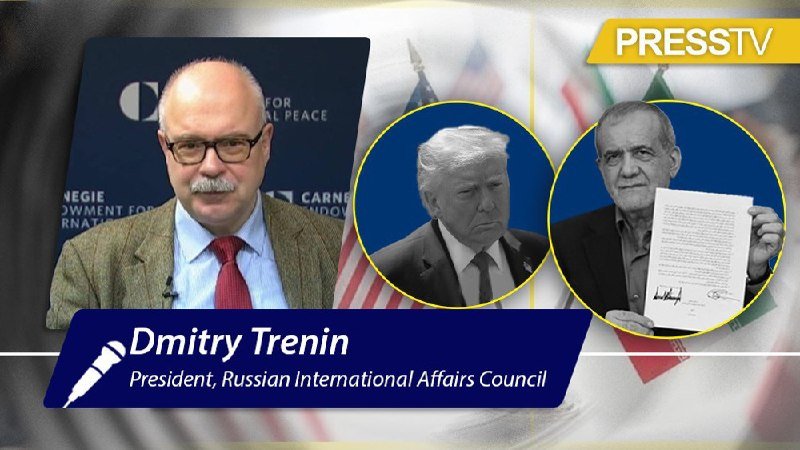
President Donald Trump told reporters on 16 June 2026 that he is willing to send his interim deal to end the war with Iran to Capitol Hill for review. The same afternoon, members of Congress said they had no idea what was in it. The gap between those two statements is the story. A president is asserting an executive prerogative over a war whose cost is measured in lives and dollars, while the branch of government constitutionally tasked with authorising the use of force operates on press-conference summaries.
The pattern is not new. It is, in fact, the default operating mode of the modern American presidency on matters of war and peace: the White House negotiates, the executive signs or threatens, and Congress is asked to react after the fact. What is striking this week is the speed. The interim agreement has barely been named in public, and the offer to send it up the Hill already carries the implication that whatever Congress receives will arrive as a fait accompli.
A deal without details
According to reporting carried by Reuters on 16 June 2026, Trump said on Tuesday he would forward the interim arrangement to lawmakers for review. The same wire noted that members of Congress had not been briefed on the substance. A Telegram channel aggregating open-source intelligence on the conflict, OSINT Live, put the matter plainly: "Congress still has no idea what's in the official agreement, and there's probably a very good reason for it."
That framing cuts to the central problem. An interim deal between the United States and Iran is not a routine arms-control technicality. It would, by definition, govern the suspension or termination of hostilities between two states whose forces have been engaged in direct fire. Treaties of this kind have historically taken the form of either Senate-advised-and-consented agreements under Article II or, more rarely, congressionally authorised executive agreements tied to prior war powers. The constitutional design assumes that the legislature sees the text before the executive commits the country to it. Here, the sequence is inverted.
Why lawmakers stay quiet
The natural counter-reading is that congressional leadership is engaged in the customary theatre of complaint, leaking frustration to friendly outlets while privately coordinating with the White House. That has happened often enough to be a plausible hypothesis. The available reporting does not, however, support it: no member of Senate or House leadership has been quoted acknowledging awareness of the text. The silence is unusually uniform.
The structural explanation is more straightforward than the conspiracy one. The executive has the negotiating pen. The intelligence on which any deal rests — enrichment levels, centrifuge inventories, sanctions enforcement, proxy force disposition — is classified at levels that make it difficult for members to ask informed questions in public without leaking sources or methods. The institutional asymmetry is real. But it is also the asymmetry that the War Powers Resolution of 1973 was designed to correct, by forcing the executive to surface its war-making decisions to Congress within 48 hours. The current situation is the inverse: Congress is waiting to be sent a document, on the executive's schedule, by the executive's choice of forum.
The deal itself — and the Iran question
The reporting surfaced in this thread does not describe the substantive content of the arrangement. That is itself a fact. An interim deal that ends a war, even provisionally, typically involves some combination of Iranian commitments on uranium enrichment, IAEA access, ballistic missile production, support for regional armed factions, and reciprocal US commitments on sanctions relief, frozen assets, and force posture. The sources do not specify which of these is in scope, which is deferred, or which is being traded against which. The text of the deal — assuming one exists in stable form — is the news. The text is, in this reporting cycle, absent.
Iranian state-aligned outlets have historically framed such negotiations as evidence of US isolation, arguing that Washington is forced into talks because its regional position has eroded. The inverse US framing holds that Tehran negotiates from weakness. Neither side has, in the material available to this publication, claimed a substantive win on a verifiable metric. The Reuters wire that surfaced on 16 June 2026 is the most concrete reporting on the deal's existence; the diplomatic substance is not yet in evidence.
The structural pattern
Step back from the personalities. The United States enters its third presidential cycle in a row in which an executive has conducted major foreign-policy business — trade, war, arms control — on a timeline that compresses or bypasses legislative review. The constitutional architecture was built for a slower tempo, where ambassadorships moved by treaty and wars were declared after deliberation. The 21st-century tempo does not reward that architecture. A president with a social-media channel and a tight inner circle can move from threat to negotiation to claim of resolution inside a news cycle. Congress, by design, cannot.
The risk is not that this particular deal is bad. It may be competent or even shrewd. The risk is that the precedent — executive-negotiated, executive-timed, executive-summarised — becomes the default. Once a war ends without a Senate vote or a War Powers renewal, the next war begins the same way. The institutional cost accrues slowly, and is paid by a Congress that finds itself, decade by decade, holding a pen with less to write.
Stakes and uncertainties
What is verified: a sitting president has publicly committed to forwarding an interim deal to Congress; Congress, per its own members cited in wire reporting, has not seen it; the war with Iran is, as of this writing on 17 June 2026, still understood to be ongoing.
What is not verified: the text of the deal, the identity of the Iranian counterparties signing it, whether any cease-fire has actually taken hold, whether sanctions relief has been provisionally extended, and whether any member of Congress has been read into the substance off the record. The Reuters report is the highest-confidence source on offer; everything beyond it is, for now, inference.
The honest read is that an arrangement of this consequence will, in time, surface in a form that allows real scrutiny. The question is whether that scrutiny happens before the arrangement is treated as binding, or only after. On the present tempo, before is the less likely option.
Desk note: Monexus framed this story around the institutional question — what Congress does and does not see — rather than the diplomatic question, because the diplomatic substance is not yet in the public record. Where Iranian state media or US administration claims are at issue, both were flagged as claims, not facts.
Wire provenance
This editorial synthesis draws on the following public wire/social posts:
- http://reut.rs/4uCe5F1
- https://t.me/ourwarstoday/1234
- https://t.me/osintlive/5678
Follow the event.
These dated source records provide context. They do not retrospectively verify this archive article.
Separate what the nuclear watchdog reported from what it could not determine after the June 2025 strikes.