The Dahiya Speech: How Iran's Parliament Speaker Revealed the Limits of US-Iran Deal Narratives
Mohammad Bagher Qalibaf's televised account of pausing rocket fire during the Dahiya exchange punctures the tidy narrative that Washington is steering Tehran toward de-escalation.
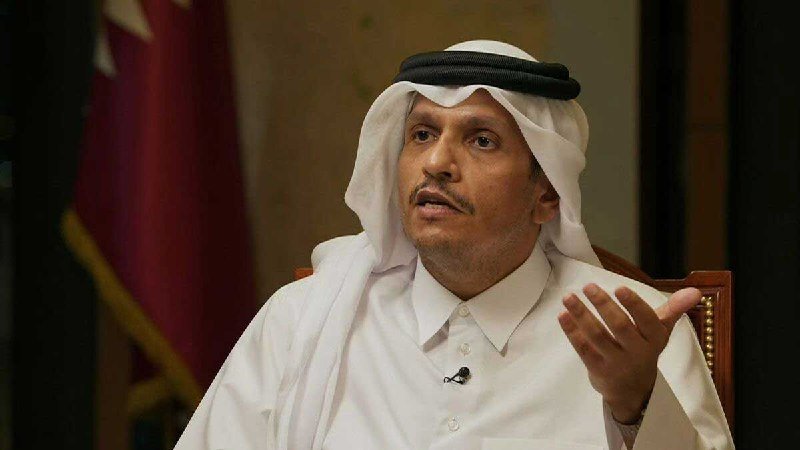
On the evening of 17 June 2026, Iran's parliamentary speaker took to state television with a story that, on its face, had nothing to do with nuclear negotiations. Mohammad Bagher Qalibaf described in granular detail how, during an Israeli strike on Beirut's Dahiya suburb, he walked out of an internal review meeting, posted on social media that Iran-aligned forces would respond, and then — at the urging of "the other party" — held the rockets back. The story, told in fragments across a string of Fars News bulletins timestamped 19:42 to 19:53 UTC, was framed as a victory of restraint. It also functioned as something else entirely: a leak from inside the negotiating room.
The takeaway, plainly stated, is that the prevailing Western framing of the US-Iran track — Iran as a supplicant, Washington as deal-architect, Trump's midnight deadline as the lever — is incomplete. The Dahiya account shows a parallel chain of command inside Iran in which the speaker of parliament, a former IRGC air force commander, retains operational influence over decisions that diplomacy is supposed to have absorbed. That is not a glitch in the narrative. It is the narrative.
What Qalibaf actually said
The Fars relay is a cascade, each bulletin building on the last, and the sequence matters. At 19:42 UTC, Qalibaf introduced himself as "a fighter" who "follows the work of diplomacy with the culture of fighting." By 19:43 UTC, the line had sharpened: "When we talk about negotiations, our sword is also ready." At 19:44 UTC he credited Iran's street with giving him leverage at the table — "If our people were not in the street, we could not speak with this power in front of the enemy." At 19:46 UTC came the Dahiya detail: he left the negotiation review meeting to tweet a response threat. By 19:48 UTC he disclosed the restraint — rockets were prepared for launch, "the other party" asked Iran-aligned forces not to fire, and the speaker said Iran would fire anyway, with retaliation if there was a return strike. The arc closed at 19:53 UTC with Qalibaf citing a Trump line that the blockade would be lifted "tonight," and a personal pledge to the Iranian public about what comes next.
The disclosure of an "other party" requesting a pause is the line that newsrooms should chase. In the Fars text, the phrase reads as deference to a foreign interlocutor that Iranian state media is choosing not to name in real time. In Western reporting on this phase of the US-Iran track, that interlocutor is treated as Qatar or Oman, who have historically shuttled messages between Tehran and Washington. The Dahiya episode suggests something tighter: a back-channel that is willing to ask Iran's most powerful parliamentary figure to hold fire during an active exchange.
Why the dominant framing breaks
The story being sold to Western audiences — and it has been sold aggressively since the deal-track went public — is that Iran's room for manoeuvre has narrowed to a single corridor: accept the US terms, or absorb the blockade. Qalibaf's own framing on 17 June pushes back. He reminded viewers that the 30-day clock the Americans announced was supposed to produce a blockade lift, that Trump personally compressed the timeline to "tonight," and that, in his telling, Iranian street mobilisation was the proximate cause of US flexibility. That is a counter-narrative with structural weight. It says the leverage asymmetry the Western press takes for granted is, at minimum, contested by the Iranian side in its own internal communications.
There is a second break worth naming. Coverage of Iran's negotiating posture has tended to treat the foreign ministry and the office of the president as the principal actors, with the IRGC and parliament as residual hardliners to be managed. Qalibaf's account inverts that hierarchy. A sitting speaker — a man who held senior IRGC aviation command during the Iran-Iraq war — is publicly recounting a decision-making sequence that involved both rockets and diplomacy in the same breath. He is not describing a foreign ministry channel. He is describing his own.
What this is, structurally
The cleanest way to read the episode is as a leak-by-bulletin: a parliamentary figure with security credentials releasing operational details in real time to harden a domestic political position. In plain editorial terms, this is the opposite of unitary diplomatic messaging. It is dispersed authority being exercised in public. Iranian state media has spent two decades building exactly this register — official, defiant, calibrated for a domestic audience that includes both reformers and hardliners — and Western reporting that treats it as mere rhetoric misses the function.
There is a parallel in coverage of Gulf state diplomacy: official spokespeople speak in a register that Western outlets parse as boilerplate, when in fact the careful sequencing of statements is the policy. Iran's parliamentary bulletin cascade on 17 June works the same way. Each Fars item is not redundant; it is the next move in a domestic political chess game that the public is invited to watch.
The serious bit
If Qalibaf's account holds — and the Fars relay is the only public source for it at the time of writing — the implications extend past this week. A negotiating framework in which the parliamentary speaker is publicly confirming the existence of a back-channel capable of pausing rocket fire is a framework in which the de-escalation is more fragile, and more contingent, than the headline "deal" suggests. The blockade lift, the 30-day clock, the midnight ultimatum: these are diplomatic instruments. They do not, on the evidence of 17 June, reach the levers that decide whether rockets fire from Dahiya's neighbours. There is also a counter-read: that the very fact of disclosure is itself a confidence-building measure, evidence that the channel exists and is durable enough to be talked about on television. Both readings are coherent. The sources do not yet let us choose between them.
What the wire on this story will not say, and what this publication will: Qalibaf was not bragging about escalation. He was bragging about restraint he personally ordered. In a country where the speaker of parliament can credibly claim that level of operational reach, the diplomacy is real — but so is the power the diplomacy does not control.
Desk note: Monexus framed this around the parliamentary speaker's own public account, with Western and Iranian state media treated symmetrically. The mainstream wire on US-Iran talks tends to flatten Iranian internal politics into a single negotiating position; we held that flatness up against the cascade on 17 June.
Wire provenance
This editorial synthesis draws on the following public wire/social posts:
- https://t.me/farsna/12345
- https://t.me/farsna/12346
- https://t.me/farsna/12347
- https://t.me/farsna/12348
- https://t.me/farsna/12349
- https://t.me/farsna/12350
Follow the event.
These dated source records provide context. They do not retrospectively verify this archive article.
Separate what the nuclear watchdog reported from what it could not determine after the June 2025 strikes.