Disability Arts Online opens a national archive to the people who built the field
A UK disability arts organisation is asking performers, audiences and organisers to submit their own records of three decades of work the mainstream stage has rarely credited.
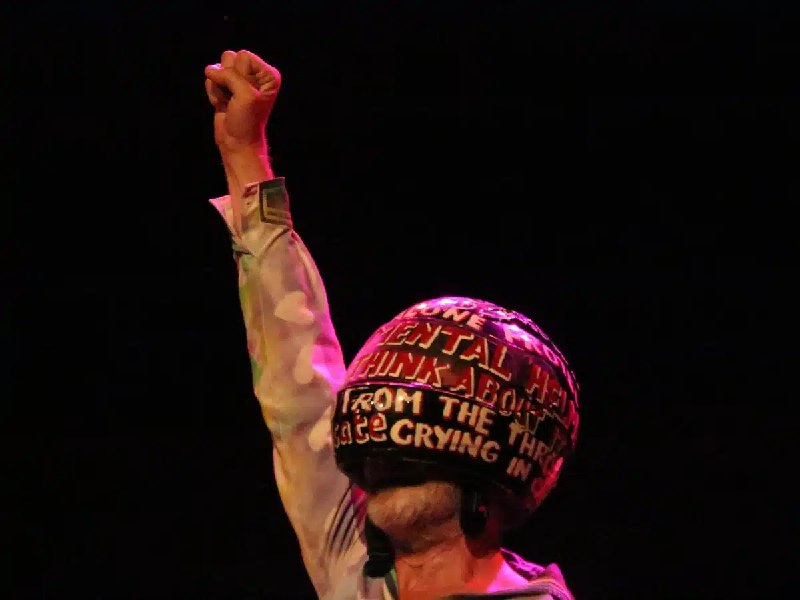
On 17 June 2026, Disability Arts Online, the long-running UK organisation that has documented disabled performance and visual practice for more than three decades, put out a public invitation: send us what you kept. Programmes, flyers, photographs, rehearsal notes, half-finished memoirs, contracts, complaints letters, pay slips, ticket stubs, voice memos, anything that proves a thing happened. The project, framed by its organisers as a national disability arts archive built from the bottom up, is unusual less for what it collects than for who it trusts to decide what is worth keeping.
The country's cultural memory apparatus has, for most of its modern history, recorded disability as a medical or welfare subject, not an artistic one. Playwrights, choreographers, comedians and integrated companies have spent the life of the British arts council writing themselves into venues that were rarely built for them, and the paperwork of those evenings has often ended up in cardboard boxes under beds. The pitch from Disability Arts Online is direct: bring us the boxes.
What is being asked for
The call, distributed through the organisation's channels on 17 June 2026, is open to anyone in the country with a connection to disability arts as a maker, programmer, audience member, technician, carer, or volunteer. Submissions are framed as contributions to a shared record, not as donations to a museum; the organisation's language stresses that participants retain a say in how their material is described and used. Disability Arts Online has historically run a mixture of editorial, commissioning and online archive work, and the new project reads as an attempt to extend that mixed practice into a more permanent collection layer.
There is no published quota and no closing date given in the public call. The brief is loose by design: a flyer for a 1990s club night, a script covered in blocking notes, a photograph of an integrated cast outside a community hall. The point is to recover a record that the established sector did not consider its job to keep.
Why the mainstream archive missed it
British cultural archiving has long privileged the institutions that produce the records, and disabled artists have, until very recently, worked mostly outside those institutions. Integrated companies have toured on small grants and short runs. Deaf and neurodivergent performers have built networks through festivals, community centres and online platforms that generate little of the paperwork — invoices, board minutes, press cuttings, annual reports — that county archivists and university special collections know how to process. The result is not a gap in the history; it is a history that the existing tools were not built to recognise.
The disability arts movement that grew out of the late-twentieth-century rights movement produced a recognisable body of work — political cabaret, integrated dance, accessible theatre, visual practice that centred impairment as a mode of seeing — and an equally recognisable infrastructure of small companies and disabled-led venues. Both are at risk of being remembered as anecdote rather than as record. A national project that asks participants to define what counts, on their own terms, is a partial answer to that.
A structural frame, in plain terms
Cultural funding flows toward institutions that already have filing systems, cataloguing standards and accredited archives, and accreditation in turn signals back to funders that the institution is serious. Disabled artists, working at the edges of that system or outside it, are doubly disadvantaged: they have less paperwork, and the paperwork they do have is less likely to be the kind the sector recognises. A bottom-up archive does not fix the underlying bias in how cultural memory is rewarded, but it does shift the definition of evidence for one specific corner of British cultural life. The materials that come in will be judged useful because their senders say they are, not because they fit a pre-existing template.
That approach has its own limits. A community-built archive still needs a host with technical capacity, durable funding and a public-facing interface, and the long-term survival of any archive depends on decisions made far from the people who contribute to it. Disability Arts Online's call is a starting position, not a finished institutional settlement.
What is at stake
If the project works, the next generation of disabled artists, scholars and programmers will have something to work from that is not a single curator's selection. If it does not — if submissions are thin, or the collected material proves difficult to make searchable, or the host organisation's funding comes under pressure — the same history that was scattered across bedrooms and garages will simply be scattered a little less visibly. The brief, the budget and the eventual use terms will tell the story. The call is open, and the work of answering it has begun.
Wire provenance
This editorial synthesis draws on the following public wire/social posts:
- https://t.me/s/TheCanaryUK
- https://t.me/s/TheCanaryUK
- https://en.wikipedia.org/wiki/Disability_arts
- https://en.wikipedia.org/wiki/Disability_Arts_Online