England squeeze past Croatia as Portugal dispatch DR Congo on a busy World Cup 2026 afternoon
Harry Kane's penalty separated England and Croatia in the early Group L fixture, while João Neves headed Portugal in front against DR Congo within six minutes at the Allianz Arena in Munich.
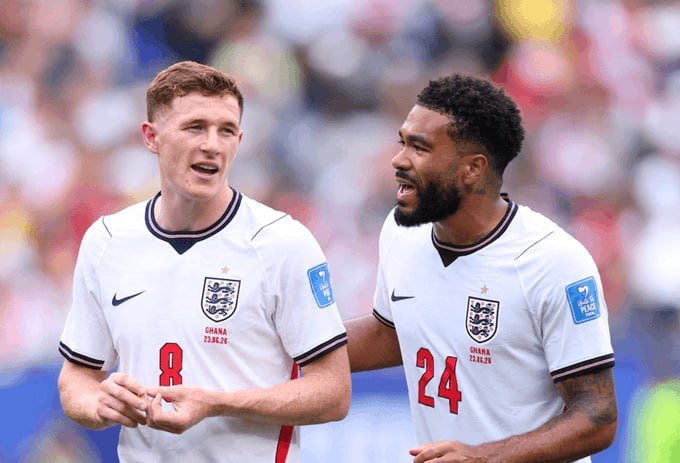
A slow-burn Group L opener at Frankfurt's Waldstadion tipped England's way inside the first half on Wednesday, when Harry Kane buried a penalty to settle a cagey, foul-strewn contest against Croatia. The final whistle confirmed a 1-0 win for the Three Lions, the kind of workmanlike result that does not flatter either side and tells you more about the group than about the contenders.
The same late-afternoon window produced a more fluid spectacle in Munich, where Portugal broke DR Congo inside six minutes through João Neves — a header from a Neto cross, the kind of goal that settles a tie before the opposition has touched the ball twice. Both fixtures sat inside the 17 June slate that FIFA had marketed as the marquee opening block of the 2026 tournament, the first World Cup staged across three host nations (the United States, Canada and Mexico) and the first to feature 48 teams. The early results do not quite settle any debate, but they do compress it: by the end of the night, two of the European pre-tournament favourites had banked three points without ever really opening the throttle.
How the goals came
England's breakthrough arrived through the route Gareth Southgate's side have leaned on for the entirety of his tenure: a refereeing decision, a ball placed on the spot, and Kane. The captain stepped up and sent the goalkeeper the wrong way, the kind of moment that has become a personal trademark since the Russia 2018 shootout against Colombia. The wire copy carried by the FIFA and The Athletic channels at 20:12 UTC was clipped to a live-blog line: "Kane (England) - Penalty, England take the lead." The first 45 minutes had been tight, with Croatia's midfield three — still organised around Luka Modrić, now 40 — looking comfortable in possession, until a clumsy challenge inside the area gave the video assistant room to intervene and the on-field official pointed to the spot.
In Munich, Portugal's opener was softer and more picturesque. Rúben Neto, starting at left wing-back ahead of the suspended Nuno Mendes, swung an early cross into the corridor between centre-back and full-back, and Neves — deployed again in the double pivot alongside Vitinha — peeled off his marker to glance a header past the Congolese keeper at 17:07 UTC. The 1-0 stood through the remainder of the half. Both goals, in their different ways, confirmed an old World Cup pattern: dead-ball situations and set-piece movement are doing more attacking work than open play, and the teams with rehearsed routines around the box tend to be the ones leaving the field with the result.
Why the performances flatter neither side
The temptation, on a single match, is to read these as signals — Kane still has it, Portugal's new-look midfield has arrived, Croatia are finished, the Congolese are out of their depth. None of those readings survive contact with the format. England created almost nothing from open play. Croatia, for all the talk of a post-Modrić decline, controlled long stretches of the ball in central areas and will feel hard done by a single questionable decision. Portugal looked tidy in possession but had not, by the hour mark, turned territorial dominance into a second goal. DR Congo, for their part, are the lowest-ranked side in the group on Elo and were playing in their first World Cup since 1974 — the structural disadvantage of arriving at a tournament against a top-ten side after a three-day turnaround from qualifying is enormous, regardless of the talent in the squad.
The honest read is that both favourites did the minimum. Kane's penalty, Neves's header — that is the difference between three points and one, and one point and zero, in a format where goal difference is the first tiebreaker.
The counter-narrative: Croatia are not dead, DR Congo are not tourists
The dominant post-match frame will be European efficiency. That frame deserves a pushback. Croatia reached the 2018 final and the 2022 semi-finals with a midfield identity that has aged remarkably well; one bad afternoon in Frankfurt does not unwind a decade. Zlatko Dalić's side can still be the team that makes this group's third match, against the higher-seeded opponent on the other side of the bracket, the most紧张的 90 minutes of the round of 16. As for the Congolese, the live wire does not yet tell us how they adjusted at half-time or whether Sébastien Desabre's substitutes altered the shape. A 1-0 deficit to Portugal, in a tournament opener, is not a collapse. It is a starting position.
The structural point underneath both games is the same. The expanded 48-team World Cup has widened the gap between the federations that arrived in May with two-month-long training blocks, sports-science infrastructure, and 40-plus scouting days, and the federations that did not. England and Portugal did not play brilliantly; they played prepared. That distinction is doing more work in 2026 than it has in any tournament since 2010.
What to watch next
Group L's second matchday falls on the 22nd, when England face the group-stage debutants from the other slot and Croatia meet the same opponent 24 hours later. By then, the question is no longer whether Kane still takes a good penalty — he plainly does — but whether Southgate's attack can generate a chance from open play. For Portugal, the more interesting variable is the fitness of Mendes, whose absence forced the Neto-at-wing-back change that produced the only goal. For DR Congo, the 22nd is the game that defines the campaign: a result there, and the opener becomes a footnote; a loss, and it becomes the story.
The opening day of a World Cup never settles anything. It just sorts the questions worth asking from the ones already answered. England's and Portugal's three points are real, but the work is only beginning.
— Monexus desk note: this file was built from FIFA and The Athletic Telegram live wires, both of which feed only goal-log lines during active play. The wire does not yet carry second-half updates, post-match quotes, or xG totals; the structural reading here leans on the known format (48 teams, three hosts) rather than on data points not in the source feed.
Wire provenance
This editorial synthesis draws on the following public wire/social posts:
- https://t.me/s/FIFAcom
- https://t.me/s/TheAthletic
- https://t.me/s/FIFAcom
- https://t.me/s/TheAthletic