Fed Holds Rates Steady as Warsh Signals Patience, Markets Parse the First Decision of a New Chair
The Federal Open Markets Committee held its benchmark rate steady for the fourth time in 2026, with new Chair Kevin Warsh declining to commit to a cut timeline in his first press conference since taking the seat.
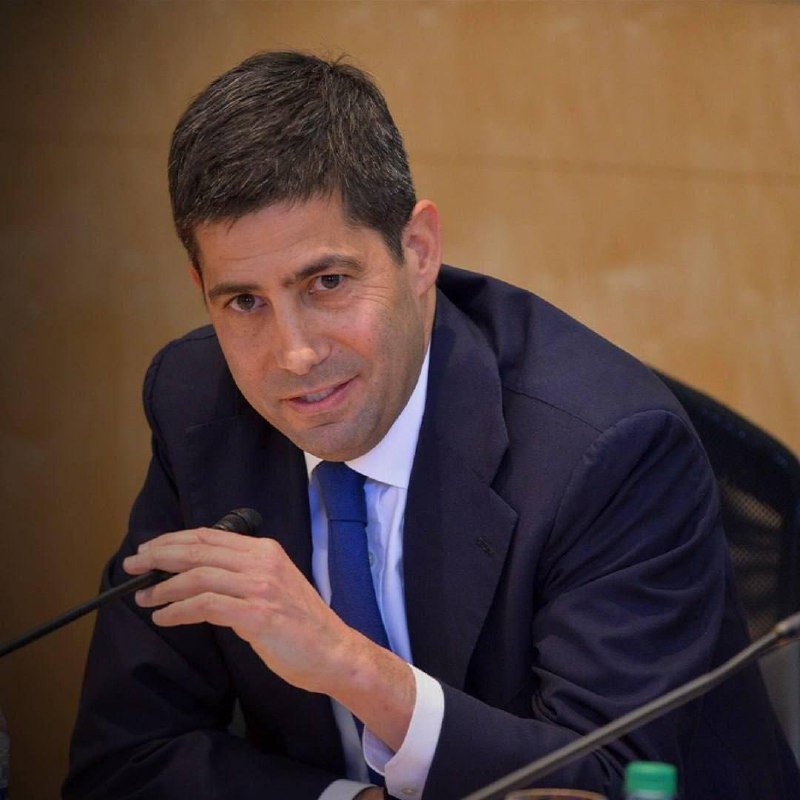
At 18:00 UTC on 17 June 2026, the Federal Reserve's Federal Open Markets Committee announced it would leave the federal funds target range unchanged, marking the fourth hold of the calendar year and the first rate decision under Chair Kevin Warsh. Roughly fifty-five minutes later, Warsh stepped to the podium and declined to give markets the timeline they had spent the day pricing in. "The Fed will meet again in six weeks," the Chair said, pointedly refusing to map the next cut onto the dot plot or the next inflation print. With that single sentence, the most-anticipated press conference of the new regime turned into an exercise in calibrated ambiguity.
The decision itself was no surprise. Crypto markets had implied it before the statement landed, with the Polymarket prediction market flagging the hold as effectively priced in. What mattered, instead, was what came after — the question of whether the first Warsh-led meeting would reset the easing narrative that the FOMC has been living with since the spring, or whether it would leave that narrative exactly where the previous chair left it.
The decision, in plain terms
The FOMC statement kept the policy rate where it has been for the past three meetings in 2026, a holding pattern that has now stretched across most of the year. Reporting from Cointelegraph and CoinDesk framed the announcement as a continuation of the status quo: the Committee sees no urgency to cut, and Warsh — confirmed as Chair earlier in the cycle and now presiding over his first decision — gave no signal that he intends to manufacture urgency either. Reuters confirmed the hold in a wire at 18:28 UTC, citing the standard post-meeting language.
The real content of the day was on the dot plot, the press conference, and the politics surrounding both. According to CryptoBriefing's coverage of the morning's run-up, Warsh faced an open rate-cut debate inside the building before he ever reached the lectern — a debate he declined to referee in public. By the time the press conference began, the question was not whether the Fed would move in June, but whether Warsh would clear the runway for a move later in the summer, in September at the latest. He did not.
What Warsh actually said — and what he refused to say
Warsh's press conference was notable for what it did not contain. There was no commitment to a particular path, no reassurance that a cut was imminent, no signal that the Committee had shifted toward an easing bias. The closest thing to a forward indicator was procedural: the next meeting is six weeks out, and the Chair intends to wait until then to make the next call.
For markets that had spent the morning building positions around the assumption that Warsh would inherit a dovish bias from his predecessor, the press conference was a reminder that the new Chair's priors are his own. The result, visible in early post-meeting trade, was a modest repricing in rate-sensitive assets and a sharp move in UNI — the Uniswap governance token — relative to the rest of the crypto market, which CoinDesk attributed to traders rotating out of rate-sensitive positions rather than any Uniswap-specific catalyst. In plain terms: the market was trading the press conference, not the statement.
The analytical read, and the one that most wire desks converged on, is that Warsh used his first meeting to establish independence from expectations set by his predecessor. A Chair who announces a cut trajectory on day one of his tenure loses negotiating leverage. A Chair who declines to give forward guidance, and instead points to the calendar, retains the optionality of moving in either direction based on the data that lands over the next six weeks.
The state context Illinois dropped in the same hour
The Fed's decision landed against a backdrop that crypto markets could not ignore. Roughly twenty minutes before the FOMC statement, Cointelegraph reported that Illinois had passed a 0.2% transaction tax on Bitcoin and other digital assets, set to take effect in 2027. Critics cited in the wire called it the most punitive digital-asset tax in the United States. The juxtaposition was sharp: with the federal government in a hands-off posture on crypto policy, the action is migrating to the states, where revenue imperatives and political symbolism more easily combine. Whether the Illinois levy survives legal challenge, and whether other states follow, is the structural question that will outlast today's FOMC.
The two stories belong together. The Fed's neutrality on rates leaves the cost-of-capital question to private markets and the calendar. Illinois's tax is a separate kind of cost — a direct friction on the digital-asset economy inside a state that has positioned itself, until now, as relatively friendly to crypto businesses. Taken together, they sketch the policy environment of the second half of 2026: the macro cost of capital is frozen, and the political cost of doing business in digital assets is being set jurisdiction by jurisdiction.
What remains unresolved
Three things are not yet knowable, and the wire coverage reflects that.
First, the composition of the dissent. The FOMC statement did not record an objection in the version cited by Cointelegraph, but a Chair who publicly declined to commit to a path is a Chair who may be managing internal disagreement. The vote, and any accompanying dissents, will be in the minutes released three weeks after the meeting. The shape of that record will tell the market far more than the statement did.
Second, the dot plot. Warsh's reluctance to provide forward guidance may be a posture, or it may reflect a Committee that has not yet converged. The June Summary of Economic Projections, distributed alongside the decision, will be parsed in detail. CryptoBriefing's morning note flagged the rate-cut debate as live; the projections will give that debate a numerical shape.
Third, the data path. The Fed does not move on the calendar alone. The next six weeks bring a fresh CPI print, a payrolls revision, and the early read on Q2 GDP. Each of those is a pivot point in the implicit policy framework the Chair set today, which is: meet, look at the data, meet again. It is a posture, not a forecast.
Stakes
The policy posture that Warsh set on 17 June 2026 is conservative in the literal sense: it preserves every option and commits to none. For borrowers, that means refinancing decisions priced on the assumption of a near-term cut are now operating without a backstop from the Chair. For risk assets, the press conference was a reminder that the new regime is willing to disappoint. For the digital-asset economy, the Illinois development runs on a parallel track but with the same effect: certainty is being replaced by case-by-case judgment, whether at the FOMC table or in a state legislature.
The argument the markets are now pricing is not whether the Fed will cut in 2026, but whether the Warsh Fed will need to be dragged to a cut by deteriorating data, or whether it will arrive there by choice. On the evidence of 17 June, the answer is: the Chair has not yet decided, and intends to keep it that way until he has to.
— Monexus desk note: Where wire desks led with the dot plot and the press conference, Monexus is framing the rate hold together with the Illinois crypto tax as twin signals of a policy environment that is moving from federal-level neutrality toward state-level friction. The structural question is who sets the cost of operating in digital assets when the central bank steps back.
Wire provenance
This editorial synthesis draws on the following public wire/social posts:
- https://t.me/s/cointelegraph
- https://t.me/s/cointelegraph
- https://x.com/Polymarket/status/
- https://x.com/Reuters/status/
- https://t.me/s/cointelegraph
- https://t.me/s/CryptoBriefing