Messi's hat-trick, Congo DR's first World Cup goal, and a record day at the expanded tournament
Day six of the expanded FIFA World Cup produced 16 goals, the highest attended day in the tournament's history, and two milestones — Messi's record-tying scoring feat and Congo DR's first-ever goal at a men's World Cup.
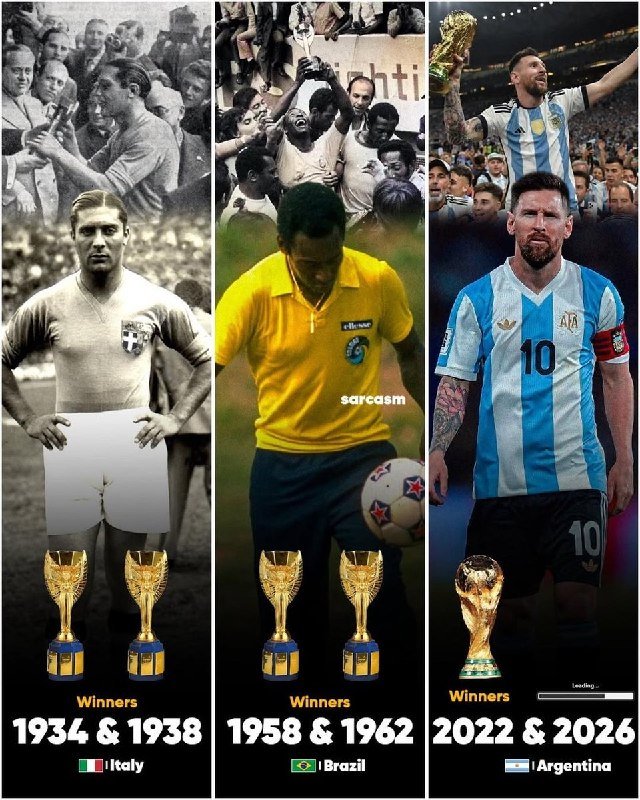
At 03:29 UTC on 17 June 2026, FIFA's official channels posted a four-line ledger of Lionel Messi's overnight accomplishment: joint-top scorer in FIFA World Cup history, a 200th Argentina appearance, a record-extending 27th FIFA World Cup appearance, and the first-ever FIFA World Cup hat-trick. Roughly fifteen hours later, the same channels carried a one-line milestone of a very different weight — a first-ever FIFA World Cup goal for Congo DR. The two announcements, sitting in the same broadcast window, capture what day six of the expanded 48-team tournament actually produced: both a coronation and a debut.
The headline belongs to Messi, but the day's structural story is the volume. FIFA confirmed at 12:38 UTC on 17 June that day six produced 16 goals across four matches — and, separately, at 09:21 UTC, that 16 June 2026 was the highest attended day in the history of the men's World Cup. An expanded format does not, on its own, generate new records at the rate this tournament is setting them. The 48-team field is doing the arithmetic; consumer appetite is doing the rest.
What actually happened on the pitch
Messi's hat-trick arrived in Argentina's fixture on 16 June — twenty years to the day after his World Cup debut goal, a symmetry FIFA's own social account underlined at 06:46 UTC. The post frames the achievement as a clean historical loop: 16 June 2006, debut goal; 16 June 2026, hat-trick. The third goal of the night took Messi level with the all-time World Cup scoring record, a mark the federation's 03:30 UTC post confirmed without naming the player he joined. Argentina's own federation and the club-and-tournament ecosystem will sort out the precise passing of the record in the days ahead; the federation posts treat it as done.
Congo DR's first men's World Cup goal, announced by FIFA at 18:12 UTC on 17 June, came against Portugal in the day's headline Group-stage fixture. Portugal were among the seeded favourites coming into the tournament; Congo DR were not. The goal's significance is not competitive — it is symbolic. Every team that has ever played at a men's World Cup remembers the moment it scored its first, and the federations that have waited decades for the chance to play one are now logging those moments at a rate the previous 32-team format never produced.
The expanded format, working as advertised
Day six's 16-goal haul is not an outlier so much as the format finding its natural cadence. Four matches, 16 goals, an average of four per game — that is the high-end of the historical distribution, but not implausibly so for a slate involving two of the pre-tournament favourites (Argentina, Portugal) and fixtures that FIFA's own previews at 07:55 UTC had framed as goal-rich: POR vs COD, ENG vs CRO, GHA vs PAN, UZB vs COL. The Central Asian debut of Uzbekistan against Colombia, in particular, was always likely to open up once Colombia's attacking structure got possession.
The attendance record matters more than the goal count, because it is the variable FIFA cannot manufacture. Four matches cannot produce the highest attended day in World Cup history without venues full to capacity. The 16 June figure implies that the host cities — distributed across the United States, Canada and Mexico under the tripartite hosting arrangement — are filling the expanded stadium inventory that the new format required. This publication treats that as evidence that the host federations' stadium programme is delivering, even where individual venue logistics have drawn criticism in the tournament's opening days.
What the records do not tell you
There are two open questions the day's milestones cannot answer. First, the precise identity of the player Messi joined at the top of the all-time list is conspicuously absent from FIFA's own posts — the federation prefers to treat the record as a moving institutional tally rather than a duel between individuals. That editorial choice is fine; it just means the milestone's full weight will be settled by outlets willing to name the second name. Second, the federation posts do not specify which of the four matches produced Congo DR's goal, or who scored it — a routine fact-pattern for a first goal, but one that downstream coverage will need to fill in from the match feed.
The honest framing is that the day's two milestones sit at opposite ends of the tournament's emotional register. One is a career-defining achievement by a player who first appeared at this stage of the competition two decades ago; the other is a debut marker for a national programme that has waited considerably longer than that for its first touch on this stage. The expanded format is designed to produce more of the second kind of moment without diluting the first, and day six is the clearest case yet that the design is working.
The Monexus staff desk framed the day's two milestones as a single narrative — career milestone and debut marker sharing the same news window — rather than running them as separate stories, which is how most wire desks have filed them.
Wire provenance
This editorial synthesis draws on the following public wire/social posts:
- https://t.me/FIFAcom
- https://t.me/FIFAcom
- https://t.me/FIFAcom
- https://t.me/FIFAcom
- https://t.me/FIFAcom
- https://t.me/FIFAcom
- https://t.me/FIFAcom
- https://t.me/TheAthletic