G7 Heads to the French Riviera With a War on Its Hands and a Deal in Its Pocket
Leaders of the world's largest economies gather in France this week carrying the cost of a 30% oil-price spike and a US-Iran deal their closest Middle Eastern ally has not been shown.
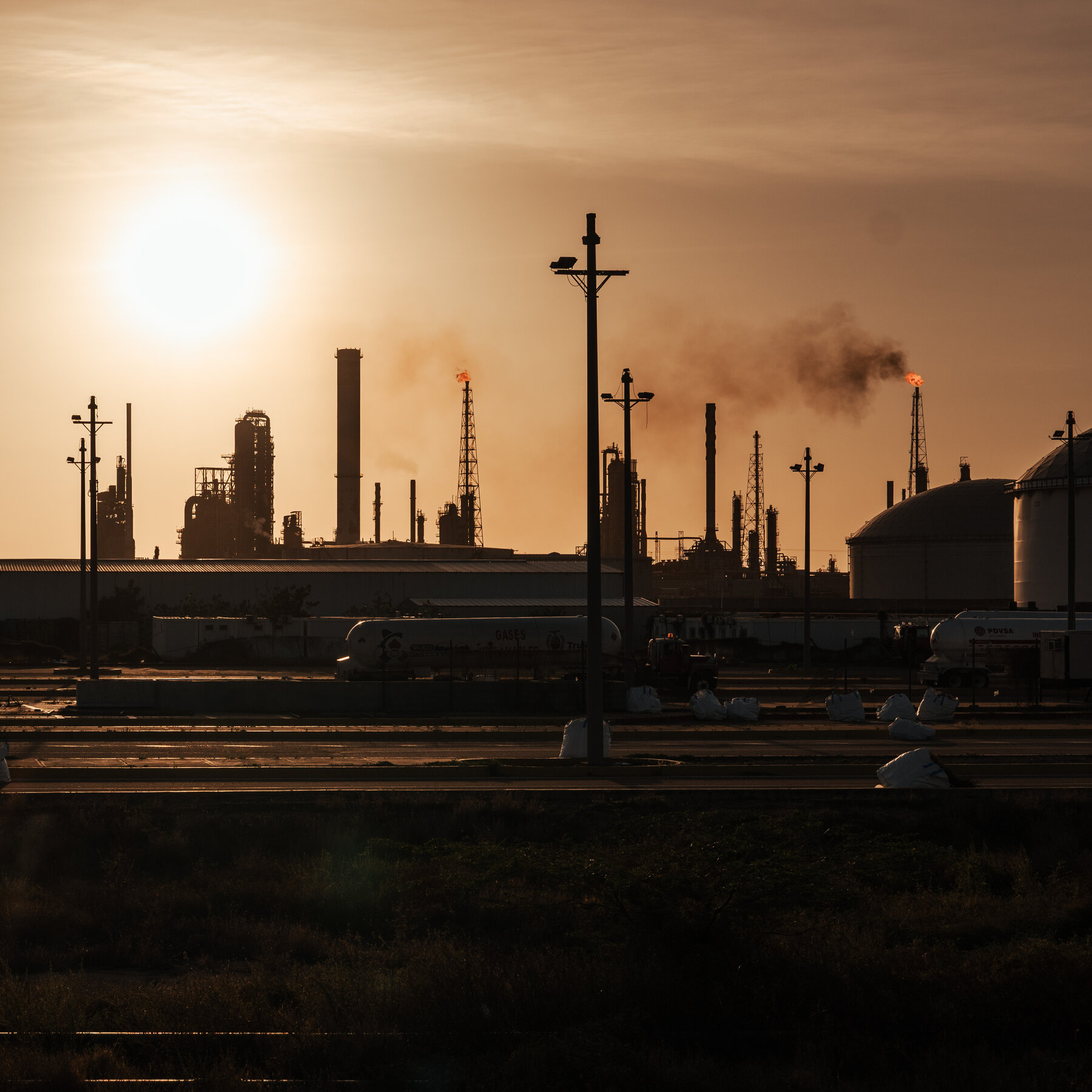
At 06:00 UTC on 17 June 2026, Reuters reported that the leaders of the world's largest economies are gathering in France this week to confront a slowdown that they will struggle to name in public. Inflation is climbing and oil prices have risen roughly 30%, yet the communiqué drafted behind the closed doors of the French summit will not, in all likelihood, attribute the damage to the country whose decisions have done the most to cause it. The structural fact — that a war initiated and prosecuted under President Donald Trump's leadership has become the single most important drag on the G7's near-term growth — is now common knowledge among finance ministries and is acknowledged in private by officials. What is also true, and what the G7 will be equally reluctant to say out loud, is that a deal which would end that war is reportedly being kept from the closest Middle Eastern ally of every G7 member present.
This is a long read about how a war became a growth problem, why the political class in charge of the response cannot bring itself to describe the problem accurately, and what is being traded away in the silence.
The economic backdrop: a 30% oil shock that no one asked for
The macroeconomic picture is, on the numbers, unambiguous. Reuters reported at 06:00 UTC on 17 June 2026 that rising inflation and a roughly 30% jump in oil prices are dampening global growth at the very moment the G7 is convening in France. Reuters reported at 05:15 UTC the same morning, under the headline "Trump's Iran war weighs on G7 economies, but don't expect hard talk in France," that the same forces — inflation, energy, the war — are now the dominant variable in the growth outlook for the world's richest economies. The framing in the Reuters dispatch is unusually direct for a wire piece written on the eve of a summit: the war is the cause; the silence is the strategy.
A 30% move in crude is not a market wobble. It is the kind of move that, in a single quarter, re-prices consumer credit, transport contracts, food input costs and the inflation expectations that anchor wage settlements across the OECD. The G7's own forecasts have not yet fully absorbed the shock — they were drafted before the latest escalation — but the direction of travel is clear. The countries with the highest energy-import intensity (Japan, Italy, Germany, France in that rough order) are the ones whose finance ministers will be angriest in the margins of the summit and the most circumspect in the plenary sessions.
The diplomatic backdrop: a deal Israel has not been shown
The economic story and the diplomatic story are the same story, viewed from two ends. On 16 June 2026 at 17:39 UTC, the X account @unusual_whales reported, citing the New York Post, that the Trump administration rejected Israel's request to see the text of the Iran deal. On 16 June 2026 at 16:57 UTC, the same account logged that Trump had warned that "all hell will break lose" if Iran tried to acquire a nuclear weapon again. The wording was tidied up the next morning by Polymarket's news desk at 13:55 UTC on 16 June 2026, which reported the line as "all hell will rain down." Either way, the message is consistent: Washington is preparing an arrangement with Tehran, and the Israeli government has been told to wait outside.
That is not a normal state of affairs between the United States and its closest Middle Eastern partner. In every previous nuclear negotiation with Iran, from the early Obama-era back-channel work through the Joint Comprehensive Plan of Action in 2015 to the Trump administration's 2018 withdrawal, Israeli intelligence and the prime minister's office have been read into the text in close to real time. The reported refusal to share the draft is, on its face, an indicator that something has been conceded to Tehran that Israel would be expected to oppose — the most plausible candidate being constraints on the United States' freedom to act militarily if Iran resumes enrichment or weaponisation work.
The structural frame: a hegemon that cannot absorb its own bill
What is on display in the French Riviera this week is the gap between the United States' capacity to wage war and its capacity to pay for the consequences. The war itself has, by every available indicator, been short and militarily decisive. The bill for it has not been. The 30% oil-price move is, in effect, the global economy's invoice for the operation, and the invoice has been sent to importers — not to the country that wrote the order.
This is the pattern that recurs when a hegemon uses force as the first instrument of policy rather than the last. The political payoff — a forced negotiation, a deal, a televised signature — accrues to the principal. The economic cost — fuel, food, freight, credit — accrues to the alliance. The alliance, in this case, is the G7, and the alliance is being asked to absorb the cost while publicly disclaiming any view on the cause. That posture is sustainable for a quarter or two. It is not sustainable for the duration of a multi-year deal.
Two further points follow. First, the G7's silence is itself a signal to the negotiating parties. By declining to criticise the war publicly, the assembled ministers give Washington the diplomatic space to close the deal on terms it prefers. By declining to endorse the deal publicly, they preserve the option to distance themselves if the terms leak and prove controversial. Second, the silence makes the deal more fragile, not less. A deal concluded without allied buy-in is a deal that has no coalition behind it for the implementation phase, and Iran has historical form for testing precisely that phase.
What the counter-narrative looks like
A second reading of the same facts deserves airtime. The Trump administration's case — made on the record and through the Polymarket-archived "all hell" line — is that the previous decade of incrementalism produced a closer-to-breakout Iran without imposing any cost on the United States' allies. From this vantage, the war and the deal are two halves of a single strategy: a short, sharp use of force to clear the negotiating table, followed by an arrangement that locks in the constraint the previous framework failed to lock in. The economic costs are real but, on this reading, are the price of deterrence; the diplomatic costs are real but are preferable to the alternative — an Iran that has crossed the threshold.
This publication finds the counter-narrative partly persuasive and ultimately insufficient. It is persuasive on the diagnosis: the previous framework did fail, and the cost of incrementalism in the nuclear domain is asymmetric. It is insufficient on the prescription: a deal that the closest Middle Eastern ally has not been allowed to see is a deal whose verification architecture will be weak, and a verification architecture that is weak is exactly the kind that failed before. The 30% oil-price move is the visible cost; the invisible cost — a deal that does not hold — will be paid later.
Stakes and what to watch
For the G7 finance ministers arriving in France, the immediate stakes are domestic and legible: pump prices, headline inflation, central-bank credibility. For the G7 leaders, the longer stakes are geopolitical and harder to measure: the credibility of the American alliance guarantee, the willingness of partners to absorb costs incurred by decisions they did not make, and the question of whether the deal Washington is reportedly closing with Tehran will hold without the cover of allied endorsement.
Three dates deserve to be marked. The summit itself, opening this week in France, will produce a communiqué that, on past form, will mention energy and inflation in the abstract and will not name the war. The deal text, when it is eventually released, will be parsed for what was conceded on enrichment, on missile range, on sanctions sequencing — and for what was not put on the table at all. And the first verification report, whenever it comes, will be the first real test of whether the framework the Trump administration has bought is the framework it can keep.
What the sources do not tell us
A serious note on what remains uncertain. The thread material on which this piece draws does not specify the G7 host city, the exact composition of the negotiating teams in Geneva or Vienna or wherever the Iran talks are now being held, the precise figure of the oil-price move beyond "roughly 30%," or the text of any provision of the deal. The reported refusal to share the deal text with Israel is sourced to the New York Post via an X account; the original New York Post story is not in the thread material and would need to be obtained before this paragraph could be tightened further. The "all hell" line exists in two slightly different wordings across two dated X posts; that is itself an indicator of how the quote is propagating through the information environment, and a useful one. Where the sources are thin, this piece has said so rather than papering over.
The broader point is one the G7 itself appears to be arriving at. A war of choice, paid for in oil and inflation by countries that did not choose it, and concluded in a deal those countries have not been asked to ratify, is not a stable equilibrium. It is a transaction that has yet to settle. The ministers gathering in France this week are, in effect, deciding whether to let the transaction settle on their balance sheets — or whether, finally, to say out loud what they already know.
This piece was framed by Monexus against the Reuters dispatch on the G7's economic backdrop and the New York Post-cited line on the Israel request, rather than as a straight wire rewrite. The two X-reported utterances of Trump's "all hell" warning are treated as the same statement, with the wording discrepancy noted rather than resolved.
Wire provenance
This editorial synthesis draws on the following public wire/social posts:
- http://reut.rs/4xx8x1l
- http://reut.rs/4xx8x1l
- https://t.me/unusual_whales
- https://t.me/unusual_whales
- https://t.me/polymarket
Follow the event.
These dated source records provide context. They do not retrospectively verify this archive article.
Separate what the nuclear watchdog reported from what it could not determine after the June 2025 strikes.