Galibaf's $300 billion victory lap and the limits of Iranian triumphalism
Tehran's parliament speaker is calling the new US-Iran memorandum 'the record of America's defeat.' The document itself tells a more complicated story.
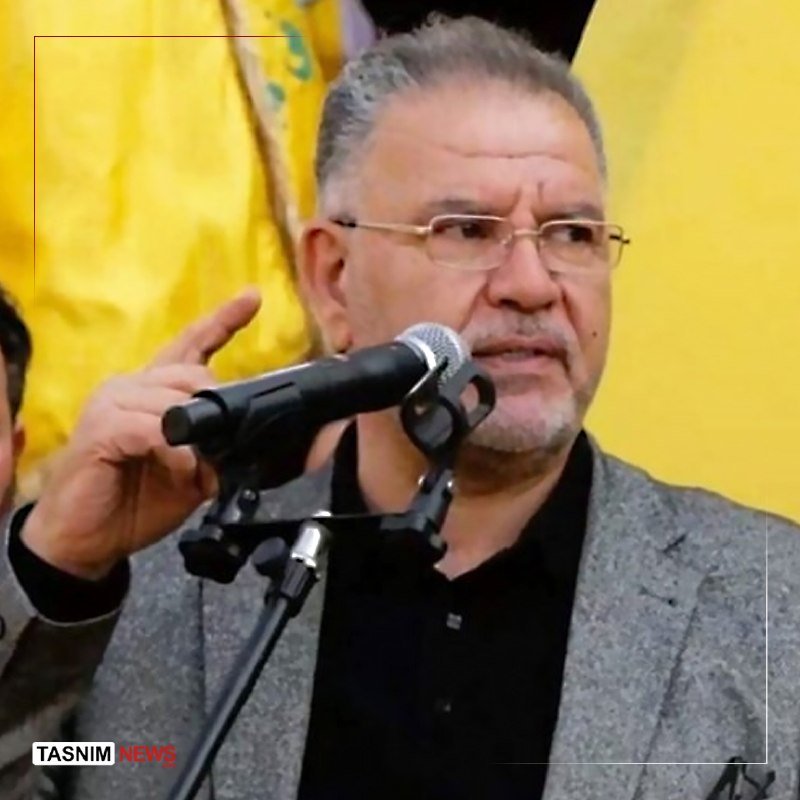
On the evening of 17 June 2026, Iran's state-aligned outlets pushed the same line in unison. Mohammad Bagher Galibaf, speaker of the Islamic Consultative Assembly, appeared on television to declare that a freshly signed memorandum of understanding with the United States amounts to "the record of America's defeat" and that the United Nations "did not issue even a single statement declaring that America is the aggressor party." Within minutes, Tasnim, Fars, Mehr and the Arabic-language Al-Alam feed were running variations of the same quotes, framed as Urgent. Theatrical, certainly. Coordinated, certainly. But the text the speaker was actually describing is a $300 billion reconstruction and development arrangement — paragraph six, by Galibaf's own count — that, on the face of it, looks more like a re-entry package for a sanctions-battered economy than a surrender document for Washington.
Iran's leadership is selling a diplomatic win. The terms deserve a closer read.
What Galibaf actually said
In a televised interview on 17 June, the speaker walked through the memorandum clause by clause. The headline number — $300 billion, allocated in paragraph six for economic reconstruction and development in Iran — was first reported by Tasnim News and then amplified by Mehr News, Fars, and Al-Alam between 19:54 and 21:04 UTC. Galibaf framed the document as a written record of American capitulation: the clause, he argued, commits Washington to a reconstruction programme for a country it has spent two decades economically isolating.
The speaker also sharpened the political argument. "The most important guarantee for us," he said, "is the strength of Iran and the harmony of the people, not the Security Council resolution." The line is a deliberate signal to two audiences. To hardliners at home, it says Tehran does not need Western validation. To a Washington audience already sceptical of the deal, it says Iran will not be bound by what its critics call Security Council theatre. Galibaf added that "after the signing of the memorandum, the flag will be in the field to serve the people" — a phrase Iranian outlets consistently use to mark the end of a negotiation cycle and the start of an implementation phase.
The rhetoric is the easiest part of the deal to verify. The numbers are not.
The $300 billion question
Galibaf did not explain how the figure was calculated, over what horizon, or from which funding mechanism. A $300 billion reconstruction envelope for Iran is large — comparable in scale to the post-2003 Iraq reconstruction effort, and larger than the cumulative World Bank lending to Iran over the past decade. If the money is to come from unfrozen Iranian assets, oil revenue escrows, or direct US or Gulf-state contributions, the architecture matters more than the headline.
Iranian state media has so far declined to publish the text of the memorandum, and the Farsi-language coverage stops short of identifying counterparties beyond the United States. Galibaf said in the same interview that "Iran's blocked money should be placed in our accounts," which suggests at least a portion of the envelope consists of released central-bank reserves rather than fresh transfers. That distinction is the difference between a restitution and a gift, and it changes the political economy of the deal in Tehran. Hardliners can call unfrozen funds a victory without admitting dependence; reformists can argue that a decade of sanctions cost the country far more than the recovered principal.
Until the document is public, the $300 billion figure should be read as a political number, not a fiscal one.
Counter-read: what the Western framing will look like
The Western wire line on this deal, when it arrives, will not use the word "defeat." Expect a different set of frames: containment preserved, nuclear file ringfenced, reconstruction tied to verification, regional de-escalation rewarded with sanctions relief. That framing has a structural advantage in Western capitals because it aligns with a long-standing bipartisan view that engagement with Tehran must be transactional and reversible.
But the Western framing has its own weakness. If the memorandum really does allocate $300 billion to Iranian reconstruction, the standard Washington line — that engagement buys leverage, not legitimacy — is harder to sustain. Money moving in one direction is leverage in the other. Tehran will argue, with some justice, that you cannot simultaneously claim to have constrained an adversary and to have bankrolled its recovery.
Galibaf's televised line about the UN — that no Security Council statement named the United States as the aggressor — is, in this read, a preemptive strike against the Western frame. It is meant to deny Washington the moral high ground before the Western press cycle has even begun.
The structural pattern
What is unfolding fits a familiar shape. A regional power locked out of dollar-clearing and Western capital markets for years, negotiating from a position of economic weakness, manages to convert that weakness into a paper commitment of large-scale capital flows. The commitment is announced at the top of the Iranian system (parliament's speaker, not the foreign ministry), wrapped in nationalist language, and routed through a memorandum of understanding rather than a treaty — the legal form that lets both sides claim victory and walk back detail later.
That is not the same as defeat for Washington. But it is not the same as a win, either. It is the kind of outcome that satisfies the photograph without resolving the underlying disagreement: what role Iran plays in the regional security architecture, what its missile and proxy posture will be, and whether the unfrozen money will fund reconstruction or rotate into the security services that Iran has spent forty years building.
The serious question is not whether Galibaf gets his victory lap. He will. The serious question is what is in paragraph six, who audits the spending, and what happens to the deal the first time an Iranian proxy opens a front that Washington has explicitly demanded be closed. Until those answers are on the public record, the speaker's framing is doing the work that the text cannot yet do.
— Monexus framed this as a story about the gap between Iranian political theatre and the still-unpublished substance of the memorandum. Western wires will lead on the dollar amount; the harder question — what Iran does with the money — is not yet answerable from the public record.
Wire provenance
This editorial synthesis draws on the following public wire/social posts:
- https://t.me/tasnimnews_en
- https://t.me/mehrnews
- https://t.me/farsna
- https://t.me/alalamarabic