In Gatchina, the dead keep surfacing: Russia searches for its own wartime missing
A volunteer search team in the Leningrad region reburies wartime remains discovered in a park named for a Finnish-born baroness — a small ceremony that exposes the scale of Russia’s still-unfinished accounting with its own dead.
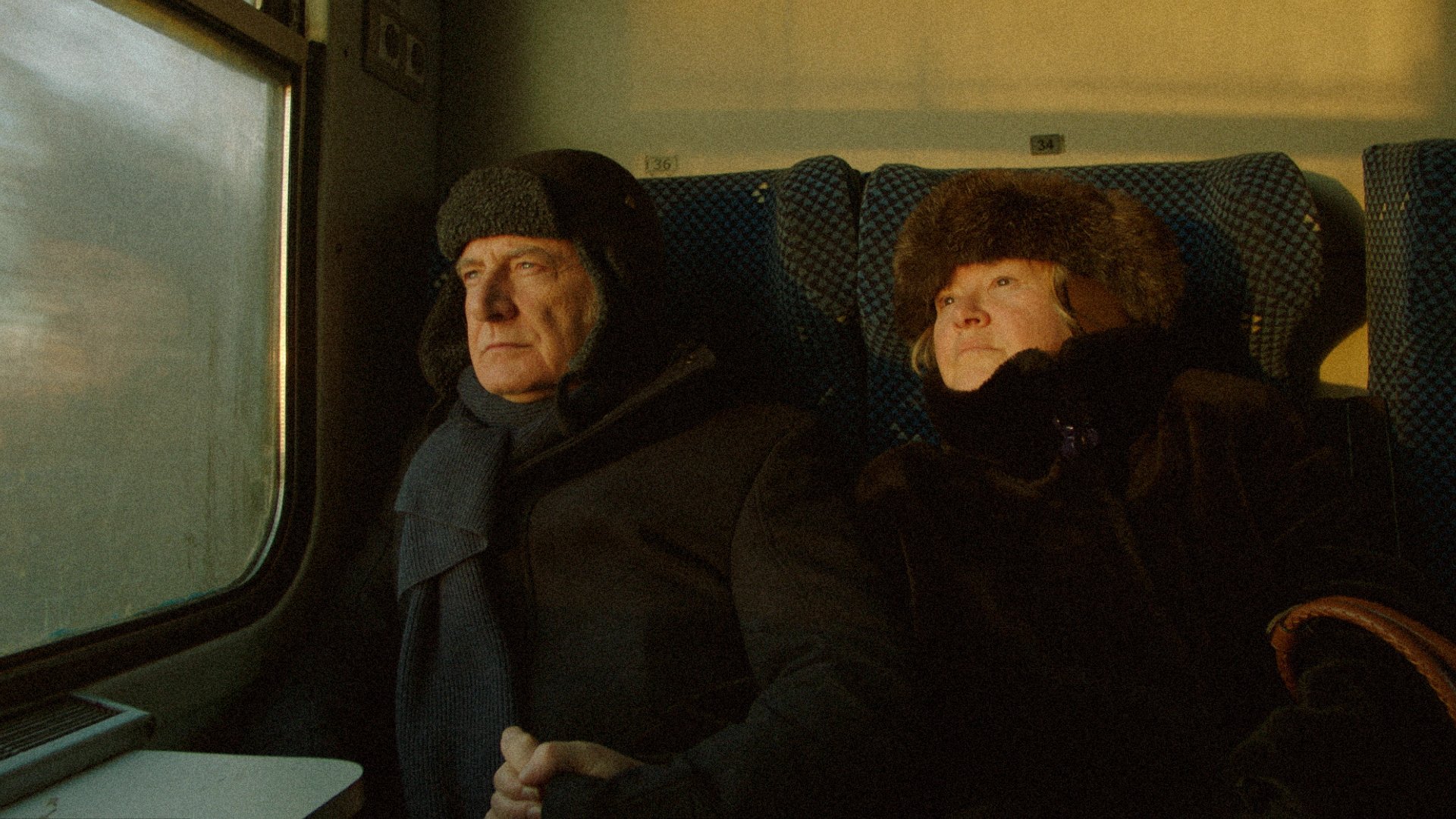
On 17 June 2026, in the city of Gatchina, about 50 kilometres south of Saint Petersburg, a small cohort of volunteers and local officials gathered for a burial that Russia has been quietly holding for eighty years. The remains interred that day had been recovered by the volunteer search team Iskra from the Sylvia park estate, a protected landscape on the edge of town named for a Finnish-born baroness whose name the park still carries. The Telegram channel Two Majors posted a short report on the ceremony at 14:42 UTC, describing it as the reburial of "the victims of the fascist troops." The channel did not specify how many individuals were recovered, nor the conditions in which they died.
The ceremony is a single data point in a much longer, and much larger, civilian project: the post-Soviet hunt for the dead of the Second World War, conducted not by state institutions but by independent search teams operating with metal detectors, shovels, and access to a deep body of wartime records that the official bureaucracy has never quite finished cataloguing. Gatchina, occupied by German forces from 1941 to 1944, is exactly the kind of terrain those teams work. The Sylvia park — the imperial estate of Grand Duke Konstantin Nikolayevich, later renamed for a Baltic German noblewoman — is layered ground: eighteenth-century landscaping, nineteenth-century military use, and a twentieth-century occupation whose civilian toll is still being measured by the handful.
What the search teams actually do
Russian volunteer search — poiskovoye dvizheniye — is a quietly professionalised civic activity. Teams like Iskra, named for the Leningrad partisan signal codename, work to a written protocol. They obtain permission from landowners and the relevant municipal authority, they record GPS coordinates for every find, they bag remains separately from personal effects, and they pass the latter to a central archive. The eventual reburial is the closing of the ledger: a small Orthodox service in the presence of local officials, often veterans' organisations, and the families of the missing where any can be located.
Two Majors' framing of the dead as "victims of the fascist troops" is the standard Russian register, and it is not without evidentiary basis: the German occupation of Gatchina was marked by executions of civilians and partisans and by the use of forced labour. But the channel is also a Russian-aligned military Telegram outlet covering the present-day war in Ukraine, and its use of that framing is a deliberate choice of emphasis. A Western wire service covering the same reburial would be likelier to call the dead "civilians and partisans killed during the Nazi occupation of the Leningrad region" — a more neutral formulation that lands at the same historical claim without the wartime vocabulary. The two readings are not in factual dispute; they are in tonal dispute about how to load the past for the present.
The numbers are staggering, and the work is unfinished
The scale of what remains to be found is hard to grasp. Soviet and post-Soviet search organisations have recovered and reburied the remains of well over a million Soviet soldiers and civilians since 1989, according to figures the Russian Ministry of Defence and veteran organisations have published on and off over the years — but the exact total depends on the source, and the Ministry's own updates have been sporadic. Independent teams, working in parallel with the central Military Historical Search effort in Moscow, continue to add to it. A single summer season in the Leningrad region can yield several hundred individual recoveries; the Sylvia park find is one line in that ledger.
The point is not the headline number. The point is what the work tells us about a country that has, in its official rhetoric, been at war with the West continuously since 2022 and yet is still digging up the dead of a war that ended eighty-one years ago. Russia spends an enormous amount of state energy on the symbolic politics of the Second World War — Victory Day parades, the "we can repeat" slogan adopted in 2014, the criminalisation of "rehabilitation of Nazism" under Article 354.1 of the Criminal Code. The volunteer search teams, by contrast, are doing something the state cannot quite do for itself: a meticulous, unglamorous accounting, one bone at a time, in a country where the bureaucracy of memory has long preferred grand narrative to ground truth.
A counter-narrative the search teams do not fit
It is worth saying plainly what the search teams are not. They are not a state instrument. Their ceremonies are not broadcasts, and the dead they bury are not, in the main, Soviet soldiers whose names can be read against the Wall of the Unknown Soldier in Moscow. Most of the remains recovered in parks like Sylvia are civilians, forced labourers, partisan casualties, and small groups of Red Army soldiers cut off during the German retreat. A meaningful share cannot be identified at all, and are buried as unknown.
This complicates the standard Russian official line, in which the war is read forward — as a permanent reference frame for present-day confrontation with the West — rather than backward, as a finite historical event whose specific victims deserve a specific accounting. The Iskra team and its counterparts across the Leningrad, Novgorod, and Pskov regions are doing the harder work. They are, in effect, treating the war as an empirical object rather than a usable myth. That distinction matters: a country willing to dig for its own civilian dead is, however imperfectly, doing a different kind of memorial labour than a country that stages the war as state liturgy.
Stakes: what this small ceremony, and others like it, are quietly doing
The reburial in Gatchina on 17 June 2026 will not move markets, will not produce a headline in English-language wire copy, and will not register in the metrics of the present war. It is, by any conventional measure, a minor event. The reason it is worth pausing on is that it represents a strand of Russian civic life that is largely invisible from outside: independent, technically serious, and politically uncomfortable for a state that prefers its war dead to be Soviet soldiers and its rhetoric to be about the future rather than the past.
The plausible alternative read is more cynical: that the state is happy to tolerate — even quietly encourage — the search teams precisely because their work feeds a usable patriotic narrative about "fascist crimes," and that the underlying project of historical accounting is, in practice, subordinated to that narrative. The framing in Two Majors' post is consistent with that read. The available evidence does not let this publication choose between the two interpretations with certainty. What can be said is that the work itself is real, the remains are real, and the absence of the state from the ceremony's foreground is, for a small moment, the story.
This piece drew on a single Russian-aligned Telegram post for its base report. Where the source did not specify details — the number of individuals recovered, the precise historical context of the Sylvia park finds, the institutional identity of the team — this publication has said so rather than fill the gaps from elsewhere. The sources do not specify whether the reburial received official municipal coverage beyond the channel's own report.
Wire provenance
This editorial synthesis draws on the following public wire/social posts:
- https://t.me/two_majors/