Ghalibaf's Reluctant Return: Iran's Parliament Speaker Frames Himself as the Man Who Almost Said No
Mohammad Bagher Ghalibaf tells a closed parliamentary session he joined the negotiating team only after being persuaded, signalling Tehran wants a public record of friction before any deal is signed.
On the evening of 17 June 2026, Mohammad Bagher Ghalibaf, the Speaker of Iran's Islamic Consultative Assembly, used a closed-door address to his fellow MPs to do something unusual in Iranian elite politics: complain, on the record, about being asked to do his job. Three separate wire channels — Tasnim, Fars and Mehr — released excerpts of the speech within minutes of one another, all timed before 20:10 UTC. The synchronised release matters. In Tehran's information environment, three outlets pushing the same quotes at the same hour is a signal that the Supreme National Security Council wanted the message out, not that it leaked.
Ghalibaf's core claim is twofold. First, that he joined the nuclear negotiating team reluctantly, after being pressed into service. Second, that sitting across the table from the person he says "designed and led the assassination of Haj Qasim" — a reference to the January 2020 killing of Quds Force commander Qassem Soleimani in a US drone strike near Baghdad — is a burden no Iranian politician would volunteer for. The phrasing is performative. It tells the clerical establishment and the street at once: I am here because the system needs me, not because I wanted to be.
Why the timing matters
The speech lands in the narrow window between two events that Tehran's political class has been quietly preparing for. One is the next round of indirect US-Iran talks mediated by Oman and Qatar, expected to resume later this month after the June pause. The other is the domestic fight over what any eventual deal will look like — how much enrichment capacity Iran retains, how the IAEA gets access to sites bombed in October, and which sanctions architecture gets unwound first.
Ghalibaf's reluctance framing is, in effect, pre-emptive insurance. If a deal is signed and a future Iranian parliament decides to punish those who negotiated it, the Speaker can point to remarks already in the public record and say he was dragged in. If a deal collapses, he can claim he never believed in the exercise. Either outcome preserves his standing inside a system that routinely discards its own negotiators once a settlement is reached.
The European footnote in the Fars excerpt sharpens the picture. Ghalibaf told MPs that "during the war, the representatives of several European countries came to Iran to plead with us," noting that the same governments that had earlier listed the Islamic Revolutionary Guard Corps as a terrorist organisation were now asking Tehran for restraint. The remark is not self-pity; it is a rebuke. It tells the European foreign-policy establishment, in language calibrated for translation, that Iran remembers who put it on lists and who later came back asking for de-escalation. In a negotiation, that asymmetry is leverage.
What the framing buys Tehran
Three things, all of them useful before talks resume.
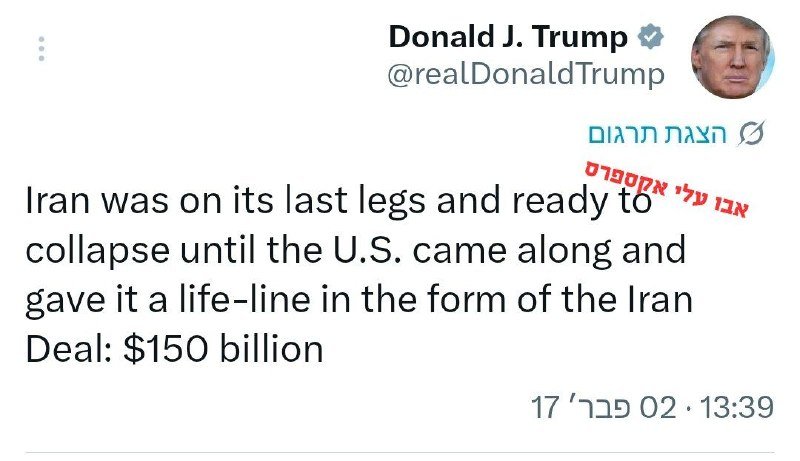
The first is domestic legitimacy. The Iranian street does not trust nuclear diplomacy; the 2015 deal is widely blamed inside Iran for the subsequent reimposition of sanctions under a different American administration. By depicting the negotiator as a reluctant conscript, the establishment turns potential backlash into a story of national sacrifice: our Speaker sat down with the people who killed Soleimani because the country needed him to.
The second is factional positioning. Ghalibaf is a former IRGC Air Force commander and a former mayor of Tehran. He has spent the better part of two decades positioning himself as the pragmatic-conservative option above the principlist faction around the Raisi-era judiciary and below the stealthy Khamenei inner circle. The reluctance narrative lets him occupy the space the regime most needs filled: a negotiator who is neither a cleric nor an active-duty military commander, and who therefore cannot be written off as either a true believer or a uniformed officer bargaining away security on someone else's orders.
The third is signalling to Washington. The line about the "designer and leader of the assassination of Haj Qasim" is not casual. It pins responsibility on a named individual in the previous US administration — code that an Iranian audience reads as Donald Trump — while leaving the current administration room to negotiate without being asked to apologise. Iranian diplomacy is practised in this register: insults to the predecessor are the precondition for engagement with the successor.
What it does not change
The speech is rhetoric, not policy. Nothing in the excerpts suggests Tehran has moved on enrichment levels, missile constraints or the fate of the three Iranian nuclear scientists whose whereabouts Western agencies have flagged. The Islamic Republic's red lines on a permanent zero-enrichment demand are not softened by Ghalibaf's performative grievance; they are, if anything, hardened by the implicit message that any deal will be sold at home as extracted under duress.
There is also the unresolved question of who Ghalibaf was talking about when he referred to "the designer and leader of the assassination." The excerpts use the singular — one individual — but the public record of the Soleimani strike involves a chain of decisions, not a single author. The phrasing leaves Tehran with plausible deniability: it could be read in Washington as a slur against a former president, or as an institutional accusation against the American security apparatus. Tehran will accept whichever reading does more diplomatic work.
Stakes
If a deal materialises in the second half of 2026, Ghalibaf's remarks will look, in hindsight, like the carefully staged preamble to a political career-defining agreement. If it does not, the same remarks become evidence that Iran's negotiating team went into the room already convinced it would walk out. The Speaker has built himself a posture that survives either outcome. The question is whether the Iranian negotiating position itself has been built to the same standard — or whether, like the 2015 episode, it will leave a successor government holding the bill.
What remains uncertain, even after three coordinated wire releases, is whether the reluctance narrative reflects genuine internal resistance on the Supreme National Security Council or whether it is a managed performance for a domestic audience. The sources do not specify which ministers or council members opposed Ghalibaf's appointment, what the dissent looked like, or whether the European "pleas" referenced in the Fars excerpt concerned the October strikes, the Strait of Hormuz transit traffic, or both. Those gaps matter. A negotiator who can claim reluctance publicly is one who has been given permission to claim it — and permission, in Tehran, is allocated from a very small room.
Desk note: Monexus led on Ghalibaf's framing rather than on any reported breakthrough, because three synchronised Iranian wire releases of the same quotes within minutes is itself the news — a domestic-audience signal first and a diplomatic message second.
Wire provenance
This editorial synthesis draws on the following public wire/social posts:
- https://t.me/mehrnews/
- https://t.me/farsna/
- https://t.me/tasnimnews_en/
Follow the event.
These dated source records provide context. They do not retrospectively verify this archive article.
Separate what the nuclear watchdog reported from what it could not determine after the June 2025 strikes.