Hardliners on the outside: what an Iran-US deal would actually shift
A US-Iran memorandum is days from signature, Trump is selling it as a nuclear win, and the Islamic Republic's own maximalists are already warning that they are being written out of the deal.
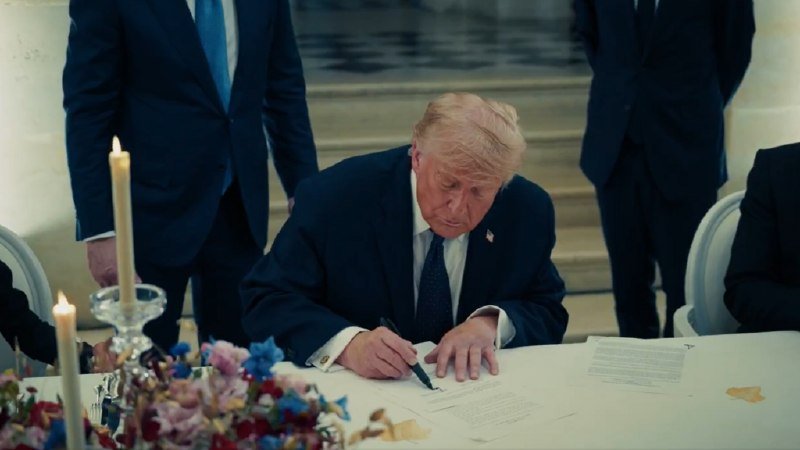
On 17 June 2026, the US and the Islamic Republic of Iran moved from posture to paperwork. A memorandum of understanding, framed by the Trump administration as the framework for ending the war and capping Tehran's nuclear file, is now within days of formal signature. Iranian state-aligned coverage of Trump's own remarks — that "they will never have a nuclear weapon," and that the United States "is not investing ten cents" into a $300 billion fund sometimes alleged in regional chatter — has been carried into the conversation by the same channels that two months ago were broadcasting the opposite thesis. The headline is no longer whether the two sides are talking. The headline is what gets locked in, and who inside Iran gets locked out.
This publication's read is straightforward: the deal, if signed, is a transfer of political authority inside the Islamic Republic as much as a transfer of nuclear capability. The same hand that signs the memorandum is the one that decides who keeps a job, a seat on the Supreme National Security Council, a slot on state television, and a margin to operate. Hardliners spent four decades selling defiance as the rent they paid for relevance. A signed deal makes that rent worthless.
The deal, in the words of the principals
Trump, speaking on 17 June, cast the prospective agreement in transactional terms: a great deal because, "by far, number one," it forecloses an Iranian nuclear weapon. The denial of the $300 billion fund was equally pointed — "we are not investing ten cents" — and aimed at a domestic American audience that has been primed, across two administrations, to expect that any nuclear settlement is also a cash transfer. The framing matters: the US side wants the public story to be a concession extracted, not a concession paid for. Coverage of Trump's remarks in Telegram-distributed wire clips, including those carried by BellumActa News, has emphasised the nuclear-cessation line and treated the cash question as a closed file. That is a tell. Where the principals are loudest is usually where the leaked draft is fuzziest.
The hardliners' complaint, plainly stated
Deutsche Welle's 17 June reporting makes the internal Iranian dynamic explicit. Hardline supporters of the Islamic Republic, the ones who built careers on a maximalist posture toward Washington, are warning in their own outlets that a signed memorandum sidelines them. The shift is from defiance to diplomacy, and the personnel costs of that shift are the actual fight. This is not, despite the Western press's habit, a factional colour story. It is the operating question of who runs Iran's security state for the next decade. The IRGC's external-operations portfolio, the nuclear negotiating team, the intelligence ministry, the state broadcasting apparatus — each of these is staffed by people whose professional identity is built around the proposition that the United States is an enemy to be managed, not a counterpart to be dealt with. A signed deal invalidates the résumé.
Why the framing outside Iran is missing the point
Western wire coverage of the prospective deal has defaulted to a familiar script: enrichment percentage, IAEA access, sunset clauses, the sanctions architecture. These are real questions and they will be negotiated in the technical annexes. But the political-economy question is upstream of all of them. A deal that hands the Iranian foreign-policy establishment a victory on the nuclear file while hollowing out the hardline cadre that has opposed any such deal since 2003 is, in the language of the Iranian street, a soft coup. The same sanctions relief that US negotiators will present as leverage-extracted is, in Tehran, a patronage reallocation. The Reuters-and-Bloomberg reader sees a non-proliferation win. The Iranian political reader sees a reorganisation of the security state.
What is genuinely uncertain
Three things are still loose, and the sources do not let a careful reader close them. First, the legal status of the memorandum itself: a memorandum of understanding is not a treaty, and the text circulating in regional coverage is not yet the signed text. Second, the hardliner response is described in commentary, not yet in action — no source item in circulation names a specific faction, institution, or named official who has publicly broken with the negotiating team. Third, the nuclear-substance question, enrichment to what percentage, under what verification, for how long, remains in the technical annexes that have not been published. Any of these can break the deal. None of them, on present evidence, has yet.
The structural pattern is older than this deal. Sanctions regimes do not just change state behaviour; they reshape the coalitions inside the targeted state, rewarding the actors who can deliver relief and punishing the ones who cannot. A signed memorandum, if it lands, will be read in Vienna and Brussels as a non-proliferation file closing. In Tehran, it will be read as a promotion list — and a corresponding dismissal slip for the cohort that built its politics around the proposition that no such list would ever exist.
Desk note: the wire has framed this as a nuclear story with a foreign-policy backdrop. Monexus is reading it as a political-economy story with a nuclear backdrop. Both can be true; only one tells the reader who actually wins and who actually loses when the ink dries.
Wire provenance
This editorial synthesis draws on the following public wire/social posts:
- https://t.me/BellumActaNews
- https://t.me/BellumActaNews
Follow the event.
These dated source records provide context. They do not retrospectively verify this archive article.
Separate what the nuclear watchdog reported from what it could not determine after the June 2025 strikes.