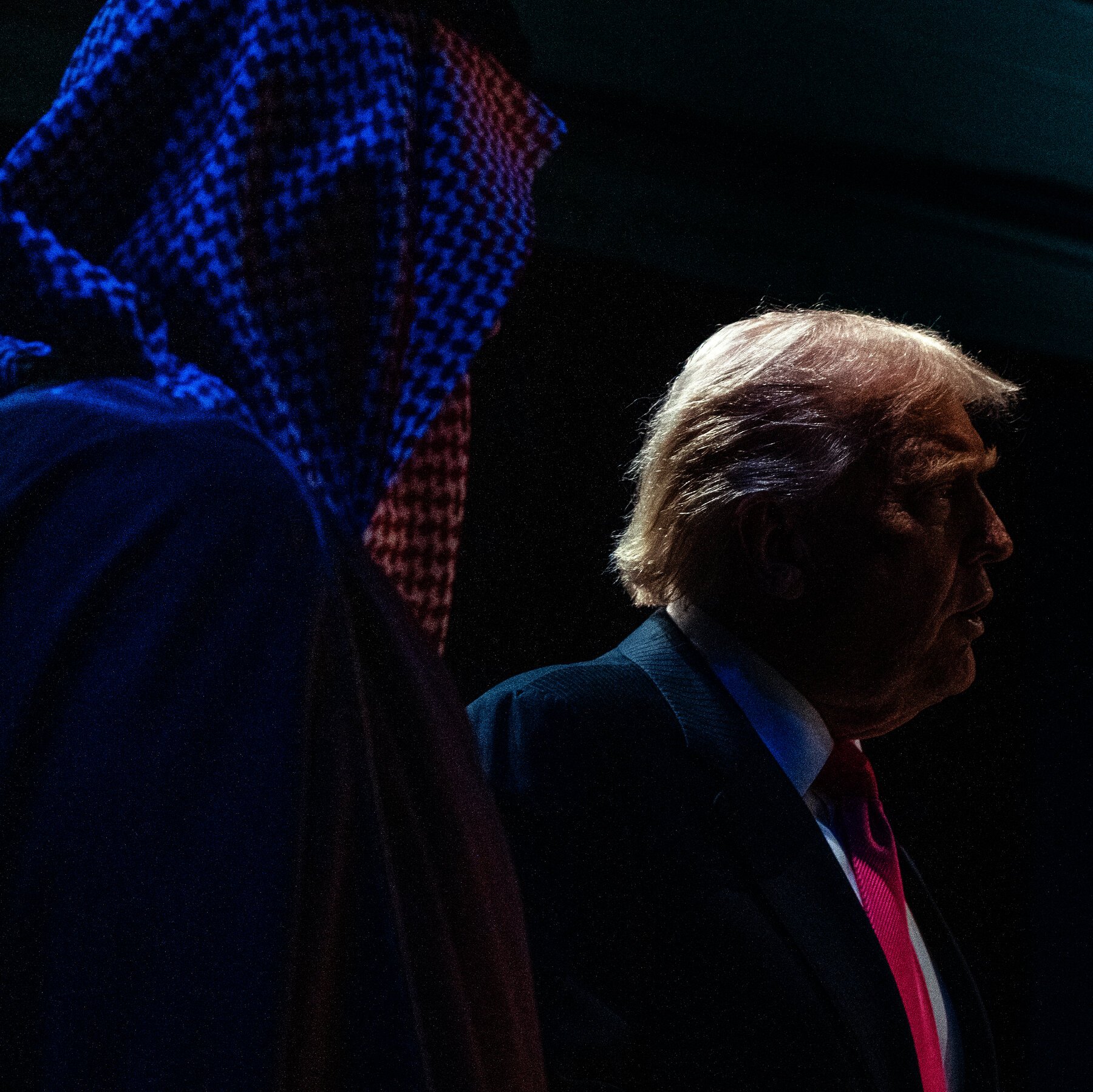
Hormuz on a 60-day clock: what Trump's deal really binds
A president who markets himself as dealmaker-in-chief is selling the public a handshake-with-a-ticking-clock over the world's most consequential oil chokepoint — and admitting, on camera, that the only enforcement mechanism is "common sense."

On 17 June 2026, sitting beside the consequences of his own diplomacy, President Donald Trump did something unusual for a self-styled dealmaker: he told the room that the enforcement mechanism holding the Iran agreement together is, in his words, "common sense." Asked by a reporter what would stop Tehran from collecting tolls on shipping through the Strait of Hormuz once a 60-day window in the deal had elapsed, the president offered no treaty clause, no snapback provision, no naval escort plan. Just common sense. The exchange, captured on the Open Source Intel and Fotros Resistance Telegram channels on Tuesday afternoon UTC, lands at a moment when roughly a fifth of the world's seaborne crude still transits that 21-mile-wide corridor — and when the price of insurance for a single supertanker passing through it has, on industry trackers, more than doubled since the war began.
The Iran deal, as described by the president himself on Tuesday, is not a settlement. It is a deferral — a 60-day pause in which the parties agree not to do the worst things they could otherwise do, after which the architecture of restraint simply expires. That is a different object than the deal the White House press corps has been describing, and it is worth saying so plainly before the political class moves on.
The deal that isn't
Trump's framing on Tuesday leaned heavily on the alternative he claims to have averted. "If we didn't do this deal, we could have dropped more bombs for another three weeks, two weeks, four weeks, two years," he told reporters, in remarks circulated on the Open Source Intel wire at 18:03 UTC. The implicit metric is duration of bombing, not structure of agreement. A reader can be forgiven for hearing an argument that the deal's value lies in what was not done, rather than in what is now binding.
That posture has a market logic. Energy traders, insurers, and Gulf sovereign-wealth desks all price uncertainty; the marginal week of avoided escalation is a marginal week of stabilised freight, stable crude benchmarks, and one fewer headline for re-routing. By that accounting, even a flimsy deal clears value. The trouble begins at minute 61, when the 60-day clauses roll off and the parties revert to the underlying distribution of force — which is to say, an Iranian navy that has spent two decades building asymmetric capabilities in the Gulf, and a U.S. Fifth Fleet that has spent the same period planning to neutralise them.
What "common sense" actually buys
The reporter's question on Tuesday was precise: is there a mechanism that would prevent Iran from collecting tolls from the Strait of Hormuz, after 60 days? The answer — "what will stop them from doing such a thing is common sense" — is a confession that the document does not contain the mechanism. Either the administration believes Tehran will refrain from extracting transit fees because doing so would provoke a response it cannot afford (a deterrence argument dressed as a legal one), or it believes the question itself is premature and the 60-day window will be extended before the clock runs out (a confidence argument dressed as a settled fact).
Neither reading is reassuring. A deterrence-only architecture is what existed before the war, and what the war was, in part, an admission had failed. A confidence-in-extension argument is hostage to the domestic political calendar in Washington, where the deal's critics will spend the next 59 days demanding harder terms and the deal's defenders will spend the same period explaining why harder terms would have collapsed the negotiation in the first place. Common sense, in other words, is doing structural work that treaties, sanctions snapbacks, and standing naval task forces are usually expected to do.
The chokepoint problem the deal doesn't solve
Even if both sides honour the 60-day window in good faith, the underlying geography does not negotiate. The Strait of Hormuz handles the maritime export of crude from Saudi Arabia, the UAE, Kuwait, Iraq, and Qatar, alongside the LNG flows from the world's largest gas field (South Pars / North Dome, shared between Iran and Qatar). Roughly 20% of global seaborne oil and a meaningful share of global LNG pass through it on any given day. There is no pipeline alternative at scale. The UAE's Habshan–Fujairah pipeline and Saudi Arabia's East–West pipeline together relieve perhaps a third of the volume in a sustained crisis, and at higher cost per barrel.
A deal that lasts 60 days does not move any of those numbers. It does not fund alternative corridors. It does not stand up new refining capacity outside the Gulf. It does not change the fact that Iran's leverage over the chokepoint is, in peacetime, the most cost-efficient geopolitical weapon any mid-sized state possesses — and in wartime, the most dangerous. The deal's silence on the chokepoint, after the war was fought in significant part over the chokepoint, is the silence at the centre of the agreement.
The structural frame — and the stakes
Read against the longer arc, the deal looks less like a settlement than like a managed pause inside a structural contest the U.S. does not currently have the appetite to escalate and Iran does not currently have the capacity to win. The dollar still prices the oil. The Fifth Fleet still patrols. Iranian asymmetric capability in the Gulf remains formidable. None of that changes at the end of 60 days. What changes is whether the political conditions for the next round of escalation are present — and the answer to that question will be made in Washington, in Tehran, and in the Gulf capitals, not in the text of the agreement.
The reader should keep three things in mind. First, the deal's enforcement is rhetorical; if the rhetoric holds, the deal holds, and if it does not, the deal was never really there. Second, oil markets will trade the rhetoric for the next eight weeks with the volatility of a binary outcome priced into a continuous curve. Third, the human cost — paid in Iranian civilians under sanctions, in Israeli civilians under rocket threat, in the populations of a region that has been at war posture for years — does not appear in any of the leader-level communiqués that produced the 60-day window.
The most honest read is also the most uncomfortable one: the deal buys time, time is what both governments needed, and the price of the next round will be set not by what was signed on Tuesday but by what the signatories choose to do with the days they have bought. Common sense, as the president put it. The phrase is doing more work than any clause in the agreement.
*Desk note: wire coverage of Tuesday's exchange led with Trump's justification for the deal — the bombing he claims to have averted. Monexus has focused instead on the structural question the questioner actually asked: what holds when the 60-day clock runs out. The two framings are not contradictory; one is a sales pitch, the other is the contract.
Wire provenance
This editorial synthesis draws on the following public wire/social posts:
- https://t.me/s/osintlive
- https://t.me/s/FotrosResistancee