Strait of Hormuz reopens under a US-Iran memorandum, but the plan to keep it open remains opaque
Washington claims gas and oil are flowing through the Strait of Hormuz again after a memorandum with Tehran, yet no public text exists and oil's reaction has been muted.
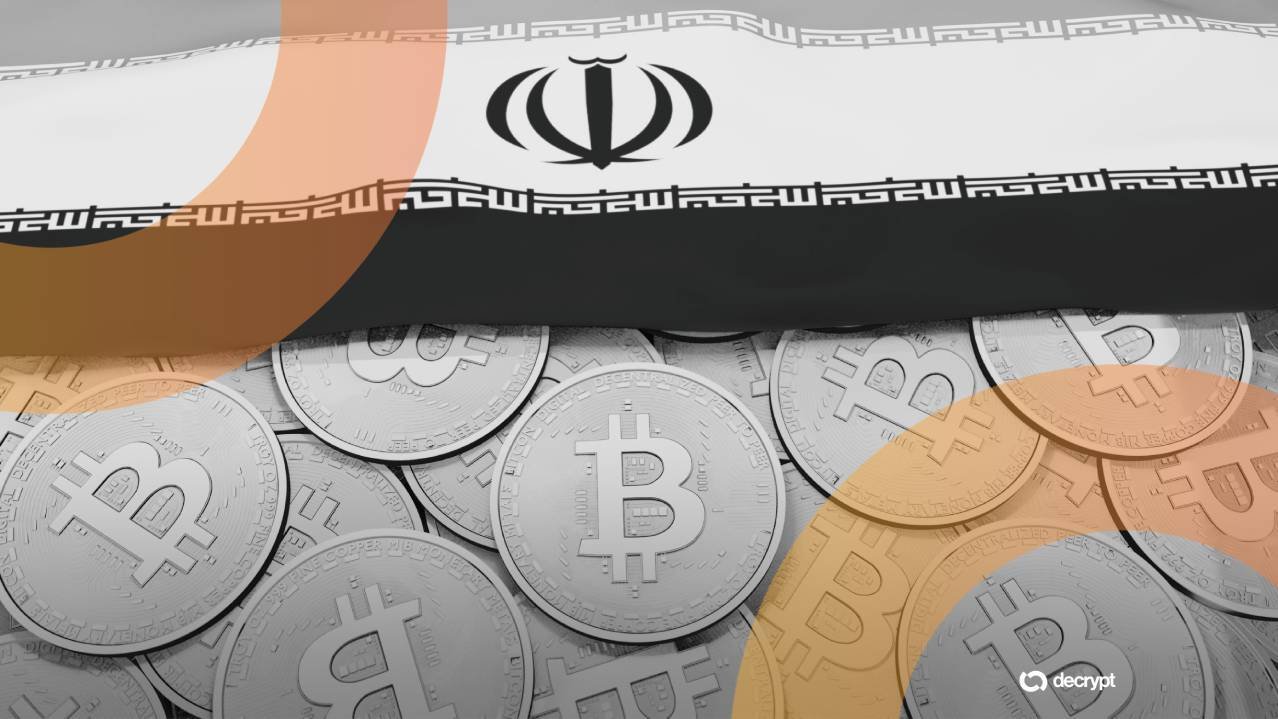
By 14:17 UTC on 17 June 2026, US Vice President J.D. Vance was publicly claiming the prize that markets and ministries across three continents had spent weeks waiting for: gas and oil, he said, were flowing through the Strait of Hormuz again. The announcement, relayed through social posts and amplified by President Donald Trump, was framed as a clean inflection point — a one-line resolution to the most acute energy chokepoint on the planet. In practice, the claim is the only fully developed part of the story. No text of a US-Iran memorandum has been published, no enforcement mechanism has been named, and the price action in Brent and WTI following Vance's remarks was, in early trade, notably restrained rather than euphoric. A diplomatic landmark is being asserted in real time, with the architecture to support it still under wraps.
The strategic argument is straightforward. The Strait of Hormuz is the single most consequential pinch-point in the global energy system: roughly a fifth of seaborne oil and a meaningful share of liquefied natural gas pass through a channel roughly 21 miles wide at its narrowest. Even a partial closure, or a sustained risk premium attached to one, is enough to lift headline crude prices, scramble Asian refiner margins, and hand Iran's regional rivals — and its Gulf neighbours — a lasting political headache. A deal that puts transit back on a normal footing therefore carries immediate commercial value, and a longer-term signalling value about whether Washington and Tehran can do business at all in this cycle.
What is being claimed, and by whom
The shape of the deal, as it has been described, is conventional for a Middle East framework of this kind. The arrangement would end active hostilities, reopen the Strait of Hormuz to commercial shipping, and start a 60-day clock running on a broader set of negotiations covering Iran's nuclear programme and the architecture of US and international sanctions. That is the structure as it has been reported, including by aggregators tracking the White House feed. The Iranian state-aligned outlets covering the announcement have framed the same package in markedly different language — Tasnim News, for instance, carried a wire in which Trump was quoted as saying that "Iran will not have nuclear weapons" and announced a press conference within 45 minutes of the social-media post, while Mehr News reported Vance as saying the central achievement of the memorandum was "the reopening of the Strait of Hormuz." The Russian-language point of friction is not the reopening itself; it is who gets credit for ending it, and on what terms.
Vance's claim that ships are already moving and that the strait will be "completely open" by Friday — quoted in the same social posts on 17 June — is the load-bearing piece of the announcement. It is also the piece most exposed to challenge. The sourcing is the Vice President's own messaging, with no third-party verification from the US Fifth Fleet, the Iranian navy, or any of the Gulf states whose coastguards would have a view. Iran International and other regional outlets that often carry confirmation traffic on Hormuz transits have not, in the materials reviewed, produced a corroborating report. Until independent ship-tracking data or a coalition naval statement appears, the "ships are moving" claim is functionally a White House statement of intent.
The counter-narrative: a deal on the cheap, or no deal at all
The most obvious alternative reading is that this is a tactical pause, not a settlement. The framework being described contains all the familiar ingredients of a Middle East de-escalation package — ceasefire, transit guarantees, a 60-day window — but is missing the one element that would convert it from a memo into a treaty: a public text, signed by named principals, with verification measures attached. Iranian state media is carrying the announcement, but Iran's own messaging has historically used these episodes to test US credibility. The risk for Washington is that Tehran accepts the framing in public, takes the immediate sanctions relief that comes with the 60-day window, and reopens the diplomatic shop in 61 days with the nuclear file reset to its pre-crisis position.
A second, more market-focused counter-narrative points at the price tape itself. If the strait were genuinely back to normal, and a fifth of seaborne oil were about to lose its geopolitical risk discount, the reaction in futures would not be measured. It has been measured. That either means the market has already priced much of the reopening risk in over the preceding weeks, or it means traders are waiting for the same piece of evidence Washington has not yet provided: a written agreement, with an enforcement mechanism, that survives a weekend.
Structural frame: corridor politics, again
The Hormuz file is a textbook case of corridor politics — the contest over a narrow geographic chokepoint whose control confers leverage far beyond its physical footprint. The pattern is familiar from the Bab el-Mandeb, the Suez, the Malacca Strait, and increasingly the Taiwan Strait: a small number of vessels in a small number of miles, defended or threatened by a small number of actors, can move the price of an entire global commodity. Whoever sets the terms of transit at these pinch-points — whether by physical presence, by treaty, or by the credible threat of disruption — captures rents and sets the negotiation agenda for everything else on the table. In this case, the agenda is the nuclear file. The 60-day clock is the visible part; the invisible part is the question of who, over the next two months, holds the initiative at the narrowest 21 miles.
That is also why the absence of a published text is not a procedural detail. A memorandum of understanding that can be characterised differently by the White House, by the Iranian state press, and by the regional wire services is, in effect, a memorandum whose terms are still being negotiated in public. Each side will read the document through its own domestic political constraints: a Trump administration that needs a win on the foreign-policy file before mid-term pressure builds, and an Iranian system that needs sanctions relief without the optics of capitulation. The next 60 days are not a window for grand bargaining; they are a window in which the bargaining's basic terms are likely to harden.
Stakes: who wins, who loses, and on what clock
The clearest short-term winners are the Asian importers — China, India, Japan, South Korea — for whom Hormuz risk premia translate directly into import bills and refining margins. A genuine reopening would compress those premia within days. Gulf producers, who have spent the period routing exports around the chokepoint and burning political capital to do it, also benefit from a return to a stable transit regime. The clearest short-term loser, if the deal holds, is the Iranian asymmetric fleet that has spent the crisis period as the principal lever on global energy prices — its strategic value is reduced, by definition, the moment the strait reopens under a multilateral understanding.
The medium-term stakes are about credibility, on both sides. If the 60-day clock runs out without a broader nuclear and sanctions framework, the question becomes whether the United States is willing to live with a partially-open, intermittently-threatened strait as the new normal — a de-escalation dividend in exchange for an indefinite strategic ambiguity on the nuclear file. If, on the other hand, the framework does produce a substantive follow-on deal, the precedent travels: the same corridor-politics playbook becomes available for every other chokepoint on the global map, including the ones where the United States has less leverage than it does with Iran.
The honest answer, on the evidence available on 17 June, is that the announcement is real and the deal is provisional. The reopening of the strait is being claimed, not yet verified. The 60-day clock is a negotiating tactic, not a schedule. The press conference Trump announced within 45 minutes of his social-media post will be the first public test of how much detail the White House is willing to disclose; the next 72 hours of ship-tracking data will be the first public test of whether the strait is, in fact, open. Until both tests return results, the prudent reading is that a real diplomatic opening has occurred, with most of the architecture still to be built.
Monexus framed this as a corridor-politics story with an unresolved verification problem, rather than a clean "deal done" piece, because the only public documentation is two politicians' social-media feeds and the Iranian state press's characterisation of them.
Wire provenance
This editorial synthesis draws on the following public wire/social posts:
- https://t.me/tasnimnews_en
- https://t.me/mehrnews
- https://t.me/unusual_whales