Trump declares Strait of Hormuz 'completely open' by Friday — but the framework holding it open is unsigned
A six-day war produced a verbal US-Iran understanding that has tanker traffic flowing and oil markets easing. The text remains unsigned, the mediators are still negotiating the ceremony, and Polymarket gives reopening a 21% chance by month-end.
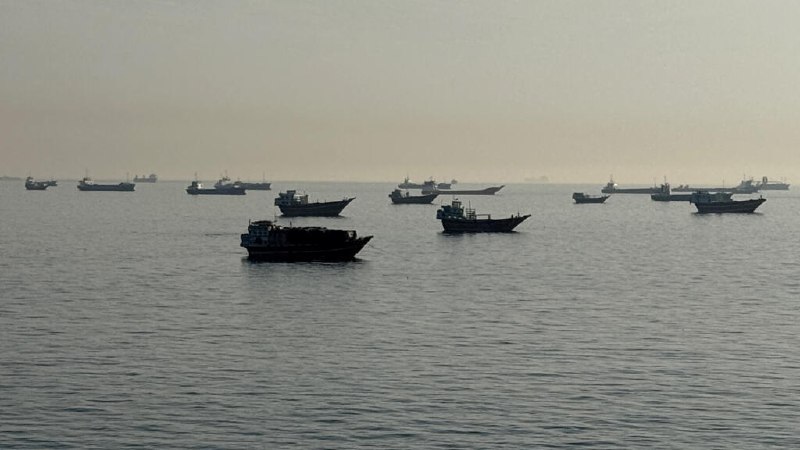
At 16:05 UTC on 17 June 2026, the US president declared that the Strait of Hormuz would be "fully open" within days. By the close of the European trading day, Vice President JD Vance was on the record confirming that gas and oil were flowing through the waterway again. Crude benchmarks eased on the news. And yet the document that ostensibly produced the ceasefire — a memorandum of understanding between Washington and Tehran — had not, as of the afternoon briefing, been signed.
The gap between the verbal ceasefire and the paper ceasefire is the story. What US officials are describing as a done deal is, on closer inspection, a framework: an end to active hostilities, a reopening of the strait, and a sixty-day clock on nuclear and sanctions negotiations, brokered through mediating states and, per a Telegram channel citing Visioner, still being finalised for a remote signing as early as Wednesday. The arithmetic of the situation — a war lasting roughly a week, a chokepoint carrying a fifth of seaborne oil, and a document that exists in summary form only — is a reminder that energy-market diplomacy in 2026 is being conducted in real time, over the wire, in the gap between an announcement and a signature.
The verbal ceasefire
The architecture of the deal, as reported by Unusual Whales citing the framework, has three moving parts. The first is a halt to active hostilities — a rollback from the strike tempo of the past week, during which both sides made explicit threats to the waterway's operability. The second is the resumption of commercial traffic through the strait, with Trump on 17 June stating that ships were "starting to go out" and that the waterway would be "completely open" by Friday. The third is a sixty-day window for broader negotiations on Iran's nuclear file and the architecture of sanctions.
The framing is candid about what would have happened without the deal. The president told reporters that, absent the agreement, "we could have dropped more bombs for another 2–3-4 weeks or 2 years. You would never have the Strait of Hormuz open." In a separate comment carried by Mehr News, he added: "If we had continued the war, the Strait of Hormuz would never have been opened." The candour is unusual for a US administration, and it sets a baseline: the reopening is being sold, in part, as a transactional outcome of US military restraint.
Vance's confirmation that gas and oil are flowing is the operational signal. Iran International and other regional outlets have, in parallel, reported Iranian cooperation with the framework. The Polymarket contract on whether strait traffic would return to normal by the end of June is pricing that outcome at 21% — a market that is pricing a real but not yet overwhelming probability of a full reopening within ten days.
The unsigned paper
The counter-narrative is structural. The same Telegram feed that reports the framework also notes that the United States, Iran, and the mediating countries are discussing signing the memorandum remotely, "as early as Wednesday rather than during an in-person ceremony." A remote signing is, by diplomatic convention, a lower-formality instrument than a ceremony-mediated text. It is faster. It is also less of a political event — and, in the Middle East, the political event is often the deal.
The detail that the framework's official text has not been released is, in this context, not a procedural footnote. It is the difference between a verifiable agreement and a presidential assurance. Reopening a chokepoint is one thing; reconstituting a sanctions-and-nuclear track on a sixty-day clock is another. The first can be observed from satellite and AIS data within hours. The second cannot.
Iranian state-aligned media have, predictably, framed the moment as a defensive success — the strait, in this reading, was never seriously threatened by Iran's ability to operate it, and the US bombing campaign was the variable that produced the closure. Mehr News's coverage of Trump's "if we had continued the war" remark is a textbook case of selective quotation in service of that frame.
The energy-market read
What the wires have not yet done, but the market has, is price the duration of the reopening. A 21% Polymarket contract on end-of-month normalisation suggests traders are giving weight to three scenarios: that the framework holds and traffic normalises within the contract window; that traffic remains elevated or intermittent, registering as a partial normalisation; and that the unsigned text becomes the lever for a renewed crisis, with the strait closing again as negotiations falter at the sixty-day mark.
The structural point is that the strait is, in a real sense, a binary asset. It either moves roughly a fifth of seaborne oil, or it does not. A 21% probability of normal traffic by 30 June, in a market where the US president has just declared the strait "fully open," is a market expressing doubt. That doubt is not yet reflected in the rhetoric from Washington, but it is visible in the implied volatility of the contract.
What the next ten days will tell us
The forward calendar is unusually legible. If the remote signing occurs on Wednesday, the framework becomes a paper instrument and the sixty-day clock starts. If traffic through the strait, as measured by tanker tracking and port calls, returns to baseline within the week, the "completely open by Friday" claim is operationally vindicated. If neither happens — if the signing slips past Wednesday, or if traffic remains throttled — the verbal ceasefire begins to look like a market-stabilisation exercise rather than a settlement.
The honest reading is that both can be true. The framework can hold, traffic can resume, and the broader nuclear-and-sanctions track can still collapse at the sixty-day mark, with the strait returning to crisis posture in August. The reopening is a tactical outcome of a war that did not achieve regime-change objectives; the underlying strategic contest over enrichment, missile development, and regional positioning is deferred, not resolved.
The Iran file is, in this sense, being managed. Whether it is being solved is a question the sources do not yet permit a confident answer to. What the sources do permit is the observation that a US administration which publicly contemplates "two years" of bombing as the alternative to a deal has, in fact, chosen a deal — and that the deal's durability will be tested first by the next ten days of tanker traffic, and second by the sixty-day clock that begins when the text is finally signed.
This publication framed the Hormuz crisis through the lens of the verbal-vs-paper ceasefire distinction, a reading the major wires had not yet articulated in the 17 June 16:00 UTC window. Sources cited are wire feeds, market data, and Telegram channels operating in the public record.
Wire provenance
This editorial synthesis draws on the following public wire/social posts:
- https://t.me/ClashReport
- https://t.me/mehrnews
- https://t.me/osintlive