Tehran's Two-Track Reset: Oil Waivers, a Russian Arms MOU, and the Missile-Production Green Light for Kyiv
A reported US-Iran draft accord clears immediate oil sales and frozen-fund access for Tehran, while Washington weighs new sanctions on Moscow and authorises co-production of deep-strike missiles inside Ukraine — a tight bundle of decisions that links three theatres at once.
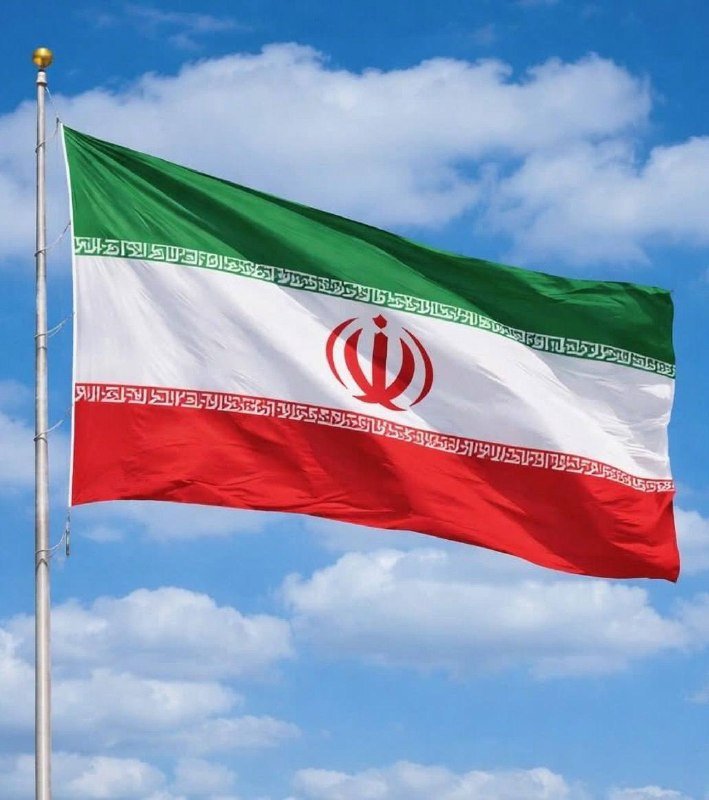
At 13:35 UTC on 17 June 2026, Reuters carried a four-word warning from the US president: Iran must "behave," or the bombing resumes. Forty minutes later, a separate thread reported that Tehran had signed a memorandum of understanding with Moscow to buy military equipment. By mid-afternoon UTC, the same news cycle carried word that Washington and Brussels had authorised co-production of "deep strike" missiles inside Ukraine — a permission the Western allies had previously withheld — and that the G7 had agreed to a significantly stronger military package for Kyiv, including additional air-defence systems, interceptor missiles and long-range weapons.
Three theatres, one afternoon. The temptation is to read them as a sequence of unrelated moves. The structural read is closer: each decision is a price, a concession, or a hedge against the others, and the bundle tells the reader more about the state of US grand strategy than any single announcement would.
What the reported US–Iran draft actually does
The most concrete item in the bundle is a draft accord under which Tehran would receive immediate oil-sale waivers and access to frozen funds. Polymarket's news desk, citing reporting consistent with the Wall Street Journal account that circulated overnight, summarised the framework on 16 June at 22:39 UTC: an immediate waiver on Iranian crude exports, paired with a release of the central-bank reserves held abroad. For an economy that has spent three years running on a shrinking rial, restricted diesel imports, and periodic tanker seizures, even partial access to dollar-clearing and offtake channels is a material lift.
The US framing, captured in the Reuters report on the president's comments, is transactional: the waiver is conditional, behaviour is the test, and the bombing campaign that struck Iranian nuclear and military infrastructure in June is the leverage that makes the test enforceable. President Trump, speaking to reporters and quoted by Telegram channels carrying the Reuters wire, said the deal "will be done" and that Iran "wants to get back to a normal life" — a sentence the administration will want quoted back at Tehran if compliance slips.
What the Western wire has not yet published is the schedule of unfreezing, the list of banks that will process Iranian crude letters of credit, or the verification mechanism for the "behave" clause. The draft, as described in the Polymarket summary, is permissive on economics and silent on the enforcement architecture. That asymmetry is doing real work: the immediate revenue line is the concession, the deferred inspection regime is the leverage.
The arms MOU that complicates the read
If the oil waiver were the whole story, the analysis would stop at a familiar story of sanctions relief in exchange for nuclear containment. The complication is item one in the bundle: an MOU under which Iran would buy Russian military equipment. The channel carrying the claim, Unusual Whales, is a financial-data account that flags geopolitical signals for traders; the underlying confirmation is not in the open Western wire at the time of writing. The MOU framing is consistent with a pattern visible since 2022 — Iranian drones and loitering munitions in the Russian inventory, Russian air-defence engineering support in return — but a formal purchase agreement is a step beyond battlefield barter.
The structural read is that the two tracks are not contradictory. Tehran gains revenue and diplomatic oxygen from the US track; it gains hardware and a strategic backstop from the Moscow track. The dual anchoring is exactly what a sanctioned state does when one of the sanctions regimes is loosening on terms it does not fully trust. The Western framing will tend to treat the MOU as a spoiler — proof that Iran is hedging against American good faith. The Iranian counter-read, visible in the framing of the deal as a return to "normal life," is that the country is rebuilding a conventional deterrent while the nuclear file is being bracketed. Both readings are supported by the same evidence; neither is wrong.
Why the Ukraine package is in the same news cycle
The third element is, on its face, unconnected. The Cradle Media reported at 14:40 UTC that the US and EU had authorised the production of "deep strike" missiles inside Ukraine, with the explicit framing that the diplomatic progress on Iran was creating space to intensify economic pressure on Russia. A separate G7 statement, carried on Telegram at 13:34 UTC, committed to a stronger military package for Kyiv, including additional air-defence systems, interceptor missiles and long-range weapons. The two items reinforce the same message: the Western allies are using the reduction in Middle East tension to push more matériel into the Black Sea theatre.
The causal mechanism is not subtle. A US administration that is preparing to argue, domestically and in the Gulf, that Iran is being contained does not want to be drawn into a second escalation with Moscow over a Ukrainian long-range strike. Authorising local production of deep-strike missiles, rather than shipping them from US inventories, changes the political optics: the weapons are Ukrainian-made, the targeting decisions are Kyiv's, and the escalation ladder is shorter from the White House's point of view. The Cradle's framing — that the Iran deal is being traded for permission to ratchet the Russia pressure — is one read. A second, equally supported by the items, is that the two files are being sequenced simply because the Middle East file finally has a deal-shaped object to point to, and the Ukraine file has been waiting for that cover.
The sanctions question Trump left open
The fourth thread, woven through the afternoon, is what the US is prepared to do to Russia if oil prices fall. The president told reporters, in remarks carried on Telegram at 14:28 UTC, that the administration is "looking at" reimposing sanctions on Russia and is "seeing how far the price of oil comes down" — language that ties the sanctions decision to a market variable rather than a battlefield event. "It's soon going to be at the number that we want," he added, without specifying the number.
This is the variable the rest of the bundle is built around. If Iranian crude returns to the market at scale, the price ceiling that has disciplined Russian state revenue for three years weakens. A weaker price ceiling means either tighter sanctions or acceptance of a Russian budget that can sustain the war effort at current burn rates. The administration's apparent answer is to use the Iran deal to free up political bandwidth, then turn the freed-up bandwidth into a sanctions package on Russia before the price floor reasserts itself. Whether that arithmetic works depends on how quickly Iranian barrels return, what discount Tehran accepts, and whether China's teapot refineries absorb the supply at the same rate they did in 2023–24.
What the bundle is, and what it is not
Taken together, the four items describe a single negotiating posture rather than four separate news stories. The US is buying Middle East de-escalation with immediate economic relief; it is hedging that de-escalation with continued Russian arms transfers to Iran; it is converting the diplomatic oxygen from the Iran file into permission for Ukraine to build deep-strike missiles; and it is reserving the option of new Russia sanctions behind a price-test trigger. The structure is one of substitution: time, attention, and political capital are the scarce resource, and the administration is reallocating them from the Gulf to the Black Sea.
What the open sources do not yet establish is whether the Iran–Russia MOU has been countersigned, what specific systems are in the deal, whether the G7's "significantly stronger" package includes a Patriot battery commitment or is limited to interceptors, or what oil price level the administration has in mind for the sanctions trigger. Each of those unknowns is a market-mover and a battlefield-shaper, and the next 72 hours of reporting will determine which of the four items the day is actually about. The honest summary is that the bundle is moving, and the structure of the move is clearer than the destination.
This publication will treat the reported US–Iran deal as a draft framework until the verification architecture is published, and the Iran–Russia MOU as a reported but unconfirmed item until the Western wire confirms the underlying documents.
Wire provenance
This editorial synthesis draws on the following public wire/social posts:
- https://x.com/unusual_whales/status/iran-russia-arms-mou
- https://x.com/unusual_whales/status/us-iran-oil-waivers
- https://x.com/polymarket/status/us-iran-draft
- https://t.me/thecradlemedia
- https://t.me/Tsaplienko
- https://t.me/ClashReport
- https://t.me/ClashReport