The Iran deal that isn't one: parsing Trump's 'understanding'
A 'memorandum of understanding' that may or may not be signed, this week or next, leaves every major question open — including whether it is a deal at all.
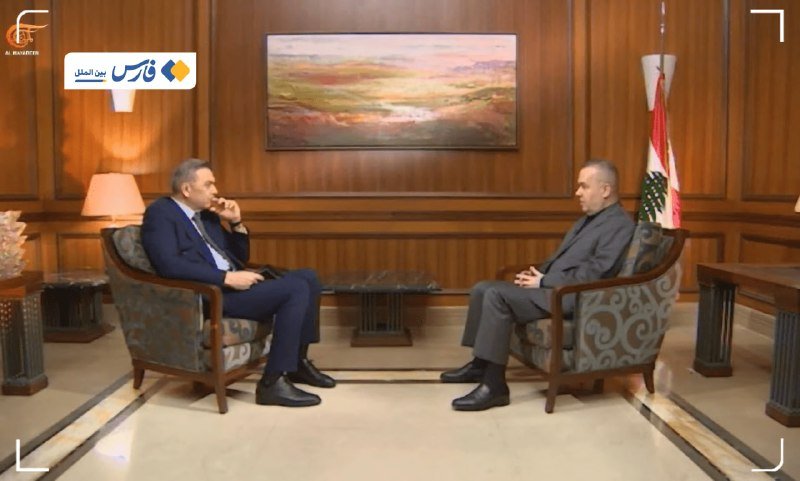
On 17 June 2026, the White House stopped pretending the Iran file is a normal negotiation. Asked whether the agreement would be signed on Friday, President Donald Trump replied: "You never know with deals." That sentence, delivered in the afternoon and carried on the Polymarket wire, tells you almost everything about where the process actually stands — neither the date, the form, nor the substance is settled.
The reporting points in two directions at once. Trump told reporters the accord would be signed "shortly, tomorrow, maybe the next day," according to a flash from Insider Paper citing his remarks. He separately described the document as "a memorandum of understanding," with "certain things" understood between the parties "without writing." A blockade, he added, had done more damage than the air campaign that dropped roughly a billion dollars' worth of ordnance on Iran. The deal that emerges from that posture is not a treaty. It is a posture.
What was actually announced
Strip out the choreography and the public record is thin. Trump confirmed an agreement was imminent and tied the timing to either Thursday or Friday of this week. He dismissed as false the reports of a $300 billion Iranian fund with American participation. The Iranian counterpart — the regime in Tehran — has not, on the basis of the available reporting, signed anything publicly. The document in question is, by the president's own description, a memorandum: a non-binding instrument that records shared expectations rather than enforceable commitments.
That is a meaningful downgrade from the framing carried by much of the Western wire over the past fortnight, which had treated a coming accord as a substantive nuclear settlement in the lineage of the 2015 Joint Comprehensive Plan of Action. What Trump described on 17 June is closer to a ceasefire understanding with optional architecture around it.
The pressure that produced it
The leverage being applied is economic, not juridical. Trump's own line — that Iran holds the world's third-largest oil reserves and therefore "what the hell" does it need a nuclear programme — captures the operative logic. The argument is that hydrocarbon wealth makes enrichment redundant. A blockade, he said plainly, was "more impactful than all of the bombing raids." That is a candid admission that the kinetic phase was secondary to strangling Iran's export capacity.
Whether that logic survives contact with Tehran's own doctrine is a different matter. The regime has long treated enrichment as a sovereign right and a bargaining chip; converting oil-for-no-nukes into a binding arrangement requires a degree of Iranian buy-in that public messaging from the Iranian side does not yet confirm. The structural pattern is familiar: a maximalist Western framing meets a maximalist Iranian framing, and the agreement, if there is one, is whatever survives the gap between them.
The regional read
Hezbollah's leadership has already claimed a "great victory" in the wake of the announced understanding, per reporting carried by Insider Paper on 17 June. That framing is partisan, and it should be read as such — the movement has every interest in presenting an arrangement that preserves much of Iran's regional posture as a win. But it is also a signal: the Iranian axis is interpreting the deal as Iran continuing to operate, sanctions partially eased, no regime change, no unfettered inspection regime. The White House is interpreting the same arrangement as the opposite — denuclearisation by other means, plus a coerced opening of the energy sector.
Both readings cannot be entirely right. Both can be partly right, which is the more likely outcome of a memorandum of understanding signed on a loose timetable.
Stakes, and what remains unknown
If the agreement is signed this week, the immediate winners are the oil majors positioning for a reopened Iranian export market, and the Gulf states whose pricing assumptions have been roiled by uncertainty. The immediate losers are the inspection-first camp in Washington and Tel Aviv, which wanted binding constraints rather than understandings. Iranian civilians, facing the cumulative damage of a blockade and an air campaign, are a category the public reporting does not dwell on; Trump's question — "are you going to let the 91 million people starve to death?" — gestures at that cost without resolving who bears it.
What remains genuinely unknown, on the public record available on 17 June, is the text. A memorandum of understanding is precisely the form a party chooses when it wants political cover for an arrangement it cannot fully commit to. The date may slip; the language may be released in stages or in summary only; the verification regime is, by Trump's own framing, partially unwritten. The honest read is that the United States and Iran have agreed to keep talking, and to call that an accord. The Monexus watch from here is whether the oil flows before the inspectors do.
Desk note: Monexus frames the 17 June messaging as a downgrade from a treaty-track settlement to a posture-track memorandum — leaning on the president's own characterisation rather than the more triumphalist wire line carried earlier in the week.
Wire provenance
This editorial synthesis draws on the following public wire/social posts:
- https://t.me/ClashReport
- https://t.me/insiderpaper
- https://t.me/ClashReport
- https://t.me/ClashReport
- https://t.me/insiderpaper
Follow the event.
These dated source records provide context. They do not retrospectively verify this archive article.
Separate what the nuclear watchdog reported from what it could not determine after the June 2025 strikes.