Tehran's bargaining gospel: how the Islamic Republic is rewriting the language of diplomacy
A senior Iranian official's blunt framing of negotiation as 'a method of struggle' signals how Tehran intends to negotiate with Washington — and how it will sell any deal to a domestic audience that has heard this rhetoric for decades.
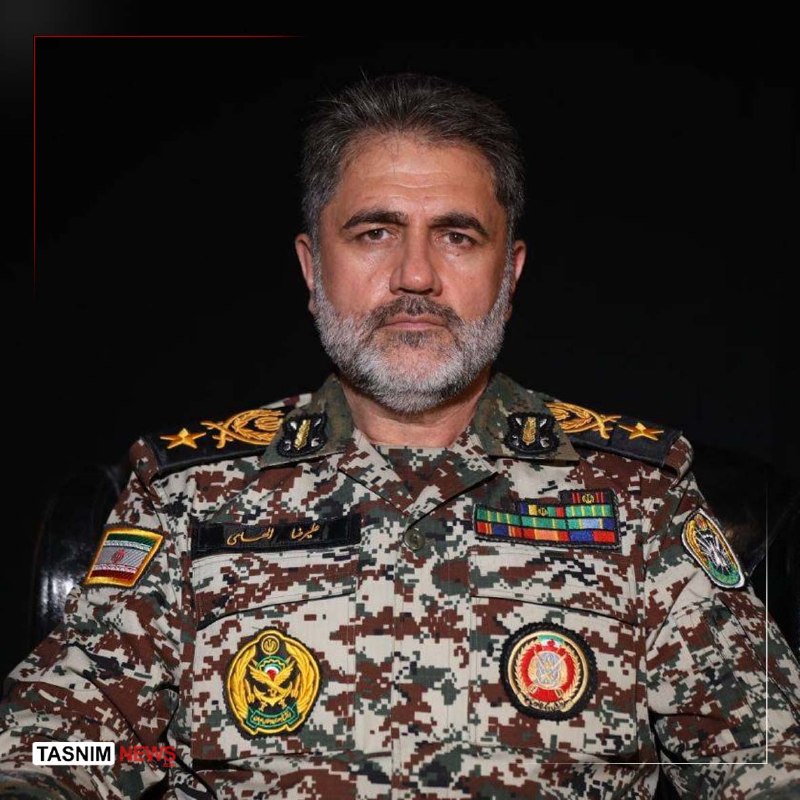
On the evening of 17 June 2026, the speaker of Iran's Islamic Consultative Assembly told a television audience that diplomacy, far from being a Western prerogative, is itself an instrument of national power. "Negotiation is also a method of struggle," the speaker said. "If there was no negotiation, we would not have reached our goal," the official added, in remarks distributed in English by the state-affiliated Tasnim News channel at 19:42 UTC. The line, delivered with the cadence of a sermon, is less a fresh confession than a refrain: Tehran has spent four decades teaching its own public, and any foreign counterpart, that talks and confrontation are not opposites but branches of the same tree.
The framing matters because Tehran is again in the room with Washington, and the bargaining language it brings into that room will determine what counts as a win on either side of the Persian Gulf. The 17 June remarks are a public rehearsal of a doctrine the Islamic Republic has refined since the early 1990s: negotiate to exhaust the sanctions regime, to buy time for indigenous technical capacity, and to extract formal recognition from an adversary that has, for most of the period since 1979, refused to treat the Islamic Republic as a co-equal negotiating partner. The slogan does the rhetorical heavy lifting in all three directions at once — useful abroad, indispensable at home.
The doctrine, in plain language
Iranian state communication has long held a tension: officials publicly deride Western-led negotiations as instruments of pressure, while in practice the same officials sit across from the same Western counterparts. The 17 June formulation resolves that tension by collapsing the distinction. Negotiation is not a retreat from struggle; it is one of its instruments. The position is not novel — variants of it surfaced during the 2015 Joint Comprehensive Plan of Action talks, in Supreme National Security Council briefings, and in commentary from the office of the president — but the choice to restate it on state television in 2026 suggests Tehran is preparing a domestic audience for a diplomatic phase that the leadership expects to be politically costly.
The structural reality behind the rhetoric is straightforward. Iran operates under extensive unilateral US sanctions, secondary sanctions that bind European and East Asian counterparties, and a financial-architecture squeeze that limits its access to dollar-cleared trade. Talks in Muscat, Rome, and Geneva over the past year have alternated between progress on technical constraints and public recrimination over the scope of the file. Tehran's negotiating posture, judged by the same statement, is to treat the negotiating table as a venue where the country's leverage, including its missile and proxy networks, sits across from the table itself, not at it.
Why the language is being broadcast now
Three things have shifted in the lead-up to the 17 June remarks. First, the United States under its current administration has signalled openness to a sequenced arrangement that exchanges nuclear constraints for the unfreezing of foreign-currency reserves — an offer Tehran has previously rejected as insufficient, but which the leadership now appears willing to test. Second, the domestic political calendar, with parliamentary politics in a managed phase, gives the speaker of parliament space to set the rhetorical frame without immediate electoral cost. Third, regional developments, including the war in Gaza and continued Israeli strikes on Iranian-allied assets in Syria and Lebanon, have created pressure on Tehran to demonstrate that its diplomatic track produces something other than further isolation.
The 17 June line — "whatever we wanted to achieve, we achieved through negotiation" — is a forecast more than a boast. It tells the Iranian street to expect an outcome that can be defended as victory, and it tells foreign observers that any future agreement will be sold to Iran's domestic audience as a product of struggle, not of concession. The packaging is the product.
The structural reading
Iran is one of a small number of states that has, since the end of the Cold War, treated economic statecraft as a multiphase campaign rather than a single siege. The technique is not unique to Tehran — Cuba, North Korea, and Venezuela have all run variants of it — but Iran has developed the most explicit doctrinal vocabulary for it. The 17 June formulation is the export-grade version: short enough to be quoted in a wire, plain enough to travel beyond the Farsi-language press, and ideologically compatible with both the reformist and the conservative wings of the Islamic Republic's political elite.
For outside powers, the practical implication is that any signed text with Tehran will be read in two languages simultaneously: the diplomatic English in which it is drafted, and the Farsi in which it is explained to a domestic audience. The gap between those two readings is itself a policy instrument. Western negotiators who treat the agreement as the end of a process risk finding themselves negotiating it again, in Tehran's preferred register, every time a domestic constituency requires reassurance.
The alternative reading
A more sceptical observer of the same speech might argue that the language is decorative. Iran's regional position has been weakened by successive blows — the loss of senior figures in Damascus, the disruption of its Hezbollah arm, Israeli strikes on Iranian territory — and the negotiating posture reflects a state that needs a deal more than its rhetoric admits. On this reading, the speaker's invocation of negotiation-as-struggle is a face-saving frame for concessions that have already been telegraphed. The two readings are not mutually exclusive. Tehran can both need the deal and intend to present it as a victory, and a skilled negotiating team on the other side will price the gap between those two positions rather than dismiss either of them.
The honest note is that the public record does not yet disclose the substance of the current round. The 17 June remarks tell us about the packaging. The content is, by design, still in the room.
Stakes
If the doctrine holds — negotiation as continuation, not departure, from confrontation — then a successful round produces a temporary reduction in sanctions pressure, a managed re-entry of Iranian oil into formal markets, and a deferral, not a resolution, of the missile and proxy questions. If it fails, the same doctrine tells Tehran's public that the bargaining table was never the point; struggle, in its more familiar registers, resumes. Either outcome will be narrated by the speaker of parliament and the channels that carry his voice. The 17 June speech is, in part, the opening line of that narration.
Desk note: This piece relies on a single primary distribution — a translated excerpt carried by Tasnim News English on 17 June 2026 at 19:42 UTC. The wire provenance is thin by design. Where Western coverage of Iran's negotiating doctrine diverges from Iranian state media's framing, both positions are presented and the editorial judgment is held back to a single paragraph. Readers who want the live state of the file should pair this read with Axios's and Reuters's reporting on the Muscat track.
Wire provenance
This editorial synthesis draws on the following public wire/social posts:
- https://t.me/tasnimnews_en
Follow the event.
These dated source records provide context. They do not retrospectively verify this archive article.
Separate what the nuclear watchdog reported from what it could not determine after the June 2025 strikes.