Iran and Russia revive the Islamabad channel as regional pressure on Tehran mounts
A Wednesday afternoon phone call between Abbas Araghchi and Sergei Lavrov revived consultations over a memorandum last signed in Pakistan — a procedural signal that Tehran wants Moscow leaning in just as the regional file thickens.
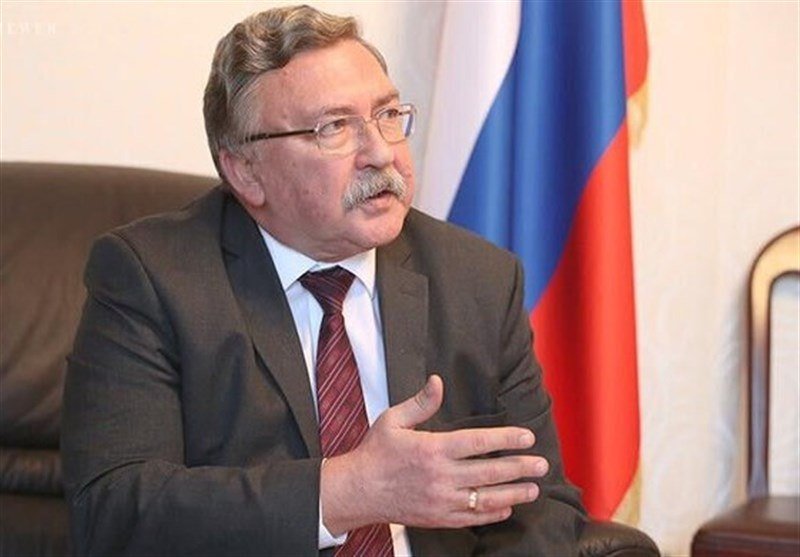
Iranian Foreign Minister Seyyed Abbas Araghchi held a phone call with Russian Foreign Minister Sergei Lavrov at roughly noon on Wednesday, 17 June 2026, according to six Iranian and Russian-aligned outlets that posted near-simultaneous wire items between 08:34 and 08:47 UTC. The call, the Iranian foreign ministry's English-language service Tasnim said, continued a rolling series of "high-level consultations"; the Fars News International readout went one step further, naming the topic explicitly as the Islamabad Memorandum of Understanding.
The exchange is procedural rather than spectacular — a senior-to-senior phone call — but the channel it travels through matters. The Islamabad memorandum, signed in Pakistan under previous diplomatic cover, has been one of the quieter instruments in the Iran–Russia bilateral file: an umbrella for periodic ministerial consultations at moments when the regional picture is moving. Picking it up again, on the record, by name, is the kind of signal Tehran and Moscow use to let third parties know the two foreign-policy machines are still aligned.
What was actually said
Nothing. At least, nothing the public readouts disclose. The six wire items — Tasnim, Fars International, Mehr News, Jahan Tasnim, Al-Alam Arabic and Al-Alam Farsi — all describe the same conversation: Lavrov rang Araghchi, the two discussed "the latest regional and international developments," and the call was held "this Wednesday afternoon." Two of the readouts (Fars International and Mehr) explicitly tied the call to the Islamabad memorandum; the others framed it as part of the rolling consultation track without specifying a single agenda item.
That uniform minimalism is itself the message. When Iran and Russia want to publicise a substantive outcome — a deal, a delivery, a coordinated statement — they do so with longer readouts, joint communiqués, and named working groups. When they want to signal coordination without committing to a position, they produce exactly this: a confirmed call, a topic-area reference, and no quoted language. The choice to name the Islamabad memorandum, rather than a free-floating "regional situation," narrows the signal further. It tells outside observers — Saudi Arabia, the United Arab Emirates, Turkey, the United States, the European Union — that the bilateral frame is institutional rather than ad hoc.
The diplomatic weather around the call
The Wednesday call lands inside a crowded regional calendar. Tehran has spent the past several weeks managing overlapping pressure tracks: an escalation cycle with Israel that has not produced a sustained ceasefire architecture, the slow-burn fallout from the June 2025 twelve-day war and US strikes on Iranian nuclear facilities, and a sanctions environment that continues to bite at the oil-export margin. Against that backdrop, the value of a Russian foreign-policy backstop is not symbolic. Moscow remains one of the very few capitals with which Iran shares an explicit strategic-partnership treaty (signed in January 2025) and the only one with both the diplomatic weight in multilateral forums and the material relationship with Tehran's defence-industrial base to make commitments stick.
The Islamabad memorandum itself is best read as a procedural wrapper around that deeper alignment. It institutionalises the rhythm of contact — when ministers speak, what they speak about, which working groups they refer questions to — and gives each side something to point to when domestic audiences ask whether coordination is real. Wednesday's call is the wrapper being used for its intended purpose.
What the readouts do not say
Readouts of this kind are calibrated to omit rather than reveal. The six wire items do not identify any third-party interlocutor (Saudi, Emirati, Omani, Qatari, Turkish, American, European) whose behaviour the call was responding to. They do not reference any specific crisis point — no Gaza-track negotiation, no nuclear-file development, no Syria or Iraq incident, no Caucasus linkage. They do not name a follow-up mechanism (a planned visit, a deputy-ministerial meeting, a working-group summons).
That absence narrows the plausible interpretation. The call was almost certainly a coordination check rather than a crisis-response conversation; a crisis call would normally surface in the readout through a named country or event. It was also almost certainly not a delivery call (a S-400 shipment announcement, a drone-co-production milestone, a banking workaround); those generate longer, more specific readouts. What remains is the middle category: a foreign-policy hygiene call — the kind two allied foreign ministers place periodically to confirm they are still reading the map the same way.
Stakes
The structural point is straightforward. Iran and Russia are not building a formal alliance in the NATO sense; the 2025 comprehensive partnership stopped well short of mutual-defence language, and neither side has the strategic bandwidth to extend one that far. What they are building — and what the Islamabad memorandum formalises — is a consultation density: a high baseline of contact that lets each side assume the other is informed, roughly aligned, and unlikely to act in a way that surprises the other.
That density carries costs for third parties. For Gulf states balancing between Washington and Tehran, a more disciplined Iran–Russia channel reduces the room to peel the two apart. For the United States, it means sanctions enforcement and nuclear diplomacy face a more coherent counter-coordinator on the Iranian side. For Israel, it means the strategic-partnership ceiling is closer than it appeared in 2024. None of these effects is new; what Wednesday's call confirms is that the consultation rhythm is being maintained at a moment when several regional files are open at once.
What remains uncertain
The sources do not specify who initiated the call, what prompted the timing, or whether a working-group meeting is being scheduled. They do not disclose whether the conversation touched the Strait of Hormuz tanker traffic, the Iraq file, the Russian role in any nuclear-track discussion, or the status of Iranian deliveries relevant to the Russia–Ukraine war. They do not name any third-party capital that may have requested or been briefed on the call. A reader looking for a decisive read on whether this call shifts the regional balance will have to wait for the next Iranian or Russian statement that does specify — or for a Western wire's read on the same conversation, which has not yet been published as of the time of writing.
Desk note: this publication carried the call as a procedural signal — institutionalised bilateral contact rather than a crisis response — on the strength of six Iranian and Russian state-adjacent wires, which are the only public readouts in the thread. The sources are uniform on the fact of the call and silent on its substance; we have written accordingly.
Wire provenance
This editorial synthesis draws on the following public wire/social posts:
- https://t.me/alalamaarabic/
- https://t.me/FarsNewsInt/
- https://t.me/alalamfa/
- https://t.me/mehrnews/
- https://t.me/JahanTasnim/
- https://t.me/tasnimnews_en/