Tehran presses sanctions relief and missile sovereignty as Lebanon ceasefire strain deepens
Spokesman Esmail Baqaei framed 17 June 2026 as the operational start of an oil-sanctions rollback while warning that any continued Israeli strikes on Lebanon would breach US commitments.
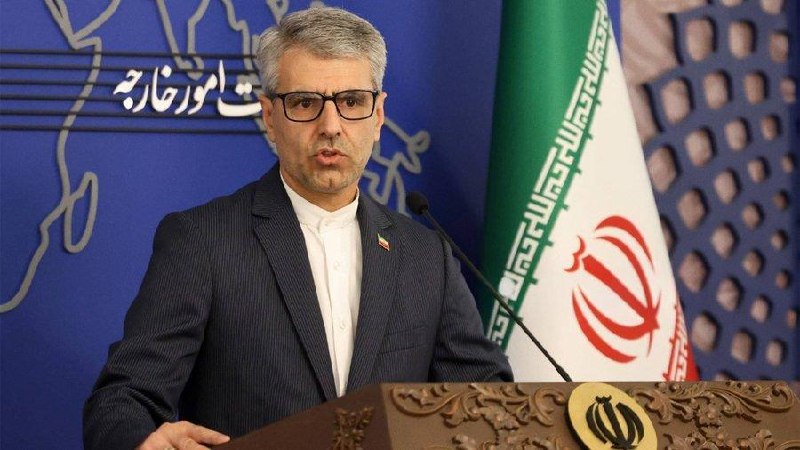
Iran's foreign-policy apparatus converged on a single message on 17 June 2026: the lifting of oil sanctions is no longer a negotiating aspiration but, in Tehran's telling, an operational reality that began today. Speaking to reporters in Tehran, Foreign Ministry spokesman Esmail Baghaei said Iran's oil sanctions "must be lifted — not just on paper, but with all its requirements," adding that Iran must be able to sell and transport its crude without obstruction. The remarks, carried in identical wording by the Foreign Ministry's Telegram channel and by the Iranian outlet Tasnim News, signal an attempt by Tehran to convert whatever private understanding has been reached with Washington into a public, dated milestone rather than a continuing concession.
The same press appearance doubled as a warning shot on two files that are usually treated separately — Tehran's missile programme and the fragile calm along the Lebanon border. Baghaei said Iran's missiles "are meant to be fired, not negotiated over," and added that the country's "defensive capabilities will not" be on the table. Within the same hour, in comments also distributed by Tasnim News and by the Tehran-aligned channel DDGeopolitics, the spokesman said that if Israeli aggression against Lebanon continues, it will be considered "a violation of America's obligations" — language that ties the file on the Lebanese ceasefire to the file on the wider sanctions package, and assigns Washington the role of guarantor rather than bystander.
A sanctions lift, announced by the sanctioned
The most striking feature of the day is provenance. It is Tehran, not the US Treasury or the European Commission, that has chosen to mark 17 June 2026 as the day the oil sanctions architecture begins to unwind. In the structural grammar of sanctions regimes, that matters. Sanctions are designed to be lifted by the imposing party, in writing, after verified compliance; a sanctioned government declaring the sanctions over inverts the sequence and forces the imposer to either ratify the claim or repudiate it publicly. The Foreign Ministry's choice to put that claim on a Telegram channel that distributes in near-real time is a deliberate act of speed: it compresses the response window for any party that wants to contradict the framing.
The basket of issues Baghaei placed inside the same envelope is also revealing. Alongside the oil-sales language, he confirmed that "detailed negotiations were held regarding the release of Iran's blocked properties" and that Tehran expects to be able to "use our blocked assets whenever" needed. That language — blocked assets, not frozen central-bank reserves alone — is wider than the usual reference to oil revenues, and points to the roughly $80bn-plus in Iranian funds held in escrow accounts across Asia and the Gulf that analysts have long treated as a separate track from crude licensing.
Missiles as a red line, not a bargaining chip
On missiles, the Foreign Ministry's phrasing leaves no daylight. "Our missiles don't even like being talked about," Baghaei said, in the line that propagated fastest across Iranian state-adjacent channels on Tuesday evening. The line functions less as policy substance than as a marker of how far Tehran believes it can publicly close a file it had previously been willing to discuss in private. In Western capitals the same posture is being read as a signal that any forthcoming framework will treat the missile file as off-limits — a constraint that constrains Washington's ability to sell the deal to Tel Aviv and to Gulf partners who view the missile programme as the principal long-run threat.
The point is structural as much as it is diplomatic. A deal that delivers sanctions relief on paper while leaving the missile file untouched is, from Tehran's vantage, the most Iran can plausibly accept and still claim victory; from Washington's, it is the kind of outcome that tends to break within a domestic news cycle. The 17 June messaging is engineered so that if the deal later frays, Iran can credibly say the missiles were never on the table to begin with.
Lebanon as the tripwire
The third element — the linkage of continued Israeli strikes on Lebanon to "America's obligations" — is the most consequential and the least developed. By choosing to frame Israeli operations in Lebanon as a Washington-side compliance question, Tehran is converting what has until recently been a bilateral Israeli-Hezbollah file into a trilateral US-Israel-Iran stress test. The framing presumes a US role in restraining Israeli action that has not been publicly elaborated; whether that role has actually been negotiated, or is being assumed by Tehran as a rhetorical move, is one of the unanswered questions of the week.
What the sources do not specify is whether Baghaei's framing reflects a private commitment from Washington, an interpretation of US public signalling, or a unilateral Iranian diplomatic construct. The statements were carried by Iranian state media and Iranian-alliliated channels; no Western wire has yet confirmed the underlying US-Israeli understanding, and no Israeli source has been cited in the same breath. Until those two conditions are met, the Lebanon language functions as a warning rather than as a description of an agreed arrangement.
What changes if the claim holds — and what doesn't
If the 17 June framing survives the next 72 hours — that is, if the US side does not publicly contradict the oil-sanctions timing, and if Treasury does not announce new enforcement designations — then the operative date for the sanctions unwind moves from "upon agreement" to "as of 17 June 2026." The commercial consequences would be visible quickly: Iranian crude already moving through shadow channels could be re-routed into formal offtake contracts; insurance and shipping could begin to re-price the Iranian cargoes that have been traded at deep discounts; and a cluster of Iranian oil buyers in Asia — long treated as a sanctions red line — could move from grey to white without waiting for a formal US general licence.
If it does not hold — if the US side contests the timing or the scope — then the same press conference becomes a record of overreach. Tehran will have publicly committed to a date that did not arrive; the political cost will fall on a Foreign Ministry that is currently the most publicly visible Iranian actor on the diplomatic stage. That asymmetry of exposure is part of why the statement was made with such force: it is calibrated to make the cost of denial, for Washington, higher than the cost of confirmation.
What remains uncertain
The thread of 17 June reporting is consistent on Iranian-side language and inconsistent on everything else. The sources do not specify which sanctions are being lifted, which Iranian entities are being de-listed, which blocked-asset accounts are being unlocked, or on what timetable. The figure of approximately $80bn in blocked Iranian funds cited above comes from widely reported public estimates across multiple Western outlets over recent years, and is referenced here to scale the negotiation, not as a specific claim sourced to today's inputs.
What is also unresolved is the Israeli position. No Israeli source has been cited in the thread context, and the US side has not been quoted in any of the channels referenced here. Until both of those voices appear on the record, the 17 June framework should be read as the most aggressive Iranian articulation to date of what Tehran believes the deal looks like — not as a description of what has actually been agreed.
The wider pattern, stripped of any theoretical scaffolding, is a familiar one: when the issuer of sanctions concedes, the sanctioned party races to set the terms of that concession in the public record before the issuer can. What is unusual today is the speed and the linkage. Tehran is announcing a date, defining a missile red line, and redefining a ceasefire as a Washington-Israeli compliance question — all in the same hour, all in the same voice. The diplomatic machinery of the next several days will be a test of whether that voice has been heard correctly, or whether it has spoken too soon.
Desk note: Monexus framed the 17 June press conference as a Tehran-led announcement of a date, not as a confirmed multilateral outcome, and kept Israeli and US-side sourcing as an explicit gap rather than fabricating either side's position.
Wire provenance
This editorial synthesis draws on the following public wire/social posts:
- https://t.me/DDGeopolitics
- https://t.me/DDGeopolitics
- https://t.me/JahanTasnim
- https://t.me/tasnimnews_en
- https://t.me/JahanTasnim
- https://t.me/DDGeopolitics