Tehran moves to monetise the Strait of Hormuz, framing the waterway as a two-state concession
Iran's foreign ministry says it will charge for passage through the Strait of Hormuz and that only Tehran and Muscat have standing on the file — a claim that puts a price tag on the world's most sensitive energy chokepoint on the eve of US talks.
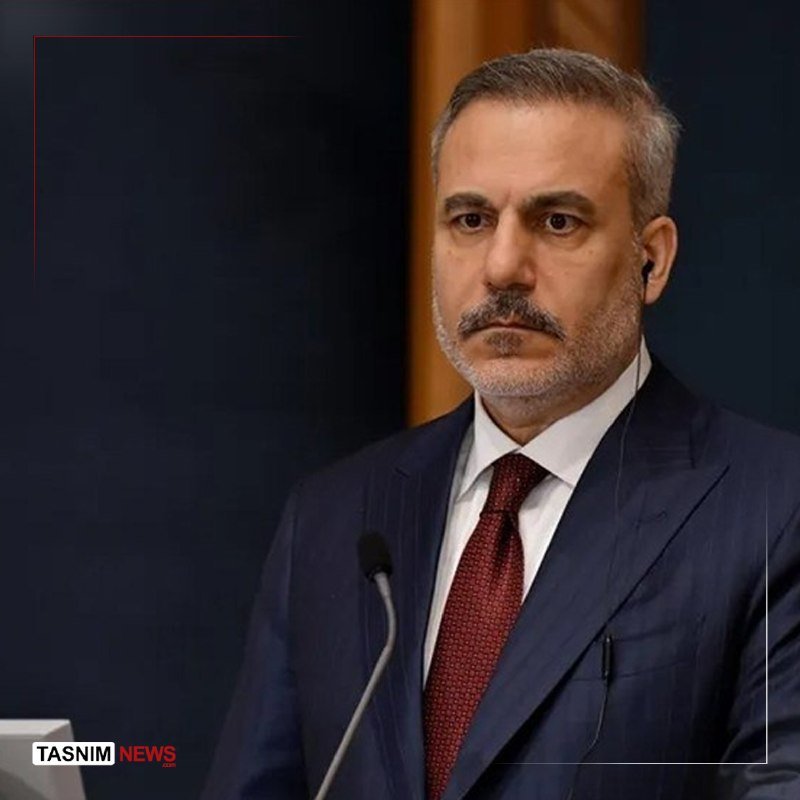
On the evening of 17 June 2026, Iran's foreign ministry spokesman Esmail Baghaei sketched out what is, in substance, a new operating logic for the world's most consequential energy chokepoint: a fee for passage through the Strait of Hormuz, administered by Tehran and Muscat as the only two coastal states with standing on the waterway. The remarks, carried by the Tasnim news agency and other Iranian state-aligned outlets, arrive two days before Iranian and US delegations are due to meet in Geneva, and they shift the diplomatic terrain in a way that the wire coverage has so far under-played.
The argument Tehran is making is not subtle. The Strait of Hormuz, by Baghaei's account, belongs to its littoral states, and those littoral states are about to start charging for the privilege of moving oil, LNG, and refined product through it. If the framework holds, the roughly twenty per cent of global oil and a third of seaborne LNG that transits the strait each day would be transiting under a Tehran-administered toll regime — a structural change to energy markets that no consumer government has yet publicly engaged with on the record.
What the spokesman actually said
The remarks, broadcast across Iranian state-aligned channels on Wednesday evening local time and reported by Mehr News and Tasnim between 21:37 and 21:51 UTC, contained four distinct claims worth separating.
First, that Iran will receive a fee "for services" in the Strait of Hormuz, and that the mechanism for managing the waterway is currently being designed. Second, that the strait is the responsibility of Iran and Oman alone, and that no other state has standing on the question. Third, that Iran's missile programme is not a negotiating instrument and is not open to discussion. And fourth, that a planned meeting between Iranian and US negotiating teams in Geneva is still scheduled to take place, with the memorandum of understanding to be signed digitally rather than in person.
The sequencing matters. Tehran is choosing, on the eve of talks, to (a) raise the diplomatic cost of a breakdown by tying a transit fee to the strait, (b) foreclose the multilateral governance question by asserting a two-state concession, (c) remove missiles from the table before the table is set, and (d) signal that face-to-face theatre is not required for the substantive work. That is not a maximalist posture; it is a negotiator's posture, designed to enter the room already holding chips.
The two-state concession framing
The Iran-Oman bilateralism is the most consequential piece. International maritime law treats the Strait of Hormuz as a corridor subject to transit passage rights under the UN Convention on the Law of the Sea, with freedom of navigation guaranteed to all states. Iran's claim that only the two coastal states have standing is, on the prevailing legal reading, not accurate. It is, however, a perfectly intelligible negotiating claim: it asserts sovereignty over a resource the rest of the world has historically taken for free.
Oman's response will determine whether the framing survives contact. Muscat has historically been the regional mediator most willing to host indirect US-Iran contacts, and it has not publicly endorsed the toll mechanism. A toll regime that Oman does not recognise would face immediate enforcement problems at the Musandam side of the strait, and any toll that Oman does recognise would amount to a de facto restructuring of how Gulf energy reaches global markets.
Why a transit fee is not a gimmick
The instinct on Western energy desks will be to treat the toll language as bluster. That would be a mistake. Hormuz is, in physical terms, narrow: the shipping lanes at their tightest are about three kilometres wide in each direction, and the Iranian side of the strait hosts a network of fast-attack craft, anti-ship missile batteries, and over-the-horizon surveillance that no naval planner in the Gulf would call manageable. The threat of closure has been a feature of Iranian deterrence doctrine since the Iran-Iraq war, when the Tanker War of the 1980s established that even limited harassment of shipping imposes meaningful insurance and rerouting costs.
A fee is a different instrument. A fee concedes transit. It does not threaten the flow of oil; it taxes it. The political economy is straightforward: a single-digit-per-barrel levy on Hormuz transit, even applied selectively, would generate billions of dollars of annual revenue for Tehran at a moment when the regime is under acute fiscal stress from sanctions enforcement and oil price compression. It is also enforceable without firing a shot — a flagged vessel, after all, has to declare itself to enter the strait at all.
The structural read is that Tehran is attempting to convert a deterrent capability into a revenue stream, on terms that recast the strait as a concession rather than a corridor. That is a real change in how the waterway has been governed for the past four decades.
Geneva, missiles, and the limits of the bargaining chip
Baghaei's other moves are best read as defensive. The statement that "Iran's missiles are only for firing, not for negotiation" closes off what would otherwise be the single most valuable Iranian concession on offer to Washington. The statement that the Iran-Oman framework stands as a bilateral matter closes off any UN Security Council route to revisiting the toll question. The statement that the Geneva meeting will go ahead with a digital signing ceremony lowers the political theatre requirements of the encounter.
Each of those moves is consistent. The picture they form is of an Iranian negotiating team that wants to come to Geneva with the file reduced to the question of sanctions relief, with a transit-fee revenue stream already factored into the post-deal fiscal projections, and with the missile file withdrawn from the table as a sovereignty question. The bet is that Washington, which is negotiating under its own calendar pressures, will treat the geometry as a fait accompli and move to settle.
What the sources do not tell us
Three things are not in the record. The first is the rate structure or even the unit of the fee: the spokesman used the phrase "fee for services" without specifying whether the charge would be per barrel, per transit, or per vessel. The second is Oman's public position: the available Iranian reporting identifies Oman as the joint authority but does not include an Omani government statement, and Muscat's silence is itself a data point. The third is the American response: no State Department or White House readout of the toll framing is in the source material reviewed, and the US negotiating position remains unstated on the record.
The structural read, set against those gaps, is that the framework is in the announce-and-consolidate phase, not the implement phase. Tehran is putting down markers; Muscat and Washington will, in the order they choose, either ratify, contest, or reroute around them. What is already on the table, however, is a claim that cannot be quietly retracted: the Strait of Hormuz, in the Iranian telling, is no longer free passage, and the era of the strait as a public good is being argued, in real time, to be over.
The stakes
If the toll mechanism survives even a partial implementation cycle, the global downstream effects are non-trivial. Insurance and freight rates on Hormuz transit would reprice immediately. Saudi Arabia and the UAE, which have built pipeline bypass capacity (the Abu Dhabi-Fujairah route and the East-West pipeline) at scale precisely to insure against Hormuz closure, would find themselves with first-mover advantage in attracting crude that no longer wants to pay the Iranian levy. Brent and Dubai benchmark spreads would reconfigure. And the precedent — that a coastal state may unilaterally tax passage through an international strait — would extend well beyond the Gulf, to the Bab el-Mandeb, the Malacca Strait, and the Turkish Straits.
Tehran appears to be pricing all of that. The bet is that the political cost of refusing to deal with the framework, on the eve of a deal, is higher than the cost of absorbing it.
How Monexus framed this: where wire coverage will read the toll language as provocation, this article treats it as a revenue-and-sovereignty claim designed to be negotiated, not enforced unilaterally — and flags the Oman gap as the variable that will determine whether the framework holds.
Wire provenance
This editorial synthesis draws on the following public wire/social posts:
- https://t.me/mehrnews/
- https://t.me/tasnimnews_en/
- https://t.me/tasnimnews_en/
- https://t.me/wfwitness/
- https://t.me/JahanTasnim/