A 14-point MoU, a status-quo freeze, and the shape of the new Iran deal
Text of a 14-point US-Iran memorandum circulated on 17 June 2026 freezes enrichment, lifts the threat of new sanctions, and commits Tehran to "safe passage" arrangements in a still-unexplained war.
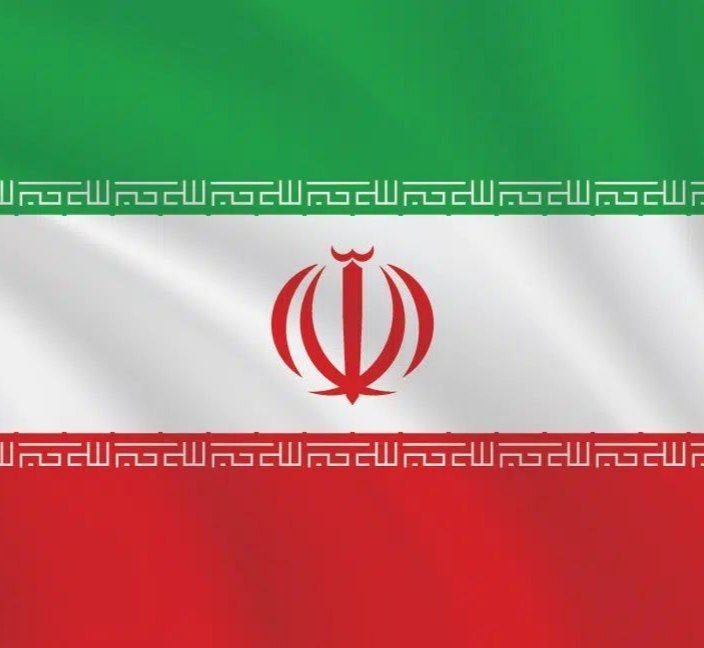
On the afternoon of 17 June 2026, three separate Telegram channels that monitor the Iran file published what purports to be the full text of a 14-point memorandum of understanding between the United States and the Islamic Republic. The most detailed version was posted at 17:33 UTC by the channel OSINTtechnical, which attributed the text to "Faytuks News" and described it as the "14-point US-Iran memorandum of understanding." Within the hour, the channel Middle East Spectator (18:42 UTC) summarised the operative trade — Iran maintains the current status quo of its nuclear programme, and the United States will not impose new sanctions and will not deploy additional forces. A third outlet, wfwitness, began publishing individual clauses at 17:37 UTC, beginning with points five through eight and noting that point five commits Iran to making arrangements "using its best efforts" for the safe passage of vessels in a conflict the document itself does not name in the circulated excerpt.
The text, if genuine, is less a peace deal than a managed pause. It is the diplomatic equivalent of two drivers, both still in their cars, agreeing not to turn the wheels for ninety days. The substance is the suspension, not the resolution.
What the document says, clause by clause
The opening clause, as reproduced by OSINTtechnical at 17:33 UTC on 17 June 2026, frames the MoU as a declaration by the United States, the Islamic Republic of Iran, and "their allies in the current war" that they are signing to end a conflict the text does not explicitly name. The reference is widely understood to mean the Israeli-Iranian exchange that intensified across April and May 2026, although the MoU text reproduced on Telegram does not mention Israel, the Islamic Republic's proxy network, or specific strikes by name.
Points five through eight, published by wfwitness at 17:37 UTC, cover operational confidence-building. Point five obliges Iran to use "best efforts" to arrange safe passage for shipping — language that stops well short of a guarantee and that historically has been the seam through which tanker seizures have slipped during similar truces in the Strait of Hormuz. Points six through eight, as summarised in the same Telegram post, deal with deconfliction arrangements and reciprocal notifications of military movements.
The headline political clause is the one Middle East Spectator paraphrased at 18:42 UTC: Iran keeps its nuclear programme at its current configuration, and the United States refrains from new sanctions designations and from additional force deployments. There is no mention in the circulated excerpts of a reversal of existing sanctions, of unfreezing Iranian assets held abroad, or of any change to the Joint Comprehensive Plan of Action architecture. The freeze is the deal.
The counter-narrative: what the framework leaves out
Read against the Iranian foreign ministry's stated red lines, the MoU is a partial win for Tehran. The Islamic Republic has, since 2019, framed its post-JCPOA enrichment posture as irreversible; the MoU accepts that posture without requiring a rollback. The United States, in return, secures a halt to the escalatory ratchet — no new sanctions, no new force — in exchange for what is, on the face of it, a status quo.
The Israeli reading is harder to reconstruct from these sources. None of the three Telegram channels publishing the text is Israeli, and none carries Israeli sourcing on what the government in Jerusalem has been promised or has conceded. The absence is conspicuous. The Israeli security cabinet has, in past rounds of US-Iran diplomacy, treated any deal that left Iran's enrichment capacity intact as a strategic setback. Whether this round was concluded with Israeli acquiescence, Israeli acquiescence-under-pressure, or Israeli silence is not addressed in the circulated text.
A second gap is the question of inspections. The International Atomic Energy Agency's verification access to Iranian facilities has been the operative enforcement mechanism of every prior arrangement. None of the three Telegram posts reproducing the MoU text refers to the IAEA by name or to inspection modalities. A freeze without inspection architecture is a freeze that depends entirely on the goodwill of the parties, and the goodwill of parties to a still-unresolved war is not a strong foundation.
A structural reading: managed rivalry, not rapprochement
What is unfolding is not a peace process in the conventional sense. It is the formalisation of a managed rivalry — the same pattern that produced the 2015 framework, the 2020 maximum-pressure collapse, and the 2023–25 back-channel exchanges, but compressed into a single instrument. The United States does not need Iran to disarm; it needs Iran not to advance. Iran does not need the United States to lift existing sanctions in this round; it needs the threat of new sanctions and new deployments to recede. Both sides get the smaller thing they need.
The dollar architecture sits underneath this. Iran's principal vulnerability in any escalation scenario is not its nuclear programme but its access to hard-currency settlement, its oil-export channels, and the SWIFT-adjacent infrastructure that allows its remaining counterparties to transact. A "no new sanctions" pledge is, in operational terms, more valuable to Tehran than any number of rhetorical assurances, because it preserves the working perimeter of Iran's existing financial arrangements. The US, in turn, preserves its own perimeter: the existing sanctions remain in force, the extraterritorial architecture is untouched, and the option of escalation remains available if the freeze breaks.
This is hegemonic management without hegemonic resolution. The incumbent order is not ceding ground; it is suspending the bill for one quarter while it watches the next quarter's numbers.
What remains uncertain, and what to watch
Three things are not yet settled. First, verification: the circulated text does not specify an inspection regime, and the IAEA's mandate in Iran has been reduced since 2021. Without a monitoring mechanism, the freeze is unilateral and reversible, and both sides know it. Second, the Israeli posture: Jerusalem has not, on the basis of these three sources, endorsed the MoU, and prior Israeli governments have reserved the right to act unilaterally against Iranian enrichment infrastructure. Third, the Gulf states: the MoU references "allies in the current war" but does not enumerate which parties are bound. Saudi Arabia, the United Arab Emirates, and Qatar each have separate equities in any Iran arrangement, and their inclusion or exclusion will shape whether this MoU holds.
The 17 June 2026 text is best read as a holding action. It buys time, forecloses the most escalatory options for both sides for the duration of the arrangement, and punts the hardest questions — verification, regional inclusion, and the long-term status of enrichment — to a later round. Whether that later round ever arrives depends on whether the managed rivalry can be sustained without one of the parties deciding that the cost of compliance has risen above the cost of breaking.
For now, the deal is the freeze. Everything else is drafting.
Desk note: this article is built from three Telegram-channel posts circulating on the afternoon of 17 June 2026. Monexus has not independently verified the authenticity of the 14-point text; we are reporting the document as it has been published, with sourcing caveats intact, and flagging the points — IAEA verification, Israeli posture, Gulf inclusion — that the circulated excerpts do not address.
Wire provenance
This editorial synthesis draws on the following public wire/social posts:
- https://t.me/Middle_East_Spectator
- https://t.me/osintlive
- https://t.me/wfwitness
- https://t.me/osintlive
- https://en.wikipedia.org/wiki/Joint_Comprehensive_Plan_of_Action
- https://en.wikipedia.org/wiki/International_Atomic_Energy_Agency
- https://en.wikipedia.org/wiki/Strait_of_Hormuz
Follow the event.
These dated source records provide context. They do not retrospectively verify this archive article.
Separate what the nuclear watchdog reported from what it could not determine after the June 2025 strikes.