Iran and US sign memorandum of understanding, leaving nuclear-material transfer unresolved
Foreign Ministry spokesperson Esmaeil Baqaei confirms the text is finalized, but a parallel readout from Washington names a 14-point pact — and the two accounts diverge on the central question of where Iran's enriched uranium ends up.
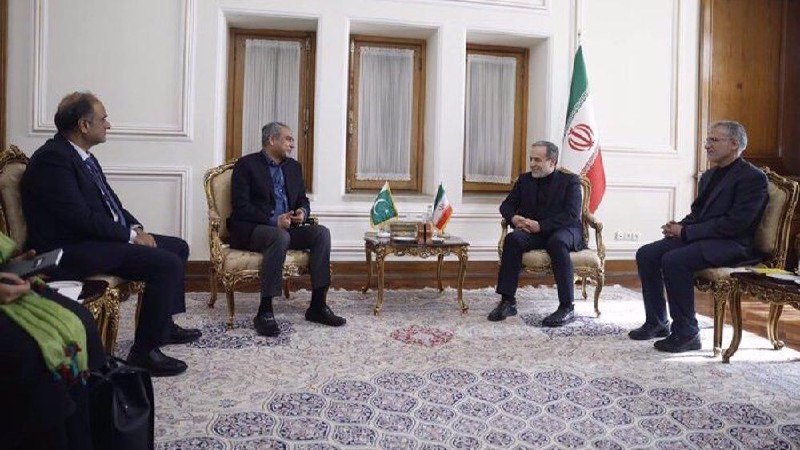
At 21:13 UTC on 17 June 2026, Iran's Foreign Ministry spokesperson Esmaeil Baqaei told state-aligned outlets that the text of a memorandum of understanding between Tehran and Washington "is now officially finalized because both parties have signed it." A follow-up message to the same Telegram channel fifteen minutes earlier explained the unusual delivery method: the document was "decided to be signed digitally," with the understanding that "when the memorandum is signed by the presidents of the two countries, violating it will cost more." Within forty-eight minutes, a US official had separately read out what they described as a 14-point pact to a wire service, and the two narratives had already begun to drift apart on the most sensitive question of the negotiation: the disposition of Iran's enriched nuclear material.
The framework, as the two sides have so far described it publicly, amounts to an interim political settlement rather than a final nuclear deal. What is striking is the speed — and the asymmetry — of the public messaging. Iran's foreign ministry confirmed finalisation through Telegram channels normally reserved for domestic and regional press; the American side distributed its terms through a single, anonymous official read-out filed to a global wire. Both moves, in their own way, are aimed less at the other government than at their own domestic audiences. For Tehran, the public emphasis is that no concession has yet been made on the physical location of the country's enriched stockpile. For Washington, the bullet-point format is designed to demonstrate that the deal is bounded, itemised, and reversible if Iran defaults.
The central disagreement
The single most important unresolved question concerns Iran's existing stockpile of enriched uranium — material accumulated over two decades of contested nuclear work, much of it enriched well above the 3.67% limit set by the 2015 Joint Comprehensive Plan of Action. According to Baqaei, speaking to Mehr News and other Iranian state-aligned outlets, "we have said from the beginning that the enriched nuclear materials will not be transferred outside of Iran." He added that the question of transfer abroad "has been introduced as an option to block other options," suggesting Tehran views the demand as a negotiating position rather than a settled term, and that the option itself has been deployed tactically rather than conceded.
The American read-out, distributed via Reuters, presents a 14-point text that — on the public evidence available — does not yet address that disagreement in any visible way. The two governments appear to have agreed that they have agreed. The harder question of what they have agreed to remains live, and the enriched-material question is the one most likely to determine whether the framework holds.
Why the digital signature matters
The Iranian foreign ministry's decision to describe the document as "signed digitally" is a procedural detail with political weight. In a regional climate where memoranda of understanding have historically been repudiated, leaked, or quietly shelved, an exchange of cryptographically attributable digital signatures would, in principle, make repudiation more expensive. Baqaei's framing — "violating it will cost more" — is the diplomatic equivalent of a deterrent posture: a public commitment, anchored in a verifiable exchange, that raises the political cost of walking away.
That posture, however, addresses a problem the Iranian side has flagged repeatedly in past talks. Previous rounds of negotiation, including the 2015 JCPOA and its 2018 US withdrawal under the first Trump administration, were vulnerable precisely because no equivalent procedural floor existed. A digitally-signed memorandum does not by itself resolve the underlying compliance question, but it does change the rhetorical terrain: Iran's argument has long been that agreements were honoured by Tehran in good faith and then discarded. The 2026 document is engineered, at least in its self-presentation, to be harder to discard.
The asymmetry of disclosure
The two governments are not telling their publics the same story at the same volume. Iran's state media, including Tasnim and Mehr, have carried Baqaei's statements verbatim and at length, with the foreign ministry's official Telegram channels amplifying them. The American side has, so far, released the deal only through an unattributed summary to a wire reporter. No on-the-record American official has yet been named; no full text has been published by either government.
This asymmetry has a structural effect. The Iranian public is hearing, repeatedly, that the deal preserves sovereignty — that the enriched material stays in Iran, that the document is signed, that violation carries cost. The American public, by contrast, is hearing that there is a 14-point plan, the contents of which remain officially unreleased. Each narrative is internally coherent. They are not, however, mutually consistent — and the question of enriched-uranium disposition is precisely the kind of substantive issue on which public statements made for domestic consumption tend to harden into negotiating constraints.
What remains uncertain
The sources available as of the time of writing do not resolve several first-order questions. The full text of the memorandum has not been published by either side. The number of enrichment centrifuges affected, the duration of any freeze, the verification arrangements, and the sequencing of sanctions relief are not yet visible in the public record. The American 14-point read-out has been distributed but not, in the materials available, enumerated. The Iranian framing of the stockpile question leaves room for a follow-on arrangement — "introduced as an option to block other options" — but the alternative being blocked has not been named.
It is also unclear how the deal interacts with the positions of the other parties to the original JCPOA — the United Kingdom, France, Germany, Russia, and China — and with the Israeli government's known opposition to any arrangement that leaves Iran's enrichment infrastructure intact. The 14-point structure implies an American attempt to deliver a verifiable, itemised agreement without reopening the broader multilateral file. Whether that works depends on whether Tehran treats the 14 points as a ceiling or a floor, and on whether Washington can hold the line on its own domestic red lines while doing so.
What is clear is that, for the first time in this cycle, both governments are publicly claiming the same document exists, signed, and binding. What that document actually says — and whether the two sides can sustain a single, shared reading of it — is the question the next seventy-two hours will answer.
— Monexus is publishing the wire and the Iranian foreign ministry's public statements side by side because, on this story, the difference between them is the story.
Wire provenance
This editorial synthesis draws on the following public wire/social posts:
- https://t.me/mehrnews/
- https://t.me/tasnimnews_en/
- https://t.me/tasnimnews_en/
- https://t.me/DDGeopolitics/
Follow the event.
These dated source records provide context. They do not retrospectively verify this archive article.
Separate what the nuclear watchdog reported from what it could not determine after the June 2025 strikes.