Israeli warplanes hit Kfar Tebnit as southern Lebanon frontier enters new phase of escalation
Two Telegram channels reported Israeli airstrikes near Kfar Tebnit on 17 June 2026. The strike lands inside an active Hezbollah engagement corridor and revives questions about the shape of Israel's northern front.
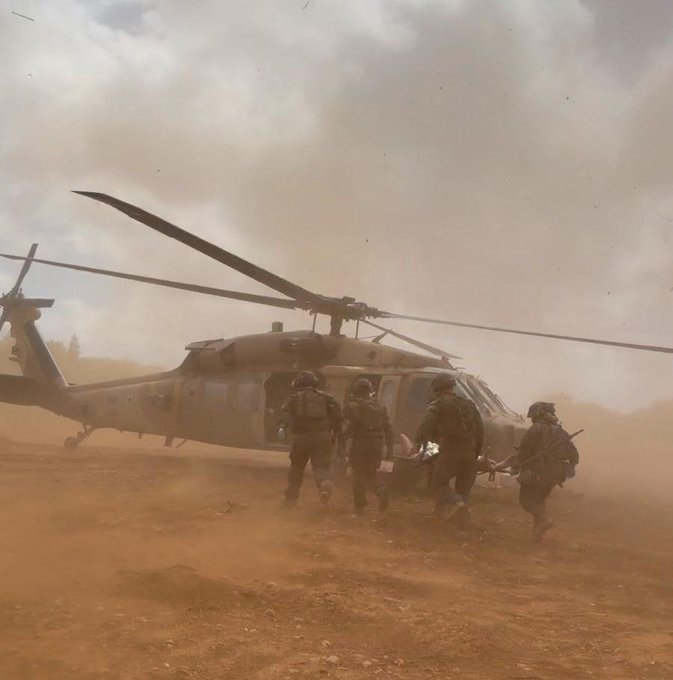
Israeli warplanes struck targets near the southern Lebanese village of Kfar Tebnit on the morning of 17 June 2026, according to two Telegram channels covering the northern front. The IntelSlava channel reported at 11:41 UTC that Israeli airstrikes had hit the area "amid ongoing clashes between Hezbollah fighters and Israeli forces," while the Beirut-based outlet The Cradle separately reported at 11:34 UTC that Israeli warplanes had attacked near Kfar Tebnit, a village Hezbollah "resistance fighters" had been using to engage Israeli troops. The two reports, posted within seven minutes of each other, converge on the same village and on the same basic operational picture: fixed-wing aircraft, a Hezbollah forward presence, and an active ground-exchange underway at the time of the strike.
The strikes land inside a frontier that has cycled between ceasefire and active combat for the better part of two years, and inside a wider regional climate in which the Lebanese border has become one of the more volatile pressure-points between Israel and Iran's network of armed allies. Monexus is publishing a single-source wire record at this stage; the underlying field reporting, including Israeli military confirmation, Lebanese casualty figures, and structural-damage assessment, has not yet been independently verified in the material available to this desk.
What the two reports say, and where they overlap
Both channels describe an air operation against targets in the immediate vicinity of Kfar Tebnit, a village in the Nabatieh Governorate south of the Litani River — a stretch of terrain that has been a Hezbollah operating zone for decades and a focal point of Israeli air activity since the 2023–2024 exchanges. IntelSlava's framing is the leaner of the two: an airstrike reported near the village during ground clashes between Hezbollah fighters and Israeli forces, posted at 11:41 UTC. The Cradle, seven minutes earlier, adds operational colour — Israeli warplanes, attacks near the village, Hezbollah fighters engaged with Israeli troops in the area — and explicitly characterises Israeli forces as an "occupation" presence.
The convergence is what matters for a news desk. Two independent channels, one of them regionally focused on the Axis of Resistance and one of them a Russian-language milblogger feed that aggregates frontline claims, agree on the village, the timing, and the basic description. That is enough to publish the strike; it is not enough to confirm casualty tolls, weapon type, or whether the targets struck were Hezbollah infrastructure, civilian structures, or a combination. The sources do not specify.
The Hezbollah-read: a frontline the resistance is choosing to hold
The Cradle's framing matters for the counter-narrative layer of this story. Its 11:34 UTC post does not describe a passive village caught in the crossfire; it describes a Hezbollah "engagement" — a forward position from which the group's fighters are actively directing fire at Israeli forces. In that reading, the airstrike is a counter-fire mission against an active shooter position rather than a punitive action against a passive settlement. The framing is consistent with Hezbollah's own public posture since the 2024–2025 border arrangement: that it retains the right to maintain a presence south of the Litani and to respond to Israeli incursions, and that Israeli airpower is used in turn to suppress those positions.
The alternative reading — and the one that tends to surface in Israeli and Western-wire coverage of similar episodes — is the inverse: that Hezbollah has rebuilt forward positions in violation of the cessation-of-hostilities understanding negotiated in late 2024, and that Israeli aircraft are degrading that infrastructure before it is used to fire into Israeli towns. Both readings describe the same event. The first centres Hezbollah agency in holding the ground; the second centres Israeli security logic in dismantling it.
The structural frame: why Kfar Tebnit, and why now
Kfar Tebnit sits on a ridge line east of the coastal road between Tyre and Bint Jbeil, an area that has been a recurring target list for Israeli warplanes during periods of escalation. The village is geographically small and demographically modest, but operationally it sits inside a network of vantage points that observers on both sides have long treated as a Hezbollah lookout and anti-tank envelope. Strikes in this corridor are not random; they correlate with episodes in which Israel assesses that the local balance of fire has shifted against its forward units or its civilian-home front.
The wider frame, written in plain editorial prose, is that the Israeli-Lebanese border has become a managed-deconfliction line that periodically collapses into active combat whenever one side reads the other as probing the arrangement. Since the November 2024 cessation understanding, the dominant pattern has been Israeli air operations against what it describes as Hezbollah re-establishment, and Hezbollah declarations that it is merely maintaining its deterrent posture. Each new strike tests the line; each test raises the question of whether this is contained border-spasm or the leading edge of something larger.
What is contested, and what this desk has not been able to verify
The Telegram material does not specify the weapon type, the number of aircraft, the targets struck, or the casualties on either side. The Israeli military's English-language channels had not, in the material available to this desk as of publication, issued a confirmation or denial of the strike, and the Lebanese state-aligned outlets that would normally publish an early toll had not yet posted. The Cradle's characterisation of Israeli forces as an "occupation" presence is the outlet's editorial line, not a description shared by Israeli or Western-wire coverage; it is included here so the framing is on the page, and so the reader can see the gap.
Two things are clear. One: fixed-wing Israeli aircraft struck near Kfar Tebnit on the morning of 17 June 2026, and Hezbollah fighters were operationally present in the village at the time. Two: the two reports that surfaced the strike both moved quickly, both described the same village, and both framed Hezbollah as the engaged party. A third thing — whether the strike was a single sortie, the opening round of a wider operation, or a routine response to a specific ground incident — is not in the source material and is not asserted here.
This desk published the wire as a single-source two-channel record rather than as a confirmed field report. Where Israeli and Lebanese state sources issue confirmation, tolls, and target identification, Monexus will fold them into the live record; until then, the strike is logged, not characterised.
Wire provenance
This editorial synthesis draws on the following public wire/social posts:
- https://t.me/intelslava
- https://t.me/TheCradleMedia
- https://t.me/thecradlemedia