The Khamenei succession: what a reported 50-vote Assembly of Experts tally actually tells us
An Iran-aligned channel claims Mojtaba Khamenei has been formally named to succeed his father by the Assembly of Experts. The framing is suspiciously tidy.
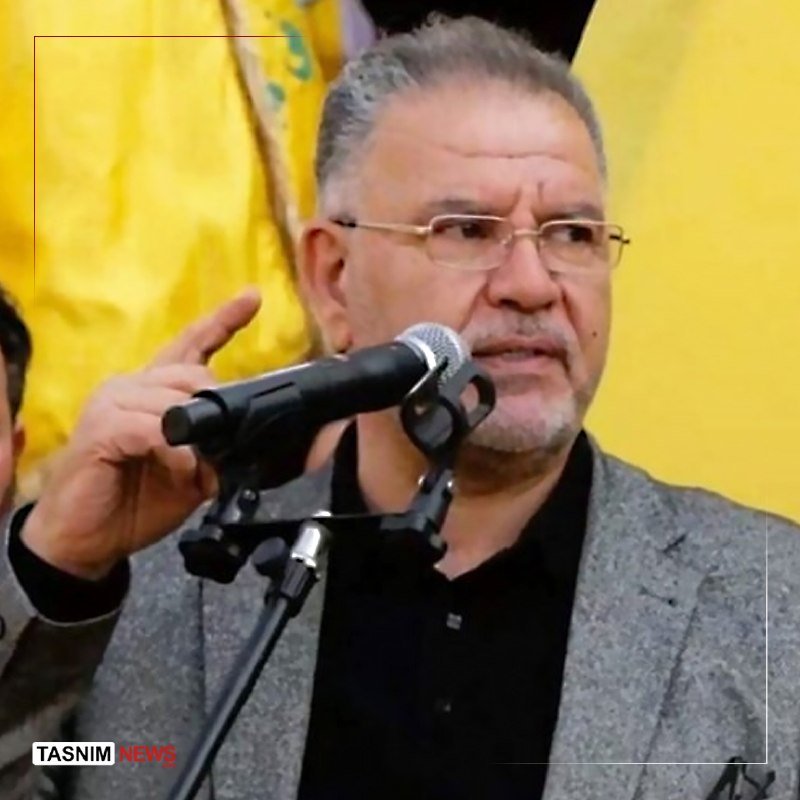
The claim, as relayed on 17 June 2026 by the Iran-affiliated outlet Al-Alam Arabic, is striking in its certainty. A figure identified as Alam al-Huda told the channel that members of Iran's Assembly of Experts met inside a part of the holy shrine in Qom, took a vote, and selected Mojtaba Khamenei to lead the country. He put the number at 50 participants, added that the tally exceeded the vote received by his late father, the "martyr Ali Khamenei," and described the second son of the deceased Supreme Leader as a man of "very special genius" whose command of jurisprudence sits "above justice." (Source: Al-Alam Arabic, 17 June 2026, 18:50–18:59 UTC.)
The most useful thing to do with a story this tidy is to slow down. If the account is accurate, it is the most consequential transfer of power in the Islamic Republic since 1989. If it is anything less than accurate — if it is a managed leak, a factional trial balloon, or a foreign information operation riding a Tehran-friendly channel — then the reporting that follows it is a test of editorial discipline, not a test of typing speed. This publication is choosing to read the room rather than the release.
The claims, item by item
Alam al-Huda's allegations, broadcast in a rolling series of "urgent" messages between 18:50 and 18:59 UTC on 17 June, run as follows. The Assembly of Experts convened inside the Fatima Masumeh Shrine complex in Qom. All members present were, in his telling, vetted or selected by Mojtaba Khamenei himself. A vote was taken. Fifty participants backed Mojtaba. The figure asserts that this total outstripped the vote his father received at the equivalent moment in his elevation. The figure further claims that only Mojtaba has the standing to "manage this war, manage diplomacy, and manage foreign policy" — a phrase that locates the announcement firmly inside the post-October-2023 strategic environment, in which the Islamic Republic has been fighting on multiple fronts through allied militias while absorbing direct Israeli strikes. (Source: Al-Alam Arabic, 17 June 2026, 18:50–18:59 UTC.)
The provenance matters. Al-Alam Arabic is the Arabic-language arm of Iranian state broadcasting. Its Arabic feed is consumed across the Levant and the Gulf as an authoritative voice on Tehran's intentions, and it is read by Western Iran-watchers as one of the more reliable signals of what the Islamic Republic wants the Arab street, and the wider region, to believe on a given day. The channel rarely publishes scoops in its own name; when it does, the question is usually not whether Tehran is on board with the line, but who inside the system is pushing it and at whom.
Why this is, at best, half a story
Three structural problems sit inside the account.
First, the venue. The Assembly of Experts is constitutionally a deliberative body of 88 senior clerics elected to eight-year terms. Its sittings are bureaucratic affairs: agendas, quorum counts, signed minutes, official communiqués published through IRNA and the office of the Supreme Leader. A vote held inside a section of a shrine, announced through a state-aligned TV channel by a commentator whose institutional role the channel does not define, is not the format in which Iranian constitutional succession has been conducted in any prior transfer. The framing is liturgical, not procedural — and that is the point. Whoever placed the story wanted the optics of a clerical conclave, not the optics of a parliamentary vote.
Second, the comparator. The claim that Mojtaba outpolled his father is a piece of political theatre rather than a verifiable fact. The 1989 elevation of Ali Khamenei unfolded across weeks, involved a constitutional amendment lowering the marja'iyya threshold, and was the subject of extensive later documentation by Iranian academics, opposition outlets, and Western Iran scholars. None of that institutional scaffolding appears in the account. We are simply told the number is higher. The slogan does the work that a citation would do in a serious accounting.
Third, the messenger. The cleric known as Alam al-Huda is a Qom-based commentator associated with hardline clerical networks. Naming him as the sole authoritative voice is a tell. Iran's factional politics run on precisely this kind of curated leak: a faithful intermediary floats a line on a friendly platform, foreign desks pick it up, and the regime watches the reaction before deciding whether to ratify, retract, or quietly forget. We are watching, in other words, a probe, not a proclamation.
What the dominant Western framing misses
The Western wire line on succession in Tehran has, for two decades, treated the Assembly of Experts as a body capable of producing surprises — moderates, technocrats, an off-ramp candidate. That reading has, historically, overstated the institution's autonomy and understated the role of the security services, the bonyads, and the Supreme Leader's own office in narrowing the field long before a vote occurs. The story itself, as relayed through Al-Alam, sits comfortably inside that script: an institutional mechanism doing the thing institutional mechanisms are supposed to do. The framing is reassuring because it implies that the post-Ali Khamenei order is still legible to outside observers, still navigable, still someone one could potentially deal with.
The more uncomfortable read is that the institutional clothing is decorative. The succession is being negotiated in the IRGC's operations rooms, in the bonyad boardrooms, and in the closed-door councils of the Assembly's actual power brokers — the small group of senior clerics who have been positioning allies for years. The Al-Alam account, on this reading, is the public shadow of a much more contested and much less decorous real-world process. The channel's choice to broadcast a tidy, shrineside, fifty-vote narrative is itself evidence that the negotiation is unsettled: a settled negotiation would not need a stage-managed leak.
The structural frame, in plain language
Iran is, at the moment, fighting a multi-front war by proxy while absorbing the most direct external blows to its leadership and infrastructure in the Islamic Republic's history. The question of who leads the country next is therefore a question of who commands the Axis of Resistance, who negotiates with Washington and Moscow, and who decides whether the nuclear file is reopened as leverage, as bargaining chip, or as existential insurance. The Mojtaba candidacy is, on its face, a hardline continuity bet: a son of the former Supreme Leader, deeply embedded with the IRGC and the security services, ideologically aligned with the conservative clerical establishment. If the account is accurate, the strategic posture of the Islamic Republic is unlikely to soften in the near term. If the account is a probe, then the same outcome is being shopped, not delivered — and the shop window itself tells the regional audience that Tehran expects continuity, not accommodation.
Stakes
For Tehran's Arab neighbours, a confirmed Mojtaba succession means a security architecture on the eastern shore of the Gulf that is more ideological, more personalist, and harder to deter through the customary channels of clerical diplomacy. For Israel, the calculus narrows: a leader whose claim to authority rests on loyalty from the security services is a leader with fewer internal checks on escalation. For the Gulf monarchies, it is a reminder that the political-risk pricing on Iranian assets — oil, gas, sanctions exposure, banking relationships — is now anchored to a single family rather than to a clerical institution. For the United States and Europe, it is a quiet warning that the assumption of a softening post-Ali trajectory, which has done so much analytical work in Western capitals since 2024, was always a bet on an institution that was never going to behave the way outsiders hoped.
The honest closing note is that we do not, on the evidence available, know that Mojtaba Khamenei has been formally selected. We know that an Iran-aligned channel says so, on a single evening, sourced to a single cleric, with no corroboration from IRNA, the Supreme Leader's office, the Assembly's own communications, or any independent wire. The next forty-eight hours will resolve the question, one way or the other. Until then, this publication treats the account as a signal of intent, not a report of fact — and treats the West's habit of reading Iranian institutional theatre as institutional substance as a habit worth breaking.
Desk note: Monexus ran the Al-Alam Arabic wire as a primary input, on the same footing we would run a state-aligned channel from any capital. The story is being treated as a managed signal pending corroboration from IRNA, the office of the Supreme Leader, or an independent wire. We will update the source ledger when, and only when, those corroborations arrive.
Wire provenance
This editorial synthesis draws on the following public wire/social posts:
- https://t.me/s/alalamarabic
- https://en.wikipedia.org/wiki/Assembly_of_Experts
- https://en.wikipedia.org/wiki/Mojtaba_Khamenei