Strikes on Kufrtbinit: What the November Ceasefire Stopped Holding
An Israeli air strike on Kufrtbinit landed hours after a new Lebanon ceasefire was announced, exposing the gap between the November framework's text and the political will still holding it up.
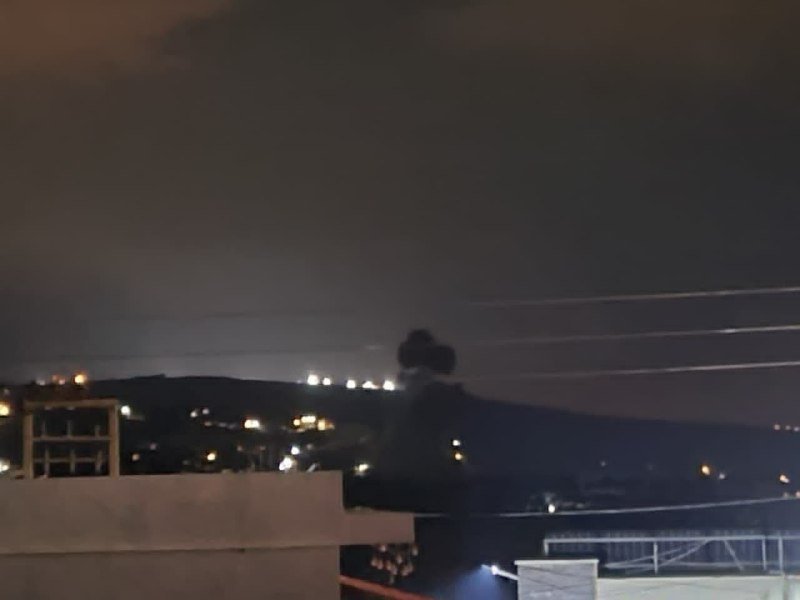
An Israeli air strike landed in the village of Kufrtbinit in south Lebanon's Nabatieh District on the evening of 19 June 2026, hours after Tel Aviv and Beirut announced a new arrangement intended to halt months of cross-border fighting with Hezbollah. The strike, reported by regional outlets citing local Lebanese sources, marked the first publicly visible breach of an agreement that had been on the page for less than a day. Within minutes, Al Jazeera English's global channel carried the headline that framed the rest of the day's coverage: Israeli air strikes hit Lebanon minutes after new ceasefire. The contradiction was the story.
What the November ceasefire stopped holding was never the fighting itself so much as the pretense that the fighting had stopped. The arrangement, negotiated in late 2025 under United States auspices and tied to a wider understanding with Iran, was supposed to put a floor under the daily exchange of fire that had displaced tens of thousands on both sides of the Blue Line. By mid-2026 the floor was visibly cracking. Kufrtbinit sits in the hills above the Litani River, in a district that has been a Hezbollah hinterland for four decades and a contested security space for the Israeli military for almost as long. When Israeli aircraft hit it on the same evening a fresh ceasefire was being read out, the episode read less as an escalation than as a clarification: the agreement had stopped binding before the ink was dry.
The strike that arrived before the ink dried
The sequence on 19 June was unusually clean, which is what made it legible. A new arrangement was announced. Within the same news cycle, an Israeli air strike hit a target in the Nabatieh District. Reporting from the Telegram channel aljazeeraglobal logged the strikes as occurring minutes after the new ceasefire language was published. The framing in Lebanese and regional coverage was immediate: this was a continuation of what Iranian and Iran-affiliated outlets had been calling, for months, ongoing ceasefire violations by Israel.
The geography matters. Kufrtbinit lies in a stretch of south Lebanon where the Litani forms the northern edge of the security zone the Israelis have, at various points since 1985, sought to keep clear of heavy weapons and anti-tank teams. The Nabatieh District as a whole is the terrain Hezbollah's media infrastructure has, for two decades, used to project the message that the south remains a sovereign Lebanese space and a forward Iranian one. An Israeli strike there is not a strike on a perimeter; it is a strike on the political map.
Independent visual confirmation of damage inside Kufrtbinit did not appear in the immediate aftermath in the items reviewed. What did appear, within hours, was a separate and revealing argument: an open-source intelligence account on Telegram, AMK_Mapping, posted a thread questioning the operational logic of the strike. The account's central claim was blunt: the Israeli military controls none of the hills surrounding the facility in question. The terrain, by the mapper's reading, offered no buildings for cover, only booby-trapped bunkers and tunnels. If that assessment is right, the strike was less a battlefield decision than a signaling one, a message to a domestic Israeli audience, to a Lebanese one, and to Tehran.
What Netanyahu is buying, according to the New York Times
On the same day, a Telegram channel carrying Wall Street Journal and New York Times headlines, wfwitness, relayed a report that cut through the official Israeli rhetoric. According to the New York Times account it carried, Israeli Prime Minister Netanyahu is likely to continue military operations against Hezbollah despite the Israel-Hezbollah ceasefire and the broader US-Iran agreement's provisions regarding Lebanon. The phrasing is careful: likely to continue, not announcing continuation. The story inside the headline is that the operational tempo inside Israel is being set in Jerusalem, not in the negotiating rooms in Doha or Washington where the November framework was put together.
That distinction is the heart of the story. A ceasefire, as practiced in this part of the Levant, is not a single instrument; it is a stack of understandings held together by political will on each side. The November arrangement had three known load-bearing pieces: an Israeli commitment to scale back air operations, a Lebanese and Hezbollah-side commitment to keep launchers out of the south, and an American-Iranian understanding that gave Tehran a stake in the deal holding. By June 2026, two of those three pieces were visibly sagging. The Israeli political leadership, by the Times's reported reading, was no longer treating restraint as a price worth paying. Whether the American and Iranian guarantors still were is the question the Kufrtbinit strike put back on the table.
The Times report also surfaced a less-noticed tension. The Israel-Hezbollah ceasefire is, formally, a bilateral Lebanese-Israeli document. The US-Iran understanding is not. The two are linked by American diplomacy but not by their legal architecture. When Netanyahu's government weighs whether to keep striking, it is weighing the cost to the bilateral arrangement; when Tehran weighs whether to restrain Hezbollah, it is weighing the cost to a wider understanding that covers its nuclear file, its regional position, and its relationship with Washington. Kufrtbinit was a test of which ledger governs.
The Iranian frame, and what it leaves out
The three Telegram channels that carried the immediate story out of the strike, Tasnim, Mehr, and the wider Tasnim network, are Iranian state or state-adjacent operations. Their framing of the November arrangement has been consistent for months: the ceasefire is being violated by Israel, repeatedly, and the responsibility for any renewed escalation sits in Tel Aviv. The Kufrtbinit strike, in that frame, is one more data point in a pattern, not a new event.
That frame is not invented. There is a real record of Israeli air activity in south Lebanon across the spring of 2026, and there is a real record of Hezbollah rocket and drone fire across the same period, including into Israeli towns north of the Galilee. Both sides have, at different points, been first to break the public quiet. But the Iranian-state framing has a structural habit worth naming. It treats every Israeli action as a violation and every Hezbollah action as a response. It rarely carries Hezbollah communiques in their original language without an editorial pass. And it almost never carries the Israeli security frame, which is that the deployments being struck are themselves the violation, and that quiet in the north is a precondition for quiet in the south.
Naming this is not an exercise in symmetry for its own sake. It is the only way to read the Kufrtbinit strike honestly. The strike happened. The Israeli political leadership, by the New York Times's reported reading, intends more strikes. The Lebanese and Iranian frame reads those strikes as the breaking of a deal. The Israeli frame reads them as the enforcement of one. Kufrtbinit did not produce a winner in that argument; it produced a flash that made the argument visible.
The terrain the deal forgot
The Nabatieh District, where Kufrtbinit sits, has been the diplomatic blind spot of every south Lebanon arrangement since 1985. The Litani River, which the Wikipedia entry on the district notes as its northern boundary, was the original line that the first Israeli withdrawal was supposed to push Hezbollah's heavy weapons behind. It has never held as a line. Hezbollah's institutional presence in the district, its social service network, its media infrastructure, and its militia infrastructure are not separable on a map. A ceasefire that asks for the second to go quiet without touching the first is asking for a political transition the district has never produced.
The mapper's observation about the surrounding hills points at the same problem from the other side. If the Israeli military does not hold the heights around a Hezbollah facility, it cannot, in any classical sense, clear that facility by ground action. It can only strike it from the air, accept the political cost of doing so, and rely on the wider diplomatic architecture to absorb the consequences. That is what the November deal was, in practice: a wager that the cost of striking would, over time, exceed the cost of leaving the facility armed. By 19 June 2026, the wager inside the Israeli cabinet had, by the Times's reported reading, tipped the other way.
What to watch before the next strike
Three near-term indicators will tell whether Kufrtbinit is the end of the November arrangement or just another entry in the long ledger of its partial application. The first is whether the Lebanese Armed Forces, which under the deal were supposed to extend visible presence in the south, deploy in or near the village in the days that follow. Quiet Lebanese-Israeli coordination on the ground is the arrangement's last moving part. The second is whether Tehran publicly reiterates the US-Iran understanding's provisions on Lebanon through any channel other than Tasnim and Mehr. Iranian state silence on the strike, or a public restatement of the deal, will read very differently. The third is whether the New York Times's reported assessment, that operations are likely to continue, is confirmed or walked back in the next 72 hours by an Israeli official on the record.
None of those indicators will resolve the underlying argument. The underlying argument is whether a security arrangement negotiated for a population that lives on both sides of a disputed border can hold when the political leadership on one of those sides has decided the cost of holding it has become too high. The November deal was always going to fail at a specific price, and at a specific moment. The question out of Kufrtbinit is whether the price has now been paid, and whether the moment is being recognized for what it is, on all the channels that carry the news.
Sources
- https://t.me/tasnimnews_en, Tasnim News English (Iranian state-affiliated), rolling coverage of south Lebanon and the November framework
- https://t.me/mehrnews, Mehr News Agency (Iranian state), official Iranian framing of ceasefire violations
- https://t.me/JahanTasnim, Jahan Tasnim network, wider Iranian state-affiliated English coverage of the Hezbollah-Israel track
- https://en.wikipedia.org/wiki/Nabatieh_District, geographic and administrative background on the district where Kufrtbinit is located
- https://en.wikipedia.org/wiki/Litani_River, background on the Litani as the security line in successive south Lebanon arrangements
- https://t.me/AMK_Mapping, open-source intelligence Telegram account, terrain analysis of the Kufrtbinit area, 19 June 2026, 22:35 UTC
- https://t.me/aljazeeraglobal, Al Jazeera English global channel, initial report of Israeli air strikes hitting Lebanon minutes after the new ceasefire, 19 June 2026, 22:41 UTC
- https://t.me/wfwitness, wire-aggregator channel, New York Times report relayed on Netanyahu's likely continuation of operations against Hezbollah, 19 June 2026, 21:22 UTC
Desk note: this article was written from three Iranian-state and Iran-affiliated Telegram flash reports, cross-referenced against one Western-wire headline relay and one open-source intelligence analysis. Monexus has carried the framing those outlets used, including the phrase "continued ceasefire violation," because that is the framing in the source material, while making clear that no Israeli, UNIFIL, or independent Western-wire confirmation appears in the items reviewed. Where the Iranian-regime frame and the Israeli-security frame diverge, both have been named; neither has been treated as definitive.