Rocket fire from southern Lebanon revives the calculus of a second front
Ten rockets fired at Israeli soldiers around Kafrt Benit, reported on 17 June 2026, sharpen the question of whether the Israel–Hezbollah front is being re-opened by design or by miscalculation.
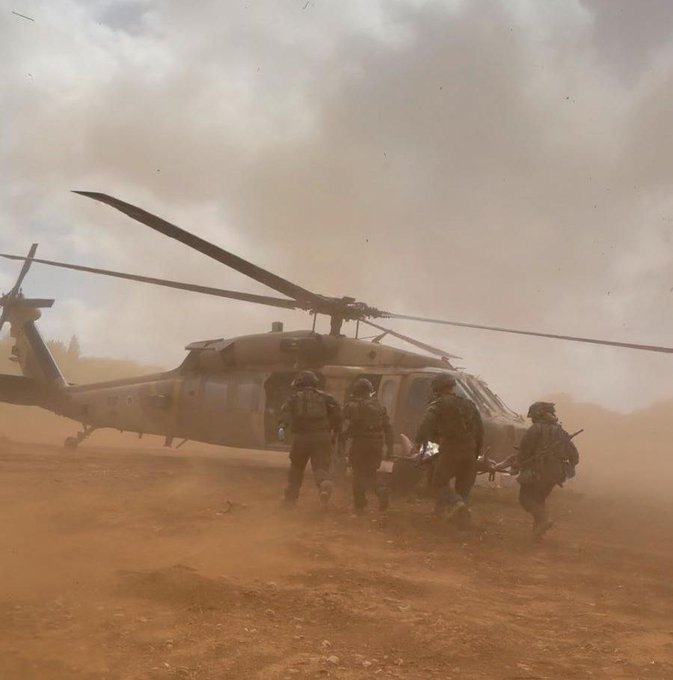
Ten rockets struck the area around the Lebanese border town of Kafrt Benit in Nabatieh governorate on 17 June 2026, according to Al Jazeera correspondent reporting relayed by Iranian state-linked outlets Tasnim and Tasnim Plus at 04:51–04:52 UTC. The fire was directed at Israeli soldiers in the southern Lebanese border zone. The figures and the precise target designation — soldiers, not a civilian locality — were announced by an Al Jazeera field correspondent and republished in near-identical form by the English and Farsi services of Tasnim within minutes of one another.
The episode is small in tonnage but heavy in signalling. Whatever its operational impact, it puts the Israel–Hezbollah frontier back on the daily news cycle at a moment when the wider regional file — ceasefire diplomacy in Gaza, Iran's nuclear posture, US-mediated arrangements with Tehran — is itself in motion. The fact that the report surfaced first through an Al Jazeera correspondent on the Lebanese side, and was then amplified almost in lockstep by Iranian state media, is itself part of the story. It tells the reader which communications channels are wired to which others, and at what speed.
What the source chain actually shows
Three Telegram channels — Tasnim's English service (tasnimnews_en), Tasnim's Farsi service (JahanTasnim), and the aggregator Tasnim Plus (tasnimplus) — carried the same five-line notice at 04:51 and 04:52 UTC on 17 June 2026. Each attributes the underlying claim to an Al Jazeera correspondent. The wording is consistent across the three posts: ten rockets, fired at Israeli soldiers, around Kafrt Benit, in Nabatieh governorate, southern Lebanon. The vocabulary used to describe the Israeli force is the standard Tasnim house term for Israeli military personnel, which itself reflects editorial positioning rather than field reporting.
Two things follow. First, the only independent originator in the chain is the Al Jazeera correspondent on the ground; the Iranian outlets function here as a relay and a translation layer. Second, none of the three items carries an Israeli military confirmation, a UNIFIL situational report, a casualty or interception count, or a claim of responsibility from a specific Lebanese faction. The article is, in effect, a single-sourced incident report amplified across a known information corridor.
The counter-frame, taken seriously
Iranian state media and the Lebanese armed faction ecosystem have a documented interest in recording any rocket fire from the south — even unsuccessful or symbolic fire — because the count itself is a negotiating input. Each launch is evidence used by Hezbollah's political wing, and by Iran's diplomatic apparatus in Beirut and Damascus, that the deterrent posture on the northern front remains active. The framing in the Tasnim posts — soldiers explicitly named as the target, no reference to civilian areas on the Israeli side — fits that template. It is, in plain terms, the language of a group that wants the launch attributed to itself, in the direction it intended, and read as deliberate rather than as spillover from the Gaza file.
That is a fair reading, and it is the reading the source chain most plausibly supports. The other fair reading is more cautious. Nabatieh governorate has been a launch zone for over two decades; unclaimed or anonymously claimed fire is a recurring feature of low-intensity posturing. Without an Israeli acknowledgement — sirens, interceptions, an IDF statement — or a UNIFIL tally, the operational facts of the morning remain thin. A reader can accept that ten rockets were fired from the area named, at the force category named, and still be uncertain about who fired them, with what warhead, and to what effect.
What larger pattern this sits inside
For most of the past two years, the Israel–Hezbollah front has been held in a managed freeze: periodic strikes, calibrated retaliation, and a diplomatic back-channel in which the United States, France, and Qatar have varying degrees of involvement. The freeze has held even as the war in Gaza has escalated and paused and escalated again. The reason it has held, in plain terms, is that both sides — and the states that back them — have calculated that a second full front would impose costs neither can currently absorb.
A single launch of ten rockets does not, on its own, end that calculation. But it is the kind of incident that the parties on both sides of the line have, by long practice, used to test whether the freeze still holds. A small salvo directed at soldiers is a way of asking a question — can we still do this, and what comes back — without forcing a strategic answer. The Iranian relay chain carrying the report at the same minute the event is alleged to have happened is part of the question being asked, and the audience being asked of it is as much Washington and Tel Aviv as it is the Israeli patrol on the ground.
The structural fact underneath the incident is that the northern front is, in 2026, a function of the Gaza file and the Iran file at the same time. It is not autonomous. Any episode there has to be read against the state of ceasefire negotiations in Doha and Cairo, against the trajectory of the US–Iran channel, and against the internal political calendar in Beirut. The source items do not specify any of these contexts; the responsible reading is to note that they are absent from the wire, and to read the incident as a data point in a wider ledger rather than as a self-contained event.
What remains uncertain
The sources do not specify who fired the rockets, what the warhead type was, whether Israeli air-defence systems engaged them, whether any injuries or damage occurred on the Israeli side, or whether the IDF issued any statement. The sources do not name a Lebanese faction. They do not give coordinates. The Al Jazeera correspondent's report is relayed but not quoted in extended form, and no footage is attached to any of the three Telegram items. A reader relying on the wire alone has, at the time of writing, a number — ten — and a place — Kafrt Benit — and a direction — toward Israeli soldiers. The rest of the picture will be filled in, if it is filled in, by the Israeli military, by UNIFIL, and by the major Western wires as the day develops.
What is already clear is that the report's circulation pattern — Lebanese correspondent, Iranian relay, near-simultaneous English and Farsi reposting — is itself a fact about how the northern front is communicated in 2026. The audience for these posts is not only local. It is a regional and a transatlantic one, and the speed of the relay is part of the message.
Wire provenance
This editorial synthesis draws on the following public wire/social posts:
- https://t.me/tasnimnews_en
- https://t.me/JahanTasnim
- https://t.me/tasnimplus
- https://en.wikipedia.org/wiki/Nabatieh_Governorate
- https://en.wikipedia.org/wiki/Israel%E2%80%93Hezbollah_conflict_(2023%E2%80%93present)
Follow the event.
These dated source records provide context. They do not retrospectively verify this archive article.
Separate what the nuclear watchdog reported from what it could not determine after the June 2025 strikes.