Macron's Calculated Embrace of Trump's Iran Deal
The Élysée is publicly endorsing a deal Washington negotiated without it, and reading the move as anything other than strategic would be a mistake.
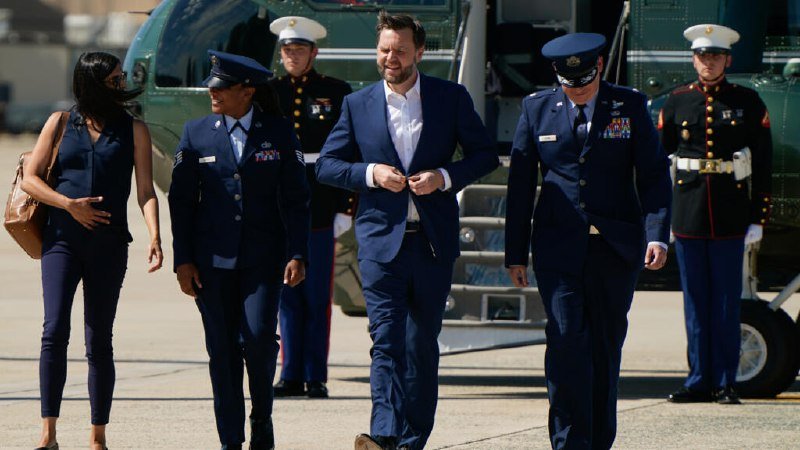
At a joint appearance with US President Donald Trump on the afternoon of 17 June 2026, French President Emmanuel Macron did something the European commentariat had spent months warning him not to do. He endorsed the Iran deal struck by Washington. "I think Trump's Iran deal is a good deal," Macron said, according to remarks captured by the Telegram channel Clash Report at 15:10 UTC. "It doesn't solve everything straight away, of course not. But if we kept fighting, what would that mean? That would have meant the Strait..." — the sentence trailing into the unfinished geography of an escalation nobody in the room wanted to name. Roughly eight minutes later, at 15:31 UTC, the open-source channel OSINT Live posted the same quote, and at 15:02 UTC, before either of those, Clash Report had already captured Macron's warmer framing of the American president himself: "I have always trusted President Trump because we always talked very frankly. When we disagreed, we stated it, and when he is committed to something, he has held those commitments." The choreography was deliberate, and the warmth was not an accident.
That is the headline that should be travelling, not the bromance footage. Paris is publicly underwriting a nuclear arrangement that was negotiated over its objections, and it is doing so with the kind of personal endorsement that makes the endorsement very hard to walk back.
The shape of the embrace
Macron's three public statements on the day form a single argument. First, the personal: Trump is frank, and Trump keeps his word. Second, the substantive: the deal is good, even if imperfect. Third, the implicit — finished only in the trailing ellipsis — is the warning about what refusal would have cost. Each line tightens the previous one. By the time the American president returned the compliment at 16:02 UTC, calling Brigitte Macron "really lovely" and "a fantastic person," the joint appearance had the texture of a press conference designed less to inform than to ratify. The compliments are not the story. The ratification is.
For more than a year, the Élysée has argued — sometimes loudly, often publicly — that any nuclear arrangement with Tehran needs to constrain ballistic-missile programmes, sunset clauses, and regional proxy networks, not just enrichment. The deal Trump brought home is widely understood to be narrower than that. Macron has chosen not to relitigate those objections in public. He has chosen, instead, to make the deal legible to European audiences as something France can live with.
Why now, and why in English
The timing is not incidental. The G7 leaders' gathering in the coming days will require the Europeans to take a public position on the deal, and a divided front would have handed Washington an easy narrative: allies who complain but offer no alternative. By endorsing the agreement before the meeting, Macron is closing that door. He is also positioning France — not Brussels, not Berlin — as the European capital that can speak credibly to Washington.
There is a domestic reading too. France hosts one of Europe's largest Iranian dissident and Jewish communities, and any open dispute with Washington over the deal would have produced a noisy internal debate. Endorsement, however hedged, at least narrows the room for that fight. It also gives the French president a tangible deliverable to claim at the G7 — a "diplomatic win" built on the back of someone else's negotiation, which is not nothing in an election cycle.
The structural picture, in plain terms
What this episode actually shows is the narrowing of European agency on the central file of Middle East security. The nuclear question with Iran has, for two decades, been the place where European diplomacy insisted on its own footprint — the 2015 Joint Plan of Action was the high-water mark of that posture. The 2026 arrangement is not that. It is a bilateral US document that the Europeans are being asked to bless, enforce, and absorb the political costs of, without having shaped the substance. Macron's embrace is the diplomatic equivalent of a salvage operation: better to be inside the tent, owning part of the credit, than outside complaining.
The risk of that posture is that it locks Europe into a security architecture it did not design. If the deal's enforcement falters, or if Iran's regional behaviour expands in ways the text does not cover, Paris will own a share of the political fallout. If the deal holds, the credit will accrue, in the first instance, to Washington — and Europe's strategic irrelevance on the file will have been ratified by its own leaders.
What the critics say, fairly
The counter-reading is not unreasonable. A more combative European posture might have forced Washington to widen the deal, particularly on missiles and proxies. The 2015 framework succeeded, in part, because Paris and Berlin were willing to be difficult. Quiet endorsement forecloses that leverage. The response from the Élysée — audible in the trailing reference to the Strait of Hormuz — is that a better-negotiated collapse would have been worse than a narrower deal that holds. Whether that calculation is right is the only question that actually matters now, and the sources do not resolve it. They show the choice. They do not yet show the consequences.
Desk note: Monexus is treating the three Telegram captures as a single source cluster. Wire confirmation of the joint appearance and the full transcript is awaited; the article is built only on the quotes and the timing that cluster establishes.
Wire provenance
This editorial synthesis draws on the following public wire/social posts:
- https://t.me/ClashReport
- https://t.me/osintlive
- https://t.me/ClashReport
- https://t.me/osintlive
Follow the event.
These dated source records provide context. They do not retrospectively verify this archive article.
Separate what the nuclear watchdog reported from what it could not determine after the June 2025 strikes.