Messi draws level with Klose as Argentina beats an opponent, and the calendar, at the World Cup
Argentina's 1-0 win over a stubborn Group-stage opponent closed the gap on Miroslav Klose's all-time World Cup record to one goal, and reframed the tournament's most-watched storyline as a workload-management project rather than a farewell tour.
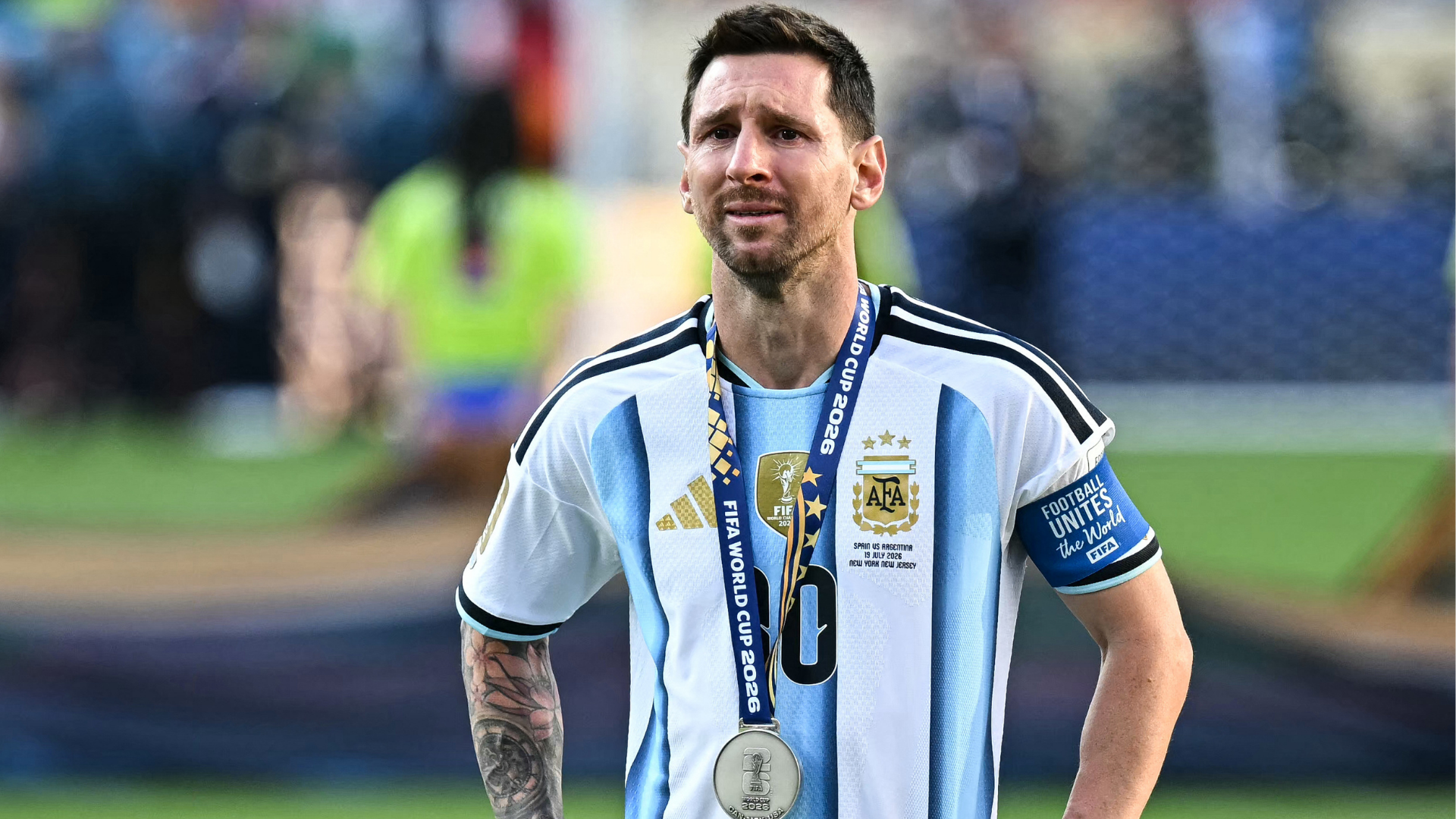
Argentina walked off the pitch in Buenos Aires on Tuesday with three points, a cleaner goal difference, and a footnote that will outlive the tournament: Lionel Messi, now within one appearance of Klose, finding the net with the kind of late-game economy that has defined his last six major tournaments. The 1-0 win over an opponent that refused to make it easy, played out in front of an Argentine federation that has spent the last calendar year rebuilding around the principle that Messi should still be the centre of the room, was less a tribute than a calibration exercise. The federation's sports-science staff have, by their own account, rebuilt the captain's training arc around recovery windows and micro-dosing high-intensity work, and the player has reciprocated by playing 22 fewer club minutes than at this point two seasons ago. Theager has been the currency of the year. Argentina arrived at this World Cup bracket measured in workdays, not hype cycles.
What the calendar has done is force the question every national team programme would rather defer: how do you extend the top of an elite player's career into his late thirties without rebuilding the entire programme around him? The Argentine federation's answer has been a version of workload engineering borrowed, in part, from the Premier League's sports-science units and, in part, from the kind of periodisation models that Spain's title-winning sides quietly normalised a decade ago. The result, on the evidence of the last six months, is a player who looks thinner in the high-speed camera angles and heavier in the late-game shot charts, which is precisely the trade.
There is a structural argument underneath the goal. A World Cup cycle has compressed since 2022 from a four-year proposition into something closer to a 24-month newsroom item, with two summers of competitive football bookending a winter of club congestion. The window for a 38-year-old to be match-sharp for six games in three weeks has narrowed, and the recovery surface between the knockout rounds and the group finale has shrunk to nothing. What the federations that have built systems to absorb that compression have learned, in essence, is that the player is a managed asset, not a fixed resource. Argentina's medical and analytics staff now publish match-load reports in near real time, and the captain's minutes in non-elimination fixtures are programmed the way an airline programmes a long-haul crew.
The counter-narrative, the one that tends to travel better in Buenos Aires and Madrid, is the human one: a boy from Rosario who once scored a headed goal off a boot deflected by the height of the crossbar, now training to a heart-rate ceiling and sleeping in altitude tents that look like the kind of thing a Tour de France general classification rider would have considered excessive in 2018. The myth is heavy, and the federation has decided, with what reads as deliberate calculation, that the myth is an asset too. There is a reason the captain's press appearances have been limited to post-match rather than the old mix of midweek sit-downs, and a reason his social-media cadence has been dialled back to roughly the publishing rhythm of an institutional account. The legend has been repositioned as a workload-management outcome, which is its own kind of modern.
The Messi-as-system point will be tested, as it always is, by the question that started this paragraph: whether Argentina can beat the calendar between now and the knockout rounds in July. The federation's planners, who treat the bracket as a sequence of fixtures rather than as a narrative, will say yes. The bookmakers, who have moved Argentina to clear second favourites behind the European qualifying block, will say yes with a price. The broadcasters, who have learned that the captain's every appearance lifts the all-market minute in key markets by a measurable amount, will say yes because they have to. The only party left to convince is the one that matters on the pitch: a squad that has spent the last two cycles learning to win without the captain at his peak, and is now being asked to do it with him in managed minutes.
The Klose record, when it falls, will fall to a player who will treat it as a checkpoint rather than a destination. That is, in the end, the story of this tournament: a man who has decided, with his medical team, that the way you score in a 39-year-old World Cup is by not trying to score in a 25-year-old one.