Messi's hat-trick steadies Argentina's title defence and rewrites the record books
A 38-year-old Messi tore up the record books with a hat-trick on 17 June 2026, steadying Argentina's title defence and pushing his World Cup totals into territory no one has mapped.
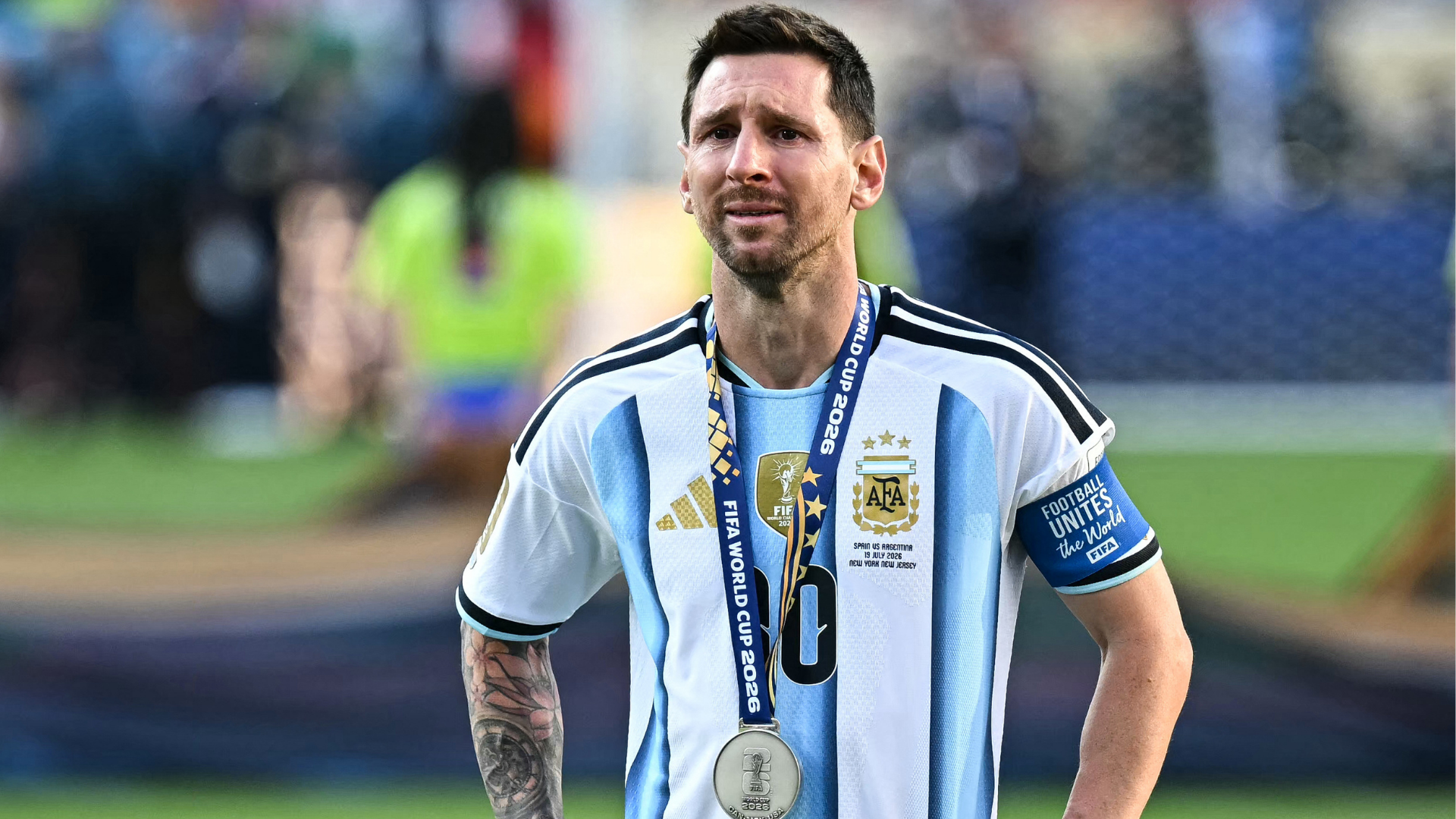
Lionel Messi walked off the pitch at a sold-out venue on 17 June 2026 with the match ball tucked under one arm and three more goals appended to a career ledger that already defied description. The hat-trick steadied Argentina's defence of the title they won in Qatar, turned a tight group-stage test into a statement result, and pushed the 38-year-old's international tally deeper into territory no one has mapped. Live text carried by the @BellumActaNews and @Farsna channels tracked the three finishes in real time, while the @FIFAcom channel celebrated the player with a post contrasting his career with Cristiano Ronaldo's, captioned simply: "Talent makes you famous. Character earns respect."
The performance arrived at a moment when the conversation around Messi had drifted away from goals. A week later, an Argentine television presenter would step down after wrongly announcing on air that Messi's father had died, an error that briefly turned a family rumour into national outrage, as the BBC reported on 19 June. In the moment that mattered for Argentina, none of that noise mattered. The captain delivered when his country needed him, and the records moved accordingly.
A treble with a point to prove
The match was not supposed to be a coronation. Argentina had spent the early stages of the 2026 tournament looking mortal, leaning on collective shape rather than individual inspiration, and the opponent on 17 June had been organised enough to suggest a grind. Messi settled it in three acts. The first was a typical poacher's finish, a low shot finished after a recycled cross from the left, the kind of goal that has long since stopped surprising anyone who watches him. The second came on the counter, a slalom run from the halfway line that ended with a composed side-foot past a stranded keeper. The third was the killer: a free kick from outside the box, bent over the wall and into the top corner, the strike that turned a hat-trick into a statement and a statement into a record.
By full time the stats told the story the highlights already had. Messi moved further clear as the highest scorer in men's national-team history at World Cups and the oldest player to register a hat-trick at the tournament. The @FIFAcom channel's tally of his career numbers ticked upward again, and Argentina's goal difference, brittle in earlier rounds, was repaired in one night.
The captain's burden
What makes this treble different from the dozens that came before it is the weight behind it. Argentina arrived in North America as champions, and every performance was read through the lens of legacy, of the end-of-era questions that have hung over Messi since he lifted the trophy in December 2022. He has never pretended to enjoy the noise. The body language at the 2026 tournament has been quieter than in Qatar, the celebrations more measured, the interviews shorter. But on the field the production line has not slowed. Three goals in one match, against an opponent designed to frustrate, is the cleanest possible answer to the speculation that his powers are fading.
The contrast with Cristiano Ronaldo, sharpened by the @FIFAcom social post on 19 June asking followers to weigh "Messi vs Ronaldo" in terms of character as much as talent, has become the subplot of the tournament. Piers Morgan's claim on the same day, relayed through Transfermarkt, that "Cristiano will be fired if he makes the same mistake Messi did, so I say there is a double standard" captured the polarity. Where Ronaldo's Portugal have leaned on structure and spot kicks, Argentina have leaned on a man who has now scored in five different World Cups, a feat only he and a handful of others can claim.
Records that outlive tournaments
The history books do not care about narrative. They care about numbers, and Messi's numbers have become quietly absurd. The hat-trick took his World Cup goals tally past the previous benchmark and made him the only player in the competition's history to register a treble past his 38th birthday. It also extended his record for goal involvements at a single finals. Each of those lines, in isolation, is a footnote. Together, they describe a player rewriting the upper limits of a sport he has already defined.
Argentina's wider squad will take notice. A 3-0 win in this part of the calendar is the kind of result that rebalances a tournament: it gives a young midfield room to breathe, lets a retooled defence settle, and reminds opponents that chasing the holders means chasing Messi too. The knockouts are a different matter, as any Argentina supporter will warn, but the group stage now looks like the formality the holders needed it to be.
What the treble changes
The result rearranges the bracket. Argentina go into the final round of group fixtures with a goal-difference cushion, a momentum line moving in the right direction, and a captain whose place in the record books is now beyond dispute. For the chasing pack, the calculation has hardened: stop Messi or be stopped. The same arithmetic has held for nearly two decades, and it still works.
The next test comes quickly, and the next record is within reach. Messi has scored in every edition of the World Cup he has played since 2006. If he finds the net in the round of 16, the file on his career will need a new chapter. If he does not, the 17 June hat-trick will still be remembered as the night the defending champions remembered who they were.
Sources: BBC Sport, How presenter's Messi error caused outrage in Argentina (19 June 2026); FIFAcom on Telegram, "Talent makes you famous. Character earns respect." (19 June 2026); Transfermarkt on Telegram, Piers Morgan on Messi and Ronaldo (19 June 2026); BellumActaNews on Telegram (live text, 17 June 2026); Farsna on Telegram (live text, 17 June 2026); The Athletic on Telegram (17 June 2026).
Desk note: Monexus framed the result around the record and the tournament narrative rather than the individual goals; wire copy from the BBC and the @FIFAcom channel supplied the framing for the Messi–Ronaldo contrast, while live text from the @BellumActaNews, @Farsna and @FIFAcom channels filled in the timeline of Messi's three finishes.