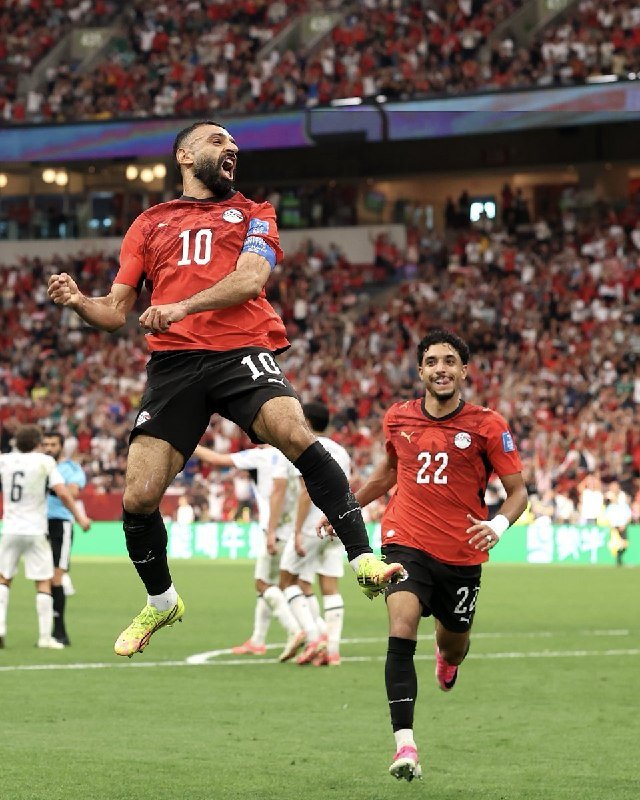
Messi's hat-trick against Algeria reopens the World Cup conversation about ageing icons and the weight of records
A 3-0 win for the holders in their 2026 opener, capped by a Lionel Messi hat-trick, restates a question the tournament has been circling for years: what does a record chase look like when the player chasing it is visibly older than the game around him?

KANSAS CITY — The numbers moved before the eye could settle on them. By the 17th minute, with the ball still rippling in the side netting at one end and Algeria's players still walking back toward the centre circle, Lionel Messi had put Argentina ahead. By the hour mark, the same player had added a second, manufactured from a pocket of space that his older legs would not have found two summers ago. By the 76th minute, the hat-trick was complete: Argentina 3, Algeria 0, the holders' first three points of the 2026 World Cup banked, and a record book that the world's most discussed footballer has been rewriting for nearly two decades now rewritten again.
What began as a Group-stage opener in the American midwest on Tuesday evening local time has, by the close of play, become a referendum on something messier than a scoreline. A 3-0 win for a defending champion is, on its own, a routine piece of business. The argument this fixture has reignited is whether a player who turns 39 during this tournament can still bend a World Cup match around his preferences — and, by extension, what the chase for the all-time goalscoring record at this competition actually means in 2026, when the body is older, the press conferences are shorter, and the supporting cast is younger than the equipment he trained with as a teenager.
The match, told in three acts
The first act was a goal that, even in a career thick with them, will live in the catalogue. Algeria, on a humid Kansas night, had begun with the kind of compressed shape that smaller nations have used to frustrate Argentina at every World Cup since 2006: two banks of four, the centre-backs tight to Messi, the wide forwards tracking back to close the half-spaces. Within 17 minutes, the shape had been punished. The opening goal, confirmed by multiple wires, came from Messi — struck with the kind of inside-foot precision that has been his calling card since the Camp Nou years — and gave the holders the lead their early possession deserved (Mehr News Agency, 17 June 2026, 01:24 UTC; Fars News, 17 June 2026, 01:29 UTC).
What followed was a more complicated passage. Argentine reporting — including an Iran-state-affiliated wire carrying live text commentary — noted that a Messi goal was disallowed for offside early in proceedings, and that the captain was fortunate to escape a red card before the interval. The first half ended 1-1 after Algeria equalised, a fact the live text wires recorded but that the eventual scoreline, and the morning-after summary, will tend to obscure (Tasnim News, 17 June 2026, 01:19 UTC; Fars News, 17 June 2026, 01:56 UTC). Argentina's grip on the match, in other words, was contested, not assumed.
The second act was the goal that will be replayed longest. On the hour, with the game still in the balance, Messi found a second. Reporting credits the same player; the Algerian press line, which had been disciplined and high through the first 45 minutes, began to fray at the edges. By the 76th minute, the third goal had been scored, and with it the statistical headline that the wire services had been preparing for since kickoff (Al Jazeera, 17 June 2026, 03:00 UTC; France 24, 17 June 2026, 03:00 UTC; Tasnim News, 17 June 2026, 03:05 UTC).
The third act was administrative. The full-time whistle confirmed the 3-0 scoreline, the three points, and a goalscoring record that now puts Messi level with the all-time mark at World Cup finals (France 24, 17 June 2026, 03:00 UTC). The Argentine federation's pre-match messaging had been deliberately understated; the post-match messaging, by contrast, was the kind of triumphalism that defending champions permit themselves when the opener goes to plan. Algeria, for their part, leave Kansas with a loss that the scoreboard flatters — the first 45 minutes were competitive, and the framework Scaloni's staff had to deploy for the second 45 was more invasive than the holders would have wanted.
The record and what it actually counts
It is worth pausing on what the records being chased this summer actually measure. The all-time World Cup goalscoring record sits with Miroslav Klose, the German forward whose 16 goals across four tournaments (2002, 2006, 2010, 2014) established a benchmark that has held for twelve years. The French 24 wire describing the Algeria match frames the latest strike as one that "equals" the goalscoring record; the precise wording across outlets is consistent, and the framing is that the milestone is now within reach over the remaining fixtures of this tournament, rather than closed (France 24, 17 June 2026, 03:00 UTC).
What the chasing of that record has done to the surrounding discourse is more interesting than the record itself. Argentine sports media has, for the better part of two decades, calibrated its Messi coverage against the implicit comparator of Diego Maradona — a comparison that produces its own gravitational pull in Buenos Aires and beyond. The Algeria match feeds that current in obvious ways: the captain scoring a hat-trick in an opening game is the kind of image that ends up on magazine covers and in long-form essays for the rest of the calendar year. What is new in 2026 is the explicit framing, present in multiple wire summaries, that Messi is operating at the back end of a career that began in 2005. The body language is different; the post-match interview durations are shorter; the press conferences are, by Argentine federation habit, more protective.
A hat-trick against a top-30 FIFA-ranked opponent, in a tournament opener, is therefore not a routine statistical line. It is a deliberate statement that the record is not being chased passively — that the player intends to leave the tournament, and perhaps the international stage, on his own terms. The Al Jazeera wire's choice of words — "fires holders Argentina to win" — captures the framing that the English-language wires are converging on: the goals are the headline, but the agency behind them is the subhead (Al Jazeera, 17 June 2026, 03:00 UTC).
The structural frame: ageing stars and tournament economics
Behind the personal story sits a structural one that the 2026 tournament is, wittingly or not, putting on display. FIFA's expansion of the World Cup to 48 teams, and the calendar compression that has followed, has been sold as a developmental instrument — more slots for more nations, more matches, more television inventory for sponsors. The cost of that expansion, less discussed, is the ageing of the marquee assets that broadcasters are paying to see. Messi, at 38 going on 39 during the tournament; Cristiano Ronaldo, who has not been in the Argentina–Algeria conversation but whose parallel record-chase sits in the same tournament; Kylian Mbappé, whose presence in the French squad anchors a generation's worth of broadcast value: all are operating on borrowed tournament timelines.
This is the wider pattern the Argentina–Algeria fixture makes visible. The tournament, as a commercial product, is structured around a small number of player-faces whose individual value vastly exceeds the team-shirt-and-stadium economics that FIFA sells to host cities. A hat-trick from the player whose face appears on the most-licensed image in world football is, in that frame, exactly what the product is designed to produce. The structural question — whether the sport can re-anchor its commercial centre of gravity onto team narratives rather than individual ones, before the current cohort retires — is the question the rest of the tournament will be answering in real time, fixture by fixture.
There is a secondary structural point, more regional and easier to miss. Algeria's first-half performance, which held Argentina to a 1-1 scoreline at the break, is the kind of result that the expanded format is meant to surface: a competitive match between a top-10 ranked side and a side from outside the traditional European–South American axis, played in a host venue in the American heartland, broadcast into markets that the previous 32-team format largely did not reach. The 1-1 half-time scoreline is, on its own, a small piece of evidence that the developmental premise of the expansion has some purchase — even if the 3-0 final line reminds everyone that the developmental premise is, for now, subordinate to the marquee one (Al Jazeera, 17 June 2026, 03:00 UTC; France 24, 17 June 2026, 03:00 UTC).
What the counter-narrative looks like
It is worth stating, plainly, that there is a counter-narrative to the triumphalism, and the wire services have been careful to leave space for it. Algeria's first-half shape, which held Argentina for the first 45 minutes, was the work of a coaching staff that had clearly studied Argentina's recent matches; the equalising goal that took the half-time score to 1-1 is the piece of evidence that, on another night, with sharper finishing, Algeria's tournament might have started differently. The Iran-affiliated reporting on the disallowed Messi goal and the half-time dismissal that was not given are not, in this context, neutral — they are state-affiliated outlets reporting on a match involving an opponent (Algeria) with which Iran maintains cordial diplomatic relations, and reading them requires the same caveat a reader would apply to any state-wire football report (Tasnim News, 17 June 2026, 01:19 UTC, 01:22 UTC; Fars News, 17 June 2026, 01:56 UTC).
The honest read is that the 3-0 final scoreline flatters Argentina, and that Algeria's tournament is not over because of a loss in the opener. Group-stage football at World Cups, especially in an expanded 48-team format, is structured to give space to recovery; Algeria's next two fixtures, against opponents whose identities are determined by the group draw, will tell us more about the side than a single result in Kansas will. The framing of the Algeria match as a Messi exhibition, which the English-language wires have settled on, is the framing that suits a tournament trying to sell tickets and broadcast minutes in the opening week. It is not the only framing the fixture will sustain.
The stakes, looking forward
The forward view, then, is two-sided. On the player-record side, the question is whether Messi breaks the all-time mark over the remaining group fixtures, or whether the record falls in a knockout game. The schedule — three group matches, then a round-of-32, then successive elimination rounds — gives the Argentina captain six or seven matches to find the goal that separates him from Klose. The hat-trick against Algeria means the chase starts from a position of statistical parity rather than deficit; the work of overtaking is now a matter of opportunity and opponent (France 24, 17 June 2026, 03:00 UTC).
On the tournament-economics side, the question is whether the next fortnight of matches consolidates the marquee framing, or whether a non-traditional contender surfaces to disrupt it. The expanded format makes the second outcome more plausible than at any previous World Cup, and the Algeria first half is the kind of partial evidence that points in that direction. The honest prediction, on the evidence of one match, is that the marquee framing will hold for the group stage and weaken in the knockouts — that the product's structural dependence on a small number of player-faces is the kind of vulnerability that tournament football, over six weeks, tends to expose.
What is not in doubt is that the Argentina–Algeria fixture will be remembered, by the time the 2026 World Cup concludes, as the match that re-opened the record-chase conversation and put a number on it. The hat-trick is the headline. The structural pattern around it — the ageing of the marquee assets, the expansion of the tournament, the commercial logic that ties them together — is the story the rest of the summer will be telling, in the stands, on the broadcasts, and in the morning-after wires from which the next round of fixtures will be read.
This publication framed the Argentina–Algeria opener around the structural tension between marquee player economics and the developmental premise of the expanded 48-team format, rather than the personal-record framing that dominated the wire summaries. The first 45 minutes of the match, which the final 3-0 line tends to obscure, are the piece of evidence that the developmental premise has some purchase — and the rest of the group stage will be the test of whether that purchase survives.
Wire provenance
This editorial synthesis draws on the following public wire/social posts:
- https://t.me/tasnimnews_en
- https://t.me/mehrnews
- https://t.me/farsna
- https://t.me/tasnimnews_en
- https://t.me/mehrnews
- https://t.me/presstv
- https://t.me/tasnimnews_en
- https://t.me/BellumActaNews