Mondelez defends staying in Russia as G7 moves to choke Moscow's oil revenues
A Cadbury-maker's boss calls continued Russian operations 'the right decision' on the same day G7 leaders promise more air defence and new pressure on Moscow's hydrocarbons.
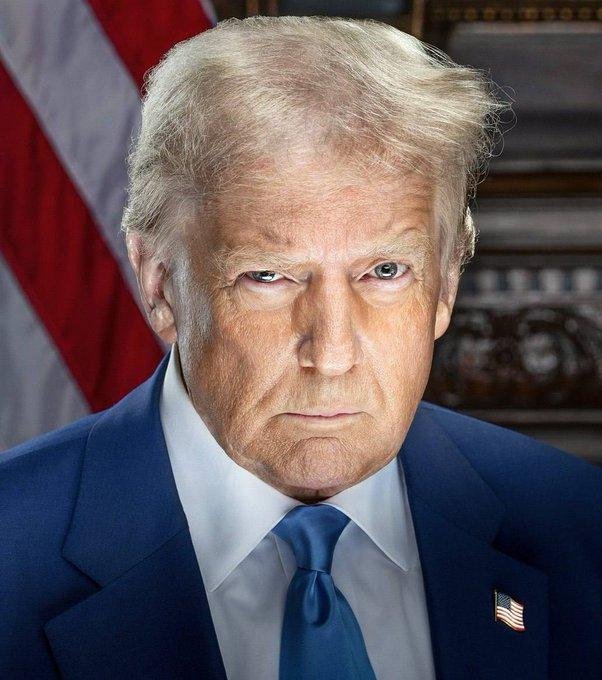
On 16 June 2026, the chief executive of Cadbury-owner Mondelez International told the BBC that his company's decision to keep operating in Russia after the full-scale invasion of Ukraine was the "right decision." Dirk Van de Put's comments landed in the same news cycle as a G7 communique promising to expand air-defence supplies to Kyiv and to step up measures against Moscow's oil and gas revenues. The juxtaposition is sharp: Western governments are tightening the financial screws on the Kremlin while at least one of the West's most recognisable consumer-goods companies argues that selling chocolates in Russia is consistent with corporate responsibility.
The argument the Mondelez boss is making, and the argument the G7 is making, are not easily reconciled. Both rest on the same premise — that the war in Ukraine is the central geopolitical event of the decade — but they draw opposite operational conclusions. The G7's logic is that economic engagement with the Russian state, in any form, is part of the problem. Mondelez's logic is that withdrawing would simply hand market share to local rivals and do nothing to change the war's course. Each side claims the moral high ground; the underlying question is whether corporate presence in a war economy is neutrality, complicity, or something in between.
A confectioner in a war economy
Van de Put's interview with the BBC, published on 16 June 2026, was a rare public defence of the kind of "staying put" position that has divided Western boards for four years. Mondelez, which owns Cadbury, Oreo and Toblerone, was one of the largest Western consumer-goods companies to maintain a Russian footprint after February 2022. Rivals including Mars, Nestle and Unilever pursued various combinations of local carve-outs, write-downs and phased exits; Mondelez's leadership has consistently argued that a local entity, run by local staff and taxed locally, was the least bad option available.
That argument has aged unevenly. Civil-society groups tracking the corporate presence in Russia have pointed out that local taxes, rents and supplier payments feed into the broader Russian economy, even if no dollars cross the border to the Kremlin directly. The Mondelez boss's claim is that the alternative — handing factories and brands to Russian owners — is worse. It is a defensible position, and one shared privately by executives across consumer staples and fast-moving consumer goods. It is also the kind of position that becomes harder to defend when Western governments are publicly debating how to starve the Russian state of revenue.
The timing matters. The BBC interview aired the day before the G7 summit's closing communique, which the Ukrainian outlet Unian reported at 05:08 UTC on 17 June as committing the bloc to "increase military assistance to Ukraine and hit Russia's oil and gas revenues." A corporate decision to remain inside the Russian market is, in that light, not just a balance-sheet call but a quiet vote on a question the G7 is trying to answer collectively.
What the G7 actually agreed
The communique, reported by Unian from the Ukrainian side of the wire at 05:08 UTC on 17 June 2026 and corroborated by the Telegram channel noel_reports at 06:00 UTC, commits the G7 to three operational tracks. First, additional air-defence systems and interceptors for Ukraine, addressing what Kyiv has described as a critical shortfall in the face of sustained Russian missile and drone barrages. Second, longer-range capabilities, the precise contours of which remain undisclosed but which clearly gesture towards striking deeper into Russian-held territory and Russian logistics. Third, consideration of licences to expand Ukrainian military production — an industrial-policy instrument that, in effect, treats Ukrainian defence manufacturing as a G7 priority sector.
The oil-and-gas revenue track is the more novel element. The communique frames Russia's hydrocarbon exports as the financial spine of the war effort and signals that the G7 intends to keep tightening the price cap, the shipping-insurance regime and the secondary-sanctions perimeter around buyers of Russian crude. The Telegram summary from noel_reports is explicit: the G7 is working to deny Moscow the revenues that underwrite its offensive.
That posture sits awkwardly with the corporate posture Mondelez has adopted. Western governments are saying, in effect, that any commercial activity that supports the Russian tax base is part of the chain that buys missiles for the Kremlin. Mondelez is saying, in effect, that a confectionery factory in Vladimir or Yekaterinburg is not a meaningful node in that chain and that exiting would harm Russian employees and consumers more than it would harm the Russian state.
The counter-narrative from Moscow and from the boardroom
The Russian counter-narrative to the G7 communique is the one that has been consistent since 2022: Western sanctions are an act of economic warfare aimed not at changing Russian policy but at impoverishing Russian citizens. Russian state-aligned outlets frame the oil-revenue measures as evidence that the G7 is escalating rather than de-escalating, and that the cost will be borne by global energy markets, not by the Kremlin. Within that framing, Western companies that remain in Russia are useful — they are evidence that the "de-Russification" of the global economy is incomplete and that pragmatism persists.
The boardroom counter-narrative runs in a different direction. Executives who have kept Russian operations cite four arguments: legal obligations to local staff and pensioners, the irreversibility of asset transfers, the risk of state expropriation, and the simple commercial reality that a Russian factory in 2026 is no longer a Russian factory in 2022 — it operates under local management, with local suppliers, and remits local taxes. The Mondelez position, as articulated by Van de Put, leans hardest on the fourth leg. It is, in the language of corporate-responsibility reports, an argument about stakeholders rather than shareholders.
Neither counter-narrative is without cost. The Russian framing collapses any distinction between companies that exited and companies that remained, treating both as legitimate Western economic actors inside the Russian economy. The corporate framing risks becoming a fig leaf for a broader reluctance to absorb short-term losses in the name of geopolitical signalling. Both, however, point to a structural reality the G7 communice cannot fully address: the war economy on Russian territory is not hermetically sealed from global commerce, and corporate decisions made in Zurich, Vevey or Chicago are part of its texture.
What the G7 is actually buying
The deeper question the Mondelez-G7 collision exposes is what Western policy is buying with its corporate-pressure campaigns and its sanctions architecture. The G7's communice is unambiguous about the objective: cut Russian hydrocarbon revenues, equip Ukraine to defend its airspace, and build out Ukrainian defence industrial capacity. Each of those is a measurable, time-bound target.
The Mondelez decision, by contrast, is a long-tail commitment. If the war ends on terms that leave a substantial Russian state intact and integrated into global markets, the company's continued presence will be vindicated and a chunk of the consumer-staples market will be intact for the West. If the war ends on terms that produce a sustained economic rupture between Russia and the G7 economies, the company will be remembered as one of the last to leave. The probability assigned to each outcome is, ultimately, what divides Mondelez's board from the governments of the G7.
That probability is the contested variable. Western intelligence agencies have, since 2024, generally treated the conflict as a multi-year proposition in which Russia's hydrocarbon revenues remain a meaningful constraint on its war-making capacity. The Mondelez position implicitly discounts that reading, or at least treats it as irrelevant to the corporate decision.
Stakes, in plain terms
The stakes for Ukraine are concrete. The air-defence interceptors and longer-range capabilities committed by the G7 are the difference, in operational terms, between a sustainable defence of urban centres and a grinding attritional loss of infrastructure to missile and drone attack. The industrial-production licences are a bet that Ukraine can become, over a five-to-ten-year horizon, a defence manufacturer in its own right rather than a permanent aid recipient. The oil-revenue measures are the financial architecture of that military programme.
The stakes for Mondelez are also concrete, but of a different order. The company is betting that its Russian franchise retains optionality — that is, that the assets have not been permanently impaired by the reputational, legal and operational drag of operating in a war economy. Van de Put's BBC interview is, in that light, an attempt to reset the reputational cost of the decision before it compounds further.
The plainest reading is that both can be partly right. The G7's measures will, if implemented, constrain the Russian state's war-making capacity. Mondelez's presence will, if the war ends in anything short of a hard rupture, preserve optionality for shareholders and livelihoods for Russian staff. The unresolved question — and the one that will determine whether 2026 is remembered as the year Western policy hardened or the year it stopped hardening — is whether the two logics can coexist within a single Western posture on the war, or whether one will, eventually, eat the other.
This publication treats the G7 communice as the lead signal of the day; the Mondelez interview is the corporate counterpoint, not the main story. The contested variable is whether continued commercial presence in Russia is a defensible form of stakeholder protection or a quiet subsidy to a war economy. Western governments and Western boards are, on the evidence of 16–17 June 2026, answering that question differently.
Follow the event.
These dated source records provide context. They do not retrospectively verify this archive article.
A dated voting record is evidence of one decision. Use the original UN record before turning it into an alignment label.
Visual explainer · historical vote of 2022-03-02 →