Portugal, DR Congo and the World Cup staging question sitting under a Group Stage in Houston
A Group-stage fixture in Houston between Portugal and DR Congo is unfolding against unresolved questions about who gets to stage football's biggest tournament, and on whose terms.
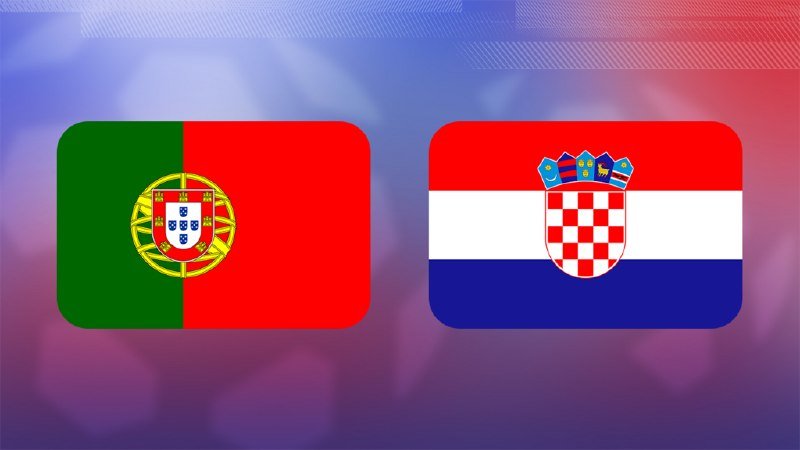
A Group-stage match between Portugal and DR Congo at Houston Stadium was briefly stopped on 17 June 2026 at 18:31 UTC for a check on Portugal's Nuno Mendes, before play resumed with a Rafael Leão substitution for Pedro Neto at 18:36 UTC, and a Cristiano Ronaldo strike that missed the target at 18:38 UTC. The result, the scoreline, and the goalscorers are not in the live reporting thread; what is in it is the venue, the substitutions, and the feel of a heavily anticipated African–European fixture playing out in a North American arena.
The match is one data point in a tournament whose staging has been a story of its own. FIFA's 2026 World Cup is the first edition hosted across three countries — the United States, Mexico and Canada — and Houston is among the U.S. host cities. The structural question that sits underneath a Group match like this is not who wins it. It is who got to decide where the tournament is played, and what African presence at a finals means in 2026 rather than 2006.
A match in the middle of a tournament question
Portugal versus DR Congo is the kind of fixture that, twenty years ago, would have been played in Europe, in a single host country, with the African side cast as the visiting novelty. In 2026, it is being played in Houston, Texas, in front of a crowd the live reports describe as a Group-stage U.S. audience. The 2026 World Cup is the first to feature 48 teams, and the expanded field is what put DR Congo on the same Group-stage pitch as Portugal in the first place. The fact that an African side's first fixture in this tournament is against the Cristiano Ronaldo generation of Portuguese players, in a U.S. city, in prime-time North American hours, is the structural story. The match, whatever its final score, is already evidence that the geography of the World Cup has moved.
The live thread from the field, via TeleSUR English, captures the texture of that. Mendes' injury stoppage, the Leão substitution and Ronaldo's off-target effort are reported in that order over seven minutes, in the format of a Group fixture in a major tournament. Nothing in the wire suggests anything other than a routine international match. That routine is itself the point: the exceptional has become ordinary, and the ordinary is now being staged in Texas.
What the wire does and does not show
The four source items are all from a single feed — TeleSUR English's match updates on X — and they cover roughly seven minutes of the second half. They record a substitution, an injury check, and a missed shot. They do not record the score, the attendance, the officials, or the half in which these events fell. They do not record the wider Group table, the other results from the day, or what is at stake in the Group for either team. Anyone reading the live thread alone would know that Portugal and DR Congo are playing in Houston, that Ronaldo missed a chance, and that Mendes needed treatment. That is the wire, and it is honest about its own limits.
A reader who wants the broader picture — the scoreline, the Group table, the rest of the day's fixtures — would need to consult other reporting. The thread provides venue, players, and the texture of the match; the rest of the picture is the reader's job to assemble. Monexus flags that gap because it matters: in a tournament that has been sold as a milestone for African and Global South football, the live wire is doing the same work it does for any Group fixture, in any country, at any hour.
The structural frame, in plain prose
Hosting rights to a World Cup are a form of soft power. The decision to expand the field to 48 teams, and to spread hosting across three North American countries, was made in 2017–2018 under then-FIFA president Gianni Infantino, with the United States, Mexico and Canada selected as joint hosts in 2018. The decision to stage matches in Houston, in a stadium also used for NFL fixtures, sits inside a broader pattern of major football tournaments being hosted in venues that are not, traditionally, football venues. The justification is logistical: there are 48 teams, 104 matches, and not enough traditional football stadiums in three countries to absorb them. The counter-narrative, more familiar to Global South football federations, is that the staging is a way to extract broadcast and ticketing value from a North American audience that has historically consumed football as a secondary sport.
DR Congo's presence in this Group is a separate, related story. The Democratic Republic of Congo qualified for the 2026 World Cup, and the qualification itself was the result of a Confederation of African Football (CAF) qualifying cycle that produced nine African finalists — the largest African contingent at a World Cup. The fact that one of those nine is opening its tournament against a European side with the largest broadcast reach in the world is a small, concrete instance of what the expansion has changed.
Stakes, and what remains uncertain
The most concrete stake is competitive: a Group-stage match in an expanded World Cup can take a team out of the tournament, or keep it in. Portugal is widely understood, on the basis of its qualification, its squad and the presence of Cristiano Ronaldo, to be among the favourites to progress from the Group. DR Congo is widely understood, on the basis of the same, to be in the more difficult position. The competitive stakes, in other words, are not symmetric. The structural stakes are. The same match, in the same stadium, in the same tournament, is the moment in which an African side plays a European side in front of a North American crowd in a tournament that, by design, the African side would not have been in twenty years ago.
What the wire does not settle, and what no live thread of a match can settle, is whether the expansion and the joint hosting will produce a deeper global audience for the African game, or whether they will produce a larger broadcast product with the same underlying distribution of attention. The score of this match, and the Group outcome, will be in the wire by end of day. The answer to that larger question is not.
Desk note: Monexus framed this as a staging story, not a results story, because the live thread records a venue, a substitution and a missed shot, not a scoreline. We will update the wire as the Group outcome firms up.
Wire provenance
This editorial synthesis draws on the following public wire/social posts:
- https://x.com/telesurenglish/status/
- https://en.wikipedia.org/wiki/2026_FIFA_World_Cup
- https://en.wikipedia.org/wiki/2026_FIFA_World_Cup_qualification_(CAF)
- https://en.wikipedia.org/wiki/NRG_Stadium