Qalibaf's Martyr Math and the Politics of a New Iranian Compact with Lebanon
Tehran's parliament speaker frames 4,000 Lebanese dead as tribute to the Islamic Republic — a rhetorical escalation that says less about battlefield reality than about the kind of post-war order Iran now wants its allies to underwrite.
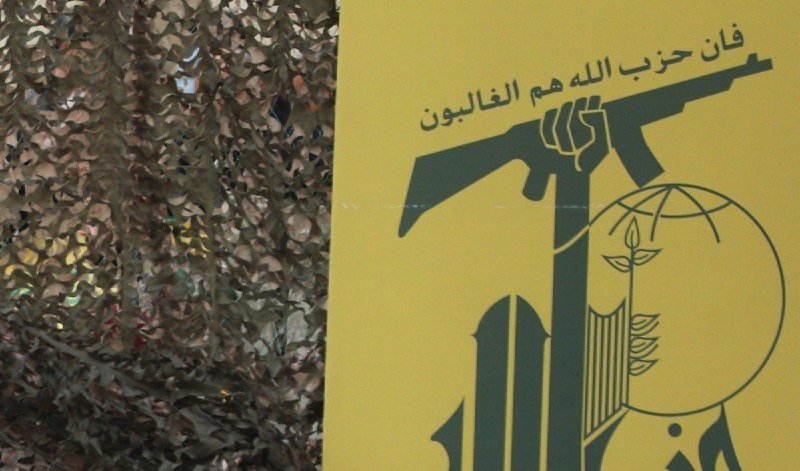
On 17 June 2026, Mohammad Bagher Qalibaf, Speaker of Iran's Islamic Consultative Assembly, told a domestic audience that Lebanon had sacrificed 4,000 "martyrs" for the Islamic Republic. The number is not a body count from any single incident. It is a political figure — a credit ledger drawn on a neighbour's dead, denominated in service to Tehran. The remark, carried by Iranian state outlets, sits inside a wider message delivered the same evening: a freshly signed memorandum of understanding, three rounds of textual negotiations and three rounds of tripartite talks held in Islamabad within 24 hours, and a call for what Qalibaf styled "jihad in the service field."
Taken together, the day's messaging sketches a post-war order Iran is trying to consolidate — one in which Lebanese blood is rebranded as Iranian ideological capital, and in which a new charter with Beirut becomes the political infrastructure of that claim.
The 4,000 figure is doing ideological work
Qalibaf's "4,000 martyrs" line, as carried by Tasnim on 17 June at 20:14 UTC, is not a casual figure of speech. In Iranian state discourse, the term shahid — martyr — carries a precise doctrinal weight: the dead who fell in defence of the Islamic Republic, or in furtherance of its regional project, are credited to the system as assets of legitimacy. To name Lebanon's dead as Iran's martyrs is to convert a bilateral war loss into a unilateral ideological deposit.
Two things follow. First, it forecloses a certain kind of Lebanese political reading — the one in which Hezbollah's war dead are mourned primarily as Lebanese patriots. Under Qalibaf's framing, the ledger is denominated in Tehran. Second, it sets a price tag. If Lebanon has already paid 4,000 into the account, future Iranian requests — political alignment, access, denials of sovereignty in security matters — come pre-financed.
The structural point: this is how a regional patron claims ownership of allied casualties without ever having to ask permission.
The Islamabad track is the real story
The martyr framing risks distracting from the more concrete diplomatic news buried in the same Qalibaf commentary at 20:10 UTC: three rounds of textual negotiation and three rounds of tripartite talks, all held in Islamabad within a single 24-hour window. That cadence is unusually compressed. Trilateral formats in the Pakistan-facilitated channel typically move in single rounds over days, not six rounds in a day.
The pattern suggests a deadline is in play. Either an external pressure window — American, Saudi, Pakistani, or some combination — is closing, or an internal Iranian decision cycle has been triggered. Mehr News, covering Qalibaf at 20:00 UTC, framed the immediate next step in almost missionary language: "after the signing of the memorandum, it is time for jihad in the service field and we must reach the people." That is the rhetoric of implementation, not negotiation. The deal, on this telling, has already been concluded in principle; what remains is rollout.
What the Western wire is not yet telling readers
Mainstream Western coverage of the Islamabad channel has tended to treat it as a procedural sideshow — useful for hostage files, marginal on the strategic axis. That framing is increasingly untenable. The compact Qalibaf is signing does not look, on the surface, like a security deal between two sovereigns. It reads more like a service-delivery memorandum — the kind of agreement a headquarters signs with a regional branch, dictating terms of political and reconstruction support in exchange for ideological alignment.
The counter-narrative, and it deserves air: a memorandum of this kind could also be a stabilisation tool — a way of regularising aid flows, reconstruction contracts, and political coordination so that the Lebanese state, rather than non-state actors, becomes the conduit. If the deal funnels Iranian and Iranian-aligned resources through Beirut's treasury and not through parallel channels, that is a less destructive equilibrium than the status quo ante. The sources available do not resolve which reading dominates; the language of "jihad in the service field" tilts it back toward the harder reading.
Stakes, plainly stated
If the memorandum is implemented on the terms Qalibaf sketched, three things happen. Lebanon's post-war reconstruction becomes politically conditioned on alignment with Tehran's regional posture. Iranian ideological claims over the sacrifices of non-Iranian dead become normalised at the level of parliamentary speech, not just clerical homily. And a precedent is set for other dossiers in Iran's near abroad — Syria, Iraq, possibly Yemen — where similar memoranda could be sold domestically as service partnerships rather than as the security pacts they functionally resemble.
The losers, in this trajectory, are the Lebanese state institutions that depend on the fiction of a sovereign reconstruction mandate, and the wider diplomatic consensus that holds that war losses are owed to the citizens of the country that buried them, not to a foreign patron's political balance sheet.
The unresolved question — and it is the one the day's messaging conspicuously avoids — is whether the 4,000 figure refers to a closed accounting or an open one. If it is closed, the memorandum is a settlement. If it is open, the memorandum is a down payment on a much larger claim. The sources do not say. That silence is itself a tell.
Desk note: the wire services have largely carried the Islamabad track as a procedural item; Monexus reads it as the political event of the week, with Qalibaf's martyr framing as the load-bearing line that tells readers what kind of order Tehran is now asking the region to underwrite.
Wire provenance
This editorial synthesis draws on the following public wire/social posts:
- https://t.me/tasnimnews_en
- https://t.me/tasnimnews_en
- https://t.me/mehrnews
- https://t.me/tasnimnews_en
Follow the event.
These dated source records provide context. They do not retrospectively verify this archive article.
Separate what the nuclear watchdog reported from what it could not determine after the June 2025 strikes.