The sound of a market listening to itself: oil, the rupee, and the limits of the headline
On 17 June 2026, falling crude and a firmer rupee pushed Nifty past 24,000. The story is less the level than what the level obscures about how Indian markets price the world.
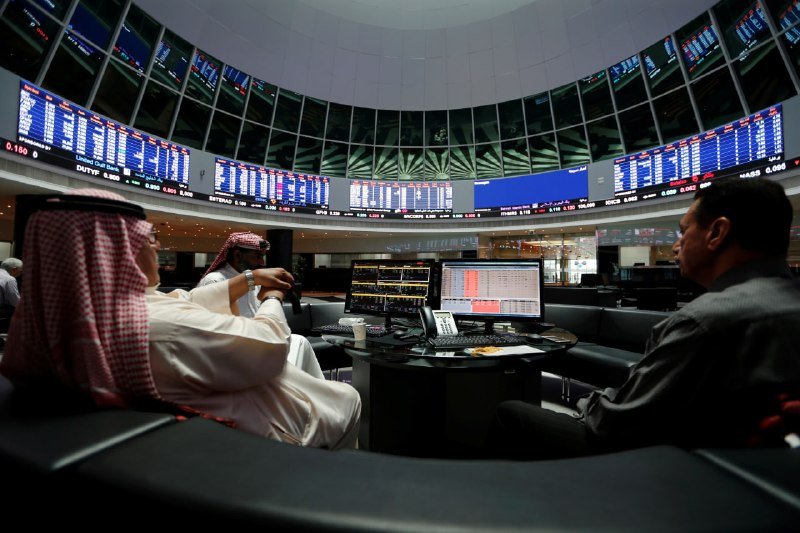
Indian equities did, briefly, what they have been paid to do. On 17 June 2026, the Nifty 50 closed above 24,000 for the first time in the cycle, the rupee firmed, and the proximate cause, as The Indian Express reported the same morning, was a softer crude complex. Within an hour, the same wire carried a court order fining a complainant Rs 10,000 for the register of his emails to a consumer forum, a singer begging a deity for nerve-strength before a concert, and a long essay on what Himalayan afforestation policy is getting wrong. Welcome to a single news morning in New Delhi: a market celebration, a small civic humiliation, a celebrity in pain, and a structural critique of environmental governance — all priced into the same bulletin.
The market story is the easiest to misread, so it is worth reading carefully. Crude falling lifts the rupee because India imports the bulk of its energy; a stronger rupee and cheaper input costs lift the earnings expectations of the heavyweights inside the Nifty, which lifts the index; the index lift draws flows from domestic systematic plans, and the flows are read, retroactively, as confirmation. The Indian Express summary — oil down, rupee up, Nifty over 24,000 — describes each step truthfully and obscures the mechanism that links them. Reporting that names the level without naming the dependency is, in effect, reporting the dashboard of a car without mentioning the engine.
The number and the thing underneath it
Twenty-four thousand on the Nifty is, strictly speaking, a triumph of arithmetic over economics. The level is the level because the constituents that make it up are weighted the way they are weighted, and because passive flows are sized the way they are sized. The Indian Express brief credits sentiment. The structural story is that an open import-constrained economy, running a current-account deficit that lives or dies on the oil bill, will always be a leveraged play on the global crude tape. When crude falls, India breathes; when crude rises, India tightens. To call the move a function of sentiment is to mistake the barometer for the weather.
This matters because the same framing, in reverse, is the one that will be deployed if and when the move unwinds. The headline that celebrates today will, in a few quarters, become the headline that explains a correction: a number the market "gave back." The number is downstream of a price the market does not set. That is the structural fact, and it is the fact a careful daily note would push back to the front.
The other three stories the same paper filed that morning
The Indian Express also reported, in the same bulletin window, that a man had been fined Rs 10,000 for "unparliamentary" emails to a consumer body; that Sonu Nigam had disclosed a painful nerve condition on the eve of a concert, asking for divine fortitude; and that a long-form piece had dissected what the country's Himalayan afforestation strategy is doing wrong, and why. Each of these is, on its face, unrelated to the index. Together they are not. The fine is a story about a state institution that has decided the tone of a citizen's email is, itself, a punishable object. The singer's disclosure is a story about the human cost of a profession that monetises the body and is expected to deliver the body on schedule. The mountain essay is a story about a flagship environmental programme whose metrics, the piece argues, are not measuring what they claim to measure.
Three of these four items touch the same underlying question: who, in the Indian republic, is permitted to do what, in what register, on whose schedule. The market hit a milestone, but the milestones the other three stories are reaching are the kind that get filed once and then quietly accumulate — until they become the climate in which the next milestone is priced.
The counter-read: the dashboard is not the lie
The obvious objection is that this reading is overwrought. The Nifty did what markets do: it reacted to oil, and to flows, and to positioning. The Indian Express reported it that way because that is the order in which the events occurred. A good newspaper files what is true, in the order it became true, and the citizen is free to read or not read between the lines. There is no obligation, in a morning brief, to remind readers that they live in a balance-of-payments economy.
The objection is fair at the level of the individual note, and unhelpful at the level of a year's coverage. The first time a wire tells a reader that the index rose because crude fell, the reader learns a fact. The hundredth time, in a year of such notes, the reader has been trained to believe that markets are short, reactive, and instrument-specific. They are, in fact, long, structural, and dependent on a small number of imported variables. The cumulative effect of the daily framing is a public that does not know its own economy.
What it costs, and what to do about it
The stake is not academic. A citizenry that believes the index is a sentiment thermometer will not, when the cycle turns, recognise a balance-of-payments squeeze until the rupee is already in free fall. A citizenry that has been told the index is what matters will not ask why energy transition policy is being run as a sub-clause of refining margins. A citizenry that has been told the market is a fact about money will not, in the next election, be able to ask the political class a question about money that is sharper than the political class's answer.
The right correction is small and constant. Each daily market note should carry, in the same paragraph, the variable the index is most exposed to, the historical range of that variable, and the policy levers that move it. Oil, in India's case, is the first such variable; the rupee, the second; the global rate cycle, the third. None of this is secret. All of it is currently being filed as colour around the number, when it should be filed as the number's definition.
A honest closing line
The Indian Express is, in the main, doing the work of an honest wire. The 17 June 2026 morning bulletin is a fair slice of a country in motion: a market, a complainant, a singer, a mountain. The argument here is not with the paper. The argument is with the habit — shared by every desk, including this one — of letting the level of an index be the headline, when the level is, in this country, downstream of a barrel of crude, a foreign portfolio allocation, and a balance of payments that is, for all the celebration, still on a leash. The market is not listening to itself. It is listening to oil, and to the rupee, and to the patience of an electorate that is being told, each morning, that the number is the news.
Monexus filed this as opinion rather than markets because the wire reports are accurate on their own terms; the question is what to make of them across a single morning, and across a year of such mornings.