The south Lebanon strikes keep coming. The news cycle keeps flattening them.
Israeli air operations in southern Lebanon now arrive as a steady drip of push alerts. The pattern itself — not any single strike — is the story, and the way the wire cycle digests it tells a separate one.
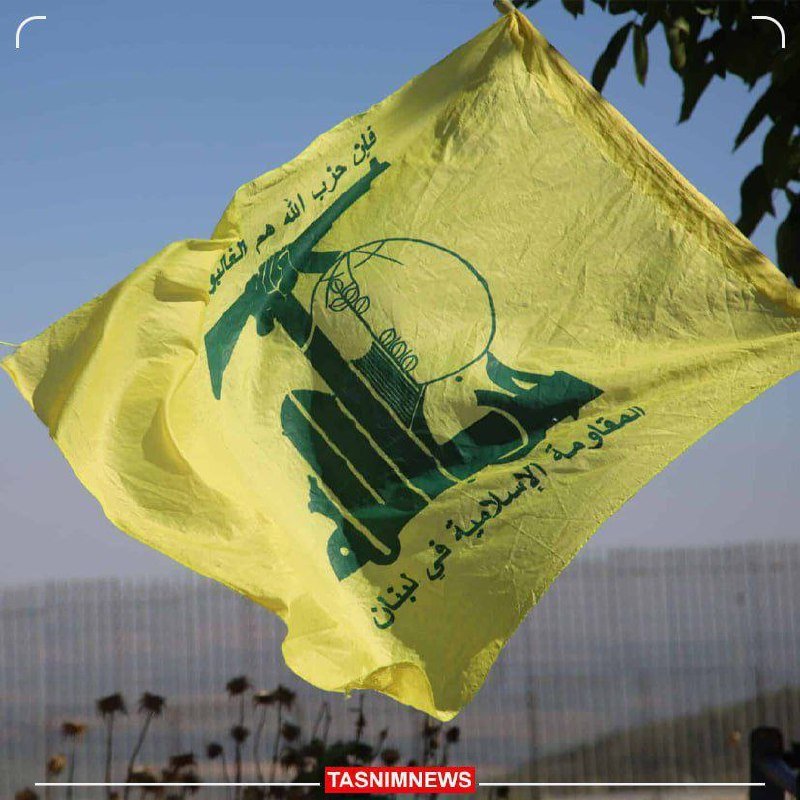
Just before 06:00 UTC on 17 June 2026, two Telegram channels with a track record of fast Lebanese field reporting — @englishabuali and @abualiexpress — pushed near-identical alerts inside a thirty-minute window. Both cited Lebanese sources saying Israeli fighter jets had struck the village of Tibnit, also rendered Kfar Tebnit / Kfar Tabnit, in south Lebanon. The first alert landed at 05:19 UTC, the second at 05:23 UTC, the third at 05:46 UTC, and the fourth at 05:48 UTC. The same village, the same morning, the same handful of channels, four times over.
That is the story. Not a single strike, but the rhythm in which these strikes now reach a global audience — and the structural problem with how the international news cycle metabolises them.
The strike is no longer the headline
A 2024 or early 2025 strike on a south Lebanon village would have triggered a thirty-minute wire cascade: Reuters bulletin, AFP flash, an IDF spokesperson read-out citing the targeted infrastructure, a Hezbollah-adjacent statement, an Lebanese health ministry line by evening, a UNIFIL presser the next day. Each strike had a distinct life cycle. The strike itself was the headline.
What the 17 June alerts show is a different regime. The same strike, reported by two regional channels within minutes of each other, is already being treated as ambient background — a thing that happens, that the wire desks parse into a paragraph between the Iran nuclear beat and the Gaza aid beat, that the IDF either confirms in a one-line statement or, increasingly, lets the Lebanese reporting carry unchallenged. The strike is no longer the headline. The continuity of the strike is the headline.
The squeeze on what counts as a sourced claim
The sourcing chain has thinned at exactly the wrong moment. International wire budgets for permanent Lebanon staffing have been contracting for at least two years; Beirut bureaux that once ran four or five reporters now run one correspondent juggling Iran, Iraq, Syria and Lebanon simultaneously. The result is that fast regional channels — Lebanese field reporters, Iran-aligned aggregators, Israel-facing Telegrams — have become the de facto wire of record for the first hour of any incident.
That has a real cost. @englishabuali and @abualiexpress are useful precisely because they move fast and are embedded in the local information ecosystem. They are also single-source by design: the four 17 June alerts trace back to "Lebanese sources." There is no second confirmation in the open record, no cross-reference from a wire stringer, no IDF read-out, no LAF statement. A reader of the 17 June alerts alone cannot tell whether one jet struck Tibnit, whether multiple aircraft struck multiple sites, whether the target was a Hezbollah-affiliated structure, an infrastructure node, or open ground. The alert reports an event; it does not yet describe one.
What the dominant frame flattens
The standard Western-wire line on south Lebanon is now a stable sentence: Israel is conducting targeted strikes against Hezbollah infrastructure, says it works to minimise civilian harm, and accepts that the tempo of operations is high. The standard regional counter-line is the mirror image: the strikes amount to a creeping occupation-by-air, civilian harm is undercounted, and the "infrastructure" framing is doing a lot of work to keep the operation inside the conventions that govern cross-border kinetic action. Both lines are partially right. Both are also load-bearing assumptions rather than reported facts at the village level.
What gets flattened in the cycle is the granular ledger — which village, which structure, which family, which ambulance, which school roof, which night of displacement. The village name "Tibnit" will appear once in a Reuters string, twice in a regional aggregator, and then in a year-end retrospective that aggregates village names without distinguishing them. The lived arithmetic of south Lebanon — the count of houses, of weddings postponed, of olive harvests missed — never accumulates in the same way that the strike count does.
The structural problem the alert pattern reveals
The deeper issue is not journalistic bias in the crude sense. It is a coverage infrastructure that was built for an era of discrete, named operations and is now being asked to metabolise a continuous low-grade air campaign. Continuous operations punish continuous coverage. They reward the channel that files the most alerts, not the one that files the most verified ones. They also disproportionately amplify the framing hand of whichever side has the better press operation on a given morning.
The 17 June alerts, considered together, are a useful specimen. They show a strike that the open record cannot yet fully describe, arriving through channels that were never designed to bear the full evidentiary weight they are now being asked to carry, into a global news cycle that has neither the permanent staff nor the structural appetite to slow down and reconstruct what actually happened in Tibnit before moving on to the next alert from the next village.
What remains uncertain
Several things. The alerts do not specify the ordnance used, the target category, the casualty count, or whether the IDF has acknowledged the strike. The village spelling varies across the four alerts (Tibnit, Kfar Tebnit, Kfar Tabnit, Kfar Tevni), a small reminder that even the geography of these events is mediated by transliteration choices made on the fly. Most importantly, the four alerts are internal echoes of one another: a reader who saw one saw all four. The "four alerts" framing is itself a media artefact, not an event count. Whether one strike or several took place in the early-morning window of 17 June is a question the open source record, as it stands at 06:00 UTC, cannot answer.
That uncertainty is not a reason to ignore the strike. It is a reason to report it at the register it deserves: as one beat in a continuous campaign whose political weight is in the accumulation, not in any single village on any single morning.
Desk note: where the wire cycle has filed a single strike as a one-line confirmation, this publication treats the four near-simultaneous alerts on the same village as evidence of a campaign rhythm, and has flagged the single-source structure of the regional reporting in plain text rather than laundered through a wire re-write.
Wire provenance
This editorial synthesis draws on the following public wire/social posts:
- https://t.me/englishabuali
- https://t.me/abualiexpress