Strait of Hormuz, Korean Peninsula: Two Fronts Converge in a Week of US Calculus
A reported US assessment that Iran can shut the Strait of Hormuz at will lands the same week Seoul weighs a Gulf deployment and resets its border line with Pyongyang. The two stories are not separate.
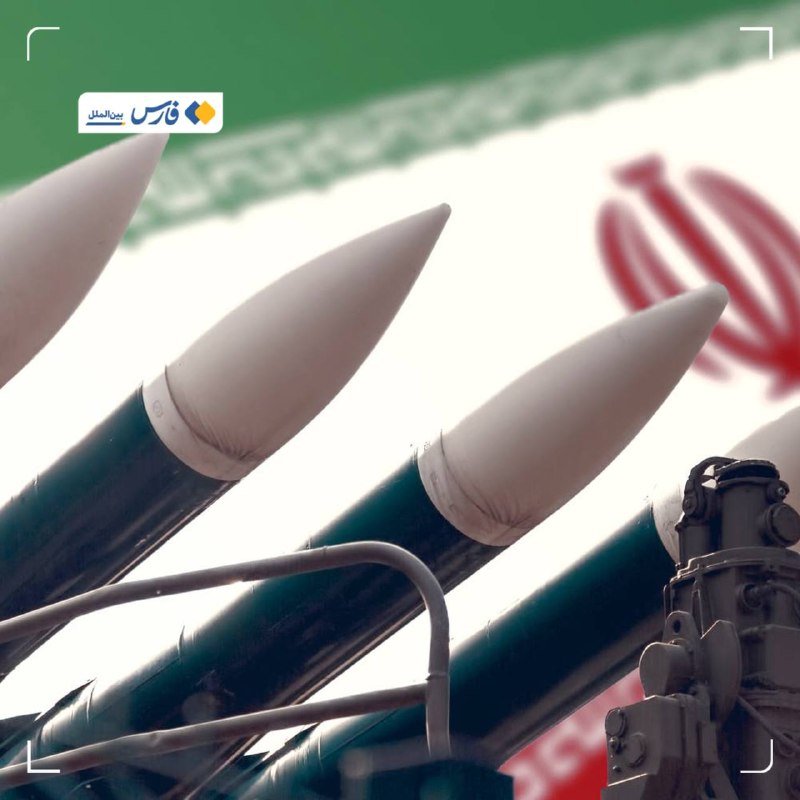
A US intelligence assessment delivered to policymakers in the week of 16 June 2026 concludes that Iran can now "effectively shut down the Strait of Hormuz at will," according to three sources cited in reporting circulated on 17 June 2026 at 00:40 UTC. The capability, those sources told the channel that carried the item, is "a powerful new capability acquired as a direct result of the war." The phrasing leaves the war unnamed, but the geography of the assessment points squarely at the waterway through which roughly a fifth of the world's traded petroleum ordinarily transits. The implication, if the assessment holds, is that the most consequential chokepoint in the global energy system has shifted from deterred to denyable in the space of a single conflict cycle.
That single intelligence finding, if independently verified, reframes two stories running on the same day. South Korea is being asked, in the words of a 17 June 2026 South China Morning Post headline, whether it will "step up for Strait of Hormuz security." Separately, Seoul announced it will shift a civilian restricted line at the border with North Korea, per a Reuters wire timed 03:10 UTC on 17 June 2026. Read in isolation, the two items describe a country juggling commitments. Read against the Hormuz assessment, they describe a country recalibrating in real time for a Middle East whose risk surface has just re-rated.
What the assessment actually says
The wording matters. The reported finding is not that Iran will close the strait tomorrow, or even that it intends to. It is that Iran now possesses the operational means to do so on its own initiative, and that this represents a step-change from the position before the war referred to in the source. Three anonymous sources are cited; the underlying US agency is not named in the public reporting. The war in question is left unlabelled, a conspicuous editorial choice in any reporting on US-Iran posture. Readers should treat the conclusion as a worst-case envelope drawn by analysts for policymakers, not as a forecast of imminent action. The gap between "can" and "will" is the entire policy question.
Why Seoul is the diplomatic variable
The South Korea question is older than this week. The Hormuz story has, for two decades, been a story about which Asian capital sends a ship, a tanker, or a task force to the Gulf, and under what legal authority. Japan has sent mine-countermeasure vessels; South Korea has, at intervals, deployed its Cheonghae Unit, a modest destroyer rotation based in Bahrain. The 17 June South China Morning Post item frames the question as an open diplomatic gamble. The calculus is now more pointed: if Iranian anti-ship and shore-based capabilities are credibly higher than they were six months ago, then the marginal value of an allied surface presence in the strait has gone up, and so has the marginal cost. South Korea's own dependence on Gulf crude — historically a meaningful share of imports — is the unspoken variable in Seoul's answer.
The Korean Peninsula is not a sideshow
The Reuters item timed 03:10 UTC on 17 June 2026 — South Korea announcing a shift in the civilian restricted line at the inter-Korean border — looks like a domestic-administration story until it is read alongside the other two. Seoul is not adjusting the line because the military situation on the ground has changed; the inter-Korean border has been effectively frozen, with limited physical contact, for years. Adjustments of the civilian access line, sometimes called the Civilian Control Line, are administrative, but they are also signals. They are read in Pyongyang and in Washington as a marker of where the Lee administration's attention is being allocated. A government that is preparing to be asked to deploy a naval asset to the Persian Gulf has an obvious interest in lowering the temperature on the land border, even if the formal posture of deterrence does not change. The two Korean stories — the Hormuz deployment debate and the border line — are different instruments playing the same score.
What the framing is not telling you
Two cautions. First, no public source in the inputs names the US agency behind the assessment, and the three anonymous sources are not independently corroborated. Reporting of this kind is most useful when later declassified in part; until then, the prudent read is that the assessment is a working analytical product, not a press-released finding. Second, the South China Morning Post item is a question, not an answer. South Korea has not announced a deployment, and the question of whether it will step up is being asked in the conditional tense. The proper headline for the week is not "Seoul deploys to Hormuz" but "Seoul is being asked to." Both of these caveats sharpen the analysis; neither contradicts the structural point.
The structural point is this. For the first time in the post-2015 era, the military balance at the world's most important energy chokepoint is being openly described as shiftable by a regional actor with a contested relationship to the US. That changes the price of every option on the table for the consumer countries of the Gulf — Japan, South Korea, China, India, and the European importers now rebuilding redundancy in their crude sourcing. It also changes the price of every option for Iran: a credible closure capability is a deterrent and a bargaining chip at the same time, and the two uses are not always compatible. The Korean Peninsula adjustment is a small data point in a wider re-rating, but the wider re-rating is what gives the small data point its meaning.
Monexus framed this story as a single US-Asia security week, not as two unrelated bulletins; the wire cycle tends to run them on separate desks, which understates the connection between Gulf posture and Korean posture for Seoul.
— Monexus Staff Writer, news desk
Wire provenance
This editorial synthesis draws on the following public wire/social posts:
- http://reut.rs/4oxBfLi