The Strait of Hormuz is "open" again. So who actually owns it now?
Donald Trump says the strait will be "completely open" by Friday. JD Vance says gas and oil are already flowing. Oman's quiet bid for sovereign control sits underneath both claims — and may outlast them.
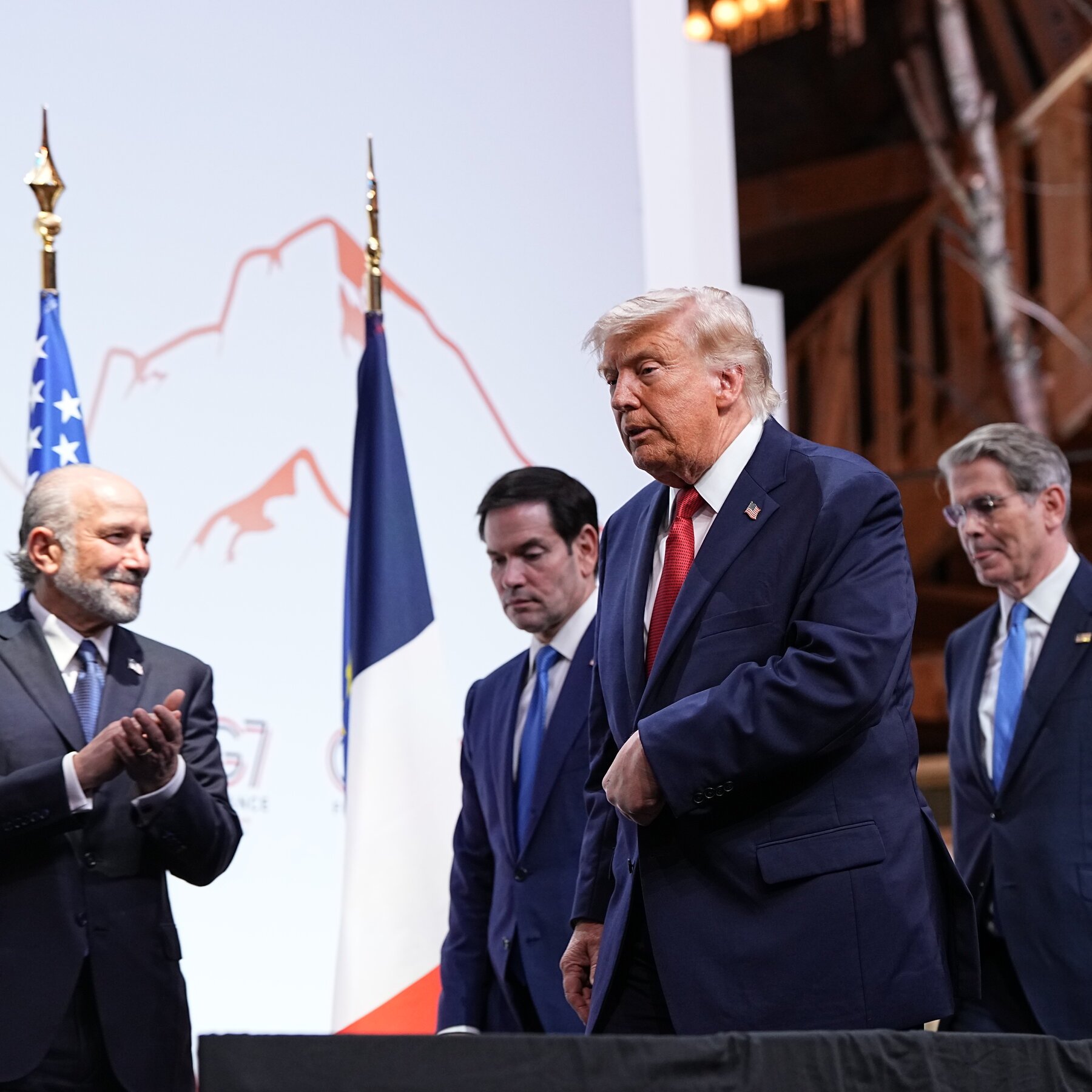
At 18:00 UTC on 17 June 2026, the Strait of Hormuz is back at the centre of the world economy — and back at the centre of an argument about who actually controls it. US President Donald Trump announced earlier in the day that the chokepoint would be "fully open" "soon," and said by Friday it would be "completely open" as ships resumed transit. Vice-President JD Vance went further, telling reporters that gas and oil are flowing through the strait again, per a post logged at 14:17 UTC. Polymarket tracked the remarks as a discrete market-moving event at 16:05 UTC. The headline is unambiguous: traffic is resuming. The subtext, less remarked in the Western wire, is that a small Gulf sultanate spent the war positioning itself to be the next steward of the corridor — and may now hold the better cards.
The case for declaring victory in Washington is real. Roughly a fifth of seaborne oil and a third of liquefied natural gas transits Hormuz, and any extended closure moves Brent crude and Asian LNG benchmarks within hours. Reopening, even partially, is a tangible economic deliverable. The political logic is also legible: an administration that has framed the recent Iran-Israel exchange as a successful escalation-management operation now has a clean off-ramp story. "Open by Friday" is the kind of deadline that markets and editorial boards alike can build around.
The counter-narrative is Omani. As Middle East Eye reported at 18:00 UTC today, Oman emerged relatively unscathed from the war, suffering minimal strikes on its own territory while its neighbours absorbed the worst of the exchange. That asymmetry of exposure has produced a domestic conversation in Muscat that is unusually direct for a Gulf monarchy: the idea of exerting sovereignty over the Strait of Hormuz itself. The phrasing — that Oman is weighing whether it should run the corridor rather than merely flank it — would have sounded fantastical a decade ago. It does not sound fantastical now.
The structural shift underneath the headlines is a slow transfer of stewardship away from the US Fifth Fleet's de facto policing role and toward the littoral states themselves. Washington's reopening claim is a statement about flow: ships moving, oil pumping, insurance rates easing. Muscat's emerging claim is a statement about authority: who sets the rules of passage, who collects the transit dues, who decides which tankers are inspected and which are waved through. Those are different conversations, and the Western wire has been reporting on the first while the second develops in Arabic-language commentary and Omani diplomatic channels.
There are three plausible readings of how this resolves, and the public record does not yet favour one. The first is the Trump-Vance reading: a kinetic crisis, a diplomatic intervention, a reopening, and a return to the pre-war operating arrangement with the US Navy continuing to guarantee freedom of navigation. The second is the Omani reading: a window opened by the war that lets a capable, neutral, diplomatically respected Gulf state insert itself as a co-steward with genuine operational authority. The third is a hybrid, in which Hormuz becomes what the Bab el-Mandeb has flirted with becoming — a multilateralised corridor managed by a consortium of littoral states under international mandate, with Washington as senior partner rather than sole guarantor. The sources do not specify which is taking shape.
What can be said is who wins and who loses under each scenario. A clean US-led reopening cements the existing architecture and rewards the American carriers, insurers, and carriers-of-last-resort who priced the closure. A co-stewarded arrangement under Omani leadership redistributes rents toward Muscat and gives Iran a quieter negotiation table, since Tehran's most workable interlocutor on its southern maritime flank is currently the Sultan of Oman. A multilateralised hybrid spreads the cost and dilutes every party's leverage, including — inconveniently for Washington — Israel's.
What remains genuinely uncertain is whether the strait is, in fact, fully open or merely less closed. Vance's claim that oil and gas are flowing again is a flow statement, not a security guarantee. Trump's Friday deadline is a political marker, not a marine insurance underwriter's assessment. And Oman's sovereign-bid is, at this stage, a domestic debate inside Muscat rather than a public negotiating position. The headline numbers — barrels moving, LNG cargoes booked — will look decisive in commodity desks by Monday. The sovereignty question will still be open, and is the one that will determine the next crisis.
Desk note: Monexus reads the reopening claim as a real flow event but treats the Omani sovereignty bid as the structurally more durable story. Western wires led with Trump's deadline; we think the lasting frame is Muscat.
Wire provenance
This editorial synthesis draws on the following public wire/social posts:
- https://x.com/MiddleEastEye/status/HLCMKJpW0AAjMu4
- https://x.com/Polymarket/status/HLCMKJpW0AAjMu4
- https://x.com/unusual_whales/status/HLCMKJpW0AAjMu4
- https://x.com/unusual_whales/status/HLCMKJpW0AAjMu4