Tehran's 'logic of power' and the politics of a coming handshake
Mohammad Bagher Qalibaf tells parliament that frozen funds must end up in Iranian hands, that the 'enemy' will be met with 'the logic of power,' and that the next phase begins the moment a memorandum is signed.
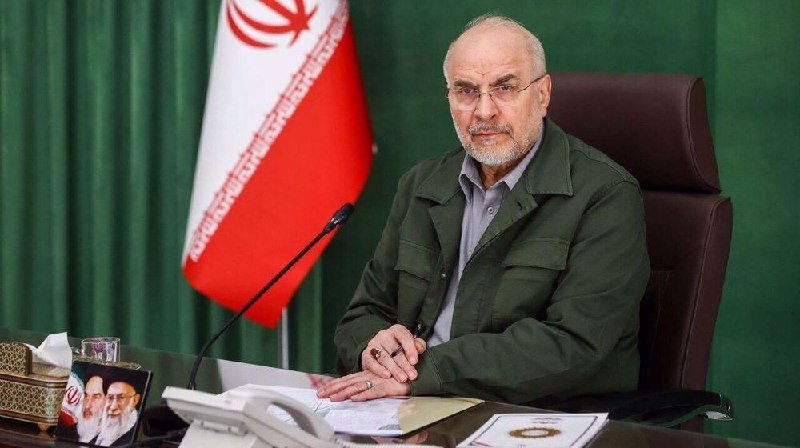
Tehran put its political vocabulary on the record on 17 June 2026. In back-to-back addresses to the Islamic Consultative Assembly, Speaker Mohammad Bagher Qalibaf framed the country's standoff with the West as a contest between two incompatible grammars — "logic" and "the logic of power" — and promised that Iran would receive the funds it says are owed to it, while reserving the right to interpret the deal on its own terms. The remarks, distributed in English by Tasnim News at 20:14 UTC, 20:20 UTC and 20:21 UTC on 17 June 2026, were less a policy lecture than a warning shot at anyone, foreign or domestic, who mistakes a forthcoming memorandum for capitulation.
The subtext is the long-running negotiation over Iranian assets frozen in third countries, and the choreography of any final deal. By choosing the public floor of parliament rather than a closed committee room, Qalibaf is doing two things at once: locking in a maximalist narrative for the Iranian street, and signalling to negotiators abroad that any agreement they sign will be measured, word for word, against what the speaker said today. The same restraint he asks of the public is the constraint he is imposing on the executive branch.
The language of conditional compliance
The clearest line is also the most quoted. "If the enemy does not understand logic, we will face him with the logic of power," Qalibaf told MPs on 17 June 2026, in remarks relayed at 20:21 UTC by Tasnim News. The formulation is textbook Iranian negotiating rhetoric — a binary that flatters the speaker's side as rational and reframes the opponent as either reasonable or a target. It is the kind of sentence that reads one way in Farsi and another in an English wire translation, which is precisely the point: ambiguity, in Tehran's diplomatic dialect, is a feature.
A second line matters more for substance. "Iran will receive the blocked money," Qalibaf said; "but this does not mean that we bring money. This money must be in Iran's possession," according to the Tasnim News transcript circulated at 20:20 UTC on 17 June 2026. That distinction — the asset is owed, but Iran reserves the method, the jurisdiction and the timing of its receipt — is the legal architecture underneath any deal that emerges. It also explains why Tehran is so insistent that the memorandum, once signed, must be read in tandem with what Iranian officials say in public.
The Lebanon framing and the regional lens
The third line is the regional anchor. "Lebanon gave 4 thousand martyrs for Islamic Iran," Qalibaf said in the same sitting, per the 20:14 UTC Tasnim News bulletin. Read in isolation it is a tribute; read against Tehran's broader messaging it is a reminder that Iran's network of allies — from Hezbollah to Iraqi militias to the Houthi movement — will be accounted for in any settlement that touches sanctions relief. Western negotiators, who tend to treat these relationships as a separate file, get a sharp reminder from the speaker's podium that Tehran reads them as a single ledger.
The deputy foreign minister, Ali Baqa'i, reinforced the line from his own post earlier in the day, telling an audience — per Tasnim News at 21:13 UTC on 17 June 2026 — that "we had more or less explained all the cases" during the period under review. It is a curious phrase for a deputy minister to use in public: half reassurance, half reproach, and entirely consistent with a system that wants the world to believe the negotiating record is closed.
What a 'memorandum' buys, and what it doesn't
The closing beat of Qalibaf's remarks, distributed by Tasnim News at 19:54 UTC on 17 June 2026, was directed inward. "After the signing of the memorandum," he said, "the flag will be in the field to serve the people and we must compensate the people for their efforts." The pivot from external adversary to domestic constituency is the move that determines whether a deal survives. Iran's rial has spent years in free fall; living costs have been the most legible tax on sanctions; and the political class needs a visible dividend, not a technocratic line item, to argue that the settlement was worth the cost of the years-long standoff.
That is the structural bind for Tehran: the same audience that demands the release of frozen funds is the audience least equipped to absorb conditional compliance. A memorandum that leaves the funds in escrow, that spreads disbursement across multiple jurisdictions, or that ties release to verification steps, will be sold domestically as victory only if it is framed as one. The speaker is doing that framing work now, in advance.
What remains uncertain
The thread does not specify which counterparties are at the table, what the memorandum's text contains, which jurisdictions are involved in the funds transfer, or what the verification architecture looks like. It also does not pin down the dollar value of the assets Iran claims are owed, nor the share that is contested. Any reader walking away from the speaker's remarks with a number in mind is reading beyond the available evidence. What is on the record is the tone: maximalist, conditional, and stage-managed for a domestic audience that will be told, in plain Farsi and then in harder English, that whatever is signed in the coming days was earned.
Desk note: this piece draws solely on the English-language bulletins distributed by Tasnim News on 17 June 2026. Monexus flags Tasnim as Iranian state media; the quotations above are presented as that outlet's translation of the speaker's remarks, not as independently verified transcripts. The structural reading is this publication's; the words are the speaker's.
Wire provenance
This editorial synthesis draws on the following public wire/social posts:
- https://t.me/tasnimnews_en/143821
- https://t.me/tasnimnews_en/143819
- https://t.me/tasnimnews_en/143817
- https://t.me/tasnimnews_en/143815
- https://t.me/tasnimnews_en/143828