The Surrender That Wasn't: Reading the Tehran Framing of the Trump Deal
Iranian state-aligned outlets are calling the Trump administration's deal a surrender. The claim deserves more scrutiny than a headline — and so does the assumption that the other side sees it the same way.
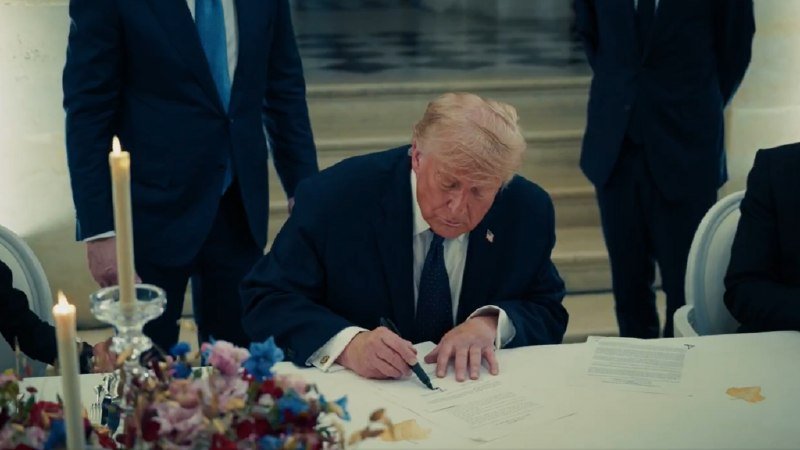
On 17 June 2026, two channels closely aligned with the Iranian state ran the same headline within ninety minutes of each other: the United States had surrendered. At 12:07 UTC, Tasnim's English service published a piece under its "reflection of war" think-tank tag arguing that the Trump administration, after months of costly fighting, was "accepting a deal that looks more like a retreat." At 12:38 UTC, the Telegram channel Jahan Tasnim — a digest feed for Bazatab-e Jangandishkade, a Tehran conversation centre focused on strategic doctrine — pushed the same thesis in Persian with the heading "Iran's new doctrine led to the surrender of the United States." The synchronisation is not accidental. It is the choreography of a victory narrative being locked into place while the cameras are still running.
The framing deserves to be read carefully, not dismissed. It also deserves to be tested.
The claim, in its strongest form
Strip the rhetoric away and the Tasnim–Bazatab thesis is a coherent one. A great power that spent months projecting force has, on this telling, walked into an agreement on terms closer to the regional actor's than to its own. Iran's doctrine — sustained missile production, proxy depth, refusal to absorb a punitive escalation — held. The cost was real on both sides, but the asymmetry of tolerance for that cost, in Tehran's reading, produced the outcome. From that vantage, the word "surrender" is less a slur than a strategic verdict.
It is the strongest reading available from inside the Iranian information ecosystem, and it is worth taking seriously before measuring it against what little else the public record contains.
Why the framing is doing work
The first thing the headline is doing is internal. Iran is managing a domestic audience that has absorbed sanctions pressure, periodic strikes, and an inflation cycle that the Tasnim line does not need to recite because the readers already live inside it. A narrative of strategic vindication — delivered through English-language Tasnim and then echoed in Persian by affiliated channels within the same news window — is the kind of message that converts an armistice into political capital at home.
The second thing the framing is doing is external. "Surrender" is a word calibrated for foreign readers who consume Iranian state-aligned English content precisely because it offers an alternative to the wire framing of the same events. The Tasnim English desk is not writing for Tehran; it is writing for the corridor of analysts, diplomats, and outlets in Beirut, Baghdad, and beyond who treat Iranian English-language output as a primary source. The headline is a signal to that audience about how the regime wishes the agreement to be remembered.
What the wire frame says, and what it doesn't
Western coverage of the same set of events has trended in the opposite direction: a tired superpower cutting a deal because the cost of continuation exceeded the cost of settlement. Both stories cannot be fully right at once — at least not without more precision about what was conceded, what was deferred, and what was left undefined.
The public reporting available does not yet supply that precision in granular form. The Iranian-aligned line asserts victory; the Western line infers exhaustion. Neither, in the available material, itemises the deal's terms in a way that would let an outside reader adjudicate. That gap is itself the story.
What this framing is not entitled to
A victory narrative is not a verification. The Tasnim framing is internally consistent and externally unprovable on present evidence. It also carries the tell of state-aligned information work: the same thesis, identical phrasing, crossing from English to Persian inside the same news cycle. Coordinated messaging is not the same as consensus reality, and treating it as such is the central trap of any analysis that draws on Tehran-aligned sources without independent corroboration.
The opposite error is equally lazy: dismissing the Iranian framing as mere propaganda without engaging the strategic logic underneath it. Iran's missile programme survived the period in question. Its proxy network was not dismantled in any visible reporting. Its negotiating position, on the available evidence, produced an agreement rather than a collapse. Those facts do not amount to surrender — but they do amount to something, and a serious reading has to say what.
The structural point
A deal signed under mutually unfavourable conditions will be narrated differently by each signatory. That is not unusual. What is worth marking is that the Iranian information apparatus — English-language first, Persian-language second — is now running a coordinated framing operation around this particular agreement with the timing discipline of a military press cycle. The operation is not proof of victory, and its mirror in the Western press is not proof of defeat. It is proof that the contest over the meaning of the deal is itself part of the deal.
The reader's task is to hold both readings at once: an adversary-state narrative that overstates, and a domestic-political narrative in Washington that is no less self-serving. Neither is a neutral observer. Between them, the agreement's actual content is what remains to be verified — and the sources available today do not yet permit that verification.
Monexus framed this story against the Iranian state-aligned English line rather than against the Western wire line because the wire version is already saturated in Western outlets; the under-reported frame is the one being constructed in real time from Tehran.
Wire provenance
This editorial synthesis draws on the following public wire/social posts:
- https://t.me/tasnimnews_en
- https://t.me/JahanTasnim
- https://t.me/tasnimnews_en
Follow the event.
These dated source records provide context. They do not retrospectively verify this archive article.
Separate what the nuclear watchdog reported from what it could not determine after the June 2025 strikes.