Trump pairs Egypt warm-up with fresh threat to resume bombing Iran
On the same day the US president publicly praised his Egyptian counterpart, he warned Tehran that the new ‘memorandum of understanding’ is provisional and that bombing would resume on any violation.
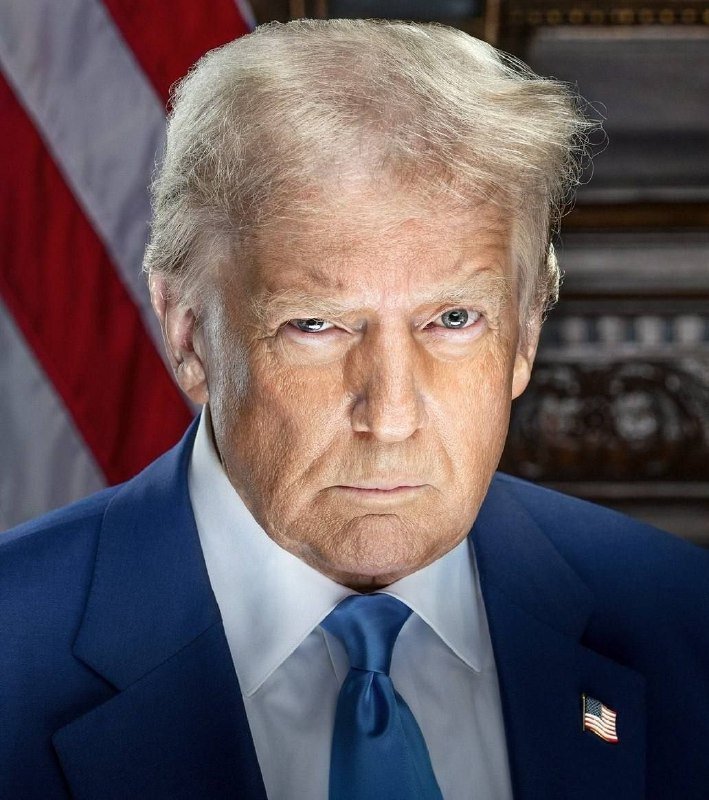
Two statements, hours apart, sketched the shape of an active Middle East portfolio on Tuesday 17 June 2026. At 12:00 UTC, US President Donald Trump used a public appearance to praise Egyptian President Abdel Fattah el-Sisi, telling reporters that his counterpart is "respected all over the world, including by me" and recalling Sisi's resistance to prior US pressure campaigns, according to a Telegram bulletin from the englishabuali channel, timestamped 13:00 UTC. Less than fifteen minutes later, at 12:46 UTC, the Beirut-based outlet The Cradle Media reported that Trump had separately warned Tehran that the newly announced US-Iran deal is provisional, described in the same bulletin as a non-final "memorandum of understanding," and that the United States would resume bombing if Iran violated the arrangement.
The two items travel together for a reason. The Egypt framing is the diplomatic substructure: a US administration that needs Cairo's airspace, Suez transit, and quiet mediation in Gaza and Libya cannot afford a publicly cold relationship with Sisi. The Iran framing is the coercive overlay: a written-but-revocable understanding, with the threat of renewed strikes as the enforcement mechanism. Read against one another, the day's reporting suggests a US Middle East posture that is simultaneously courting the Arab Mediterranean and keeping the military option on the table against Iran.
What Trump actually said about Sisi
The englishabuali bulletin, posted at 13:00 UTC on 17 June 2026, records Trump describing el-Sisi as respected globally "including by me," and frames the exchange as a reminder that el-Sisi has, in the channel's characterisation, "stood as a solid wall" against earlier US pressure. The phrasing matters. Public warmth between the two presidents is not new — the two men have shared a working relationship across Trump's first and second terms, and Sisi was among the first Arab leaders Trump hosted on returning to office. What is notable is the channel's emphasis: the bulletin foregrounds Sisi's prior refusal to align with US demands rather than recent cooperation, suggesting the writer reads the statement as a Trump concession to Egyptian autonomy, not as a fresh endorsement.
That reading is consistent with the operational reality. Egypt controls the Suez Canal, the SUMED pipeline, and overflight rights that any sustained US air campaign against Iran would require. It is also a co-mediator, alongside Qatar, in the Gaza ceasefire track. Trump has tangible reasons to elevate Sisi publicly even when domestic US politics offers little reward for doing so.
The Iran warning, in the wording The Cradle used
The Cradle Media's bulletin, timestamped 12:46 UTC on 17 June 2026, frames the US–Iran arrangement as a "memorandum of understanding" rather than a binding accord, and quotes Trump warning that the deal is non-final and that bombing would resume on any Iranian violation. The same channel's second cross-post, also at 12:46 UTC, repeats the warning. The Cradle, which operates from Beirut and leans sympathetic to the so-called Axis of Resistance, is not a neutral source on US-Iran diplomacy, and its selection of language — "memorandum" rather than "agreement," "non-final" rather than "framework" — should be read as an editorial framing choice, not a verbatim transcript.
What can be reported with confidence from the bulletin itself: (a) Trump publicly characterised the new arrangement as revocable on 17 June 2026; (b) the characterisation was paired with an explicit threat to resume military action; (c) the characterisation was delivered in the same news cycle as the Egypt statement, not in response to a specific Iranian action. What the bulletin does not establish: the text of the memorandum, the verification mechanism, the precise trigger for renewed strikes, or whether Iran has accepted the framing.
Why the two announcements are being run as a pair
The pairing reads as an attempt to send two messages simultaneously. To Gulf and North African partners, the Sisi endorsement signals continuity in the US-Egyptian relationship, however strained, and pre-positions Cairo for any future escalation with Iran. To Tehran, the parallel warning makes clear that the same US administration that is publicly courting Arab allies is prepared to resume kinetic action if the Iranian file slips.
The structural pattern is familiar. The United States under Trump has repeatedly used interim, non-binding language — "framework," "memorandum," "understanding" — to describe deals with adversaries, reserving the right to define compliance unilaterally. Critics on both sides of the aisle have argued that such language gives Washington maximum optionality and the other party minimum legal cover. The Cradle's framing leans into that critique; a Western wire account of the same remarks, were one available in the thread, would more likely stress the diplomatic value of having an arrangement at all.
This publication notes that the most plausible alternative read of the dual announcements is more benign: Trump is reaffirming a long-standing US-Egypt relationship and reminding Tehran that an unsigned, evolving arrangement is by definition contingent on good behaviour. Either reading, the operational consequence is the same — a wider US threat envelope around the Gulf, and a narrower Iranian margin for ambiguity.
What the sources do — and do not — establish
The thread context contains three items, all from 17 June 2026, all Telegram-sourced. The englishabuali bulletin is a single-line wire of Trump's Sisi remarks, drawn from a channel with a documented pro-Egypt and pan-Arab editorial stance. The two Cradle bulletins are near-identical copies of a single report, suggesting an immediate cross-post rather than independent confirmation. There is no Reuters, AP, AFP, BBC, or Al Jazeera English item in the thread that corroborates either statement, no official White House transcript, and no Iranian foreign ministry response. The two quotes that move this article — Trump's "respected all over the world, including by me" line and the Cradle's paraphrase of his Iran warning — are therefore reported on the strength of the channels that published them and the editorial choices those channels made in doing so.
What is verified: Trump made a public statement on el-Sisi on 17 June 2026; Trump publicly characterised a US-Iran deal as a non-final "memorandum of understanding" on the same day, with an explicit threat to resume bombing on violation. What is not verified from this thread: the precise wording of the Sisi quote, the existence and text of the underlying memorandum, Iran's official response, the legal status of the arrangement, and the military posture the United States has ordered for the Gulf. A reader looking for any of those should wait for a wire confirmation before treating them as established.
The stakes, for now, are directional. Egypt gains a public reaffirmation of standing it had reason to doubt, with implications for Suez, Gaza mediation, and energy-corridor politics. Iran gains an arrangement, but one explicitly framed as revocable on a US-defined trigger. The market read, when it comes, will most likely track the latter: the language of the Cradle bulletin is the language of an oil-risk premium, not an oil-risk discount.
This publication framed the Sisi line as a diplomatic substructure and the Iran line as a coercive overlay. The Cradle's editorial choice to call the deal a "memorandum of understanding" was carried into the piece as the channel's framing, not as a settled characterisation; readers should treat the term as contested until a primary-source document or wire confirmation surfaces.
Wire provenance
This editorial synthesis draws on the following public wire/social posts:
- https://t.me/englishabuali
- https://t.me/thecradlemedia
- https://t.me/TheCradleMedia