Trump's Iran deal: between "global recession" and the threat of resumed bombing
The president frames the agreement as the alternative to economic collapse; the vice-president signals the air campaign is conditional on Iranian behaviour.
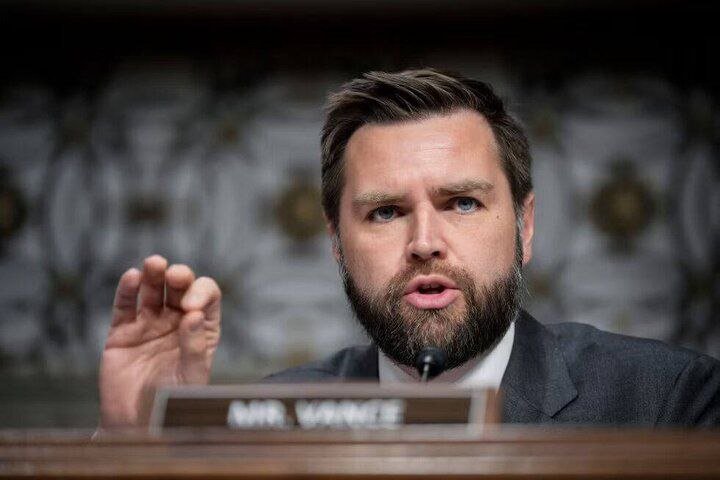
Donald Trump used a Tuesday afternoon appearance to cast the Iran agreement reached by his administration as the lesser of two evils — and to warn, in the same breath, that the alternative remained on the table. Speaking to reporters on 17 June 2026, the US president said the deal was preferable to "a global recession" and characterised critics of the agreement as "stupid people" who "want to see a global recession." Hours earlier, Vice-President JD Vance had struck a sterner note in a separate set of remarks, drawing a line between airstrikes that pursue American objectives and a bombing campaign pursued for its own sake. The dual framing — economic salvation on one side, conditional escalation on the other — sets the rhetorical terms under which the agreement will now be defended in Washington and contested in Tehran.
What is being sold, in plain terms, is a sequence of trade-offs: American restraint on further military action, in exchange for concessions on Iran's nuclear programme and behaviour in the Strait of Hormuz — the chokepoint through which a significant share of seaborne oil transits. Trump's sales pitch is that the alternative to accepting those concessions is not the status quo ante, but an air campaign whose principal consequence would be a renewed shock to energy markets. Whether that pitch survives contact with the deal's actual text, and with Iran's own reading of what it has signed, is the question that will define the next several weeks.
What Trump said, and what Vance added
The president's remarks, captured and circulated on 17 June 2026 by the Englishabuali Telegram channel, were uncharacteristically concrete about the economic stakes. "The alternative to this agreement was a global recession," Trump told reporters. "There are stupid people who want to see a global recession. They are simply stupid people." He returned to the Strait of Hormuz repeatedly, framing control of the waterway as the operative test of whether Iran was living up to its end of the bargain. The framing matters because the Strait is the single physical asset whose disruption moves global crude prices within hours; a credible threat to close it is, in market terms, the threat that has historically given Iran leverage in negotiations.
JD Vance's contribution, circulated the same day by the ClashReport Telegram channel, was pitched at a different audience. "There are some people who just want the bombing to continue regardless of whether it accomplishes anything for Americans," the vice-president said. "That's not what Trump is trying to do. He's not trying to caus[e unnecessary harm]." The line — clipped at the channel's reproduction point — is a calibrated one: it concedes the existence of an airstrike campaign, defends it as instrumental rather than punitive, and implicitly draws a boundary around the hawks in the president's own coalition who favour escalation as an end in itself.
Reuters reported on the same day that Trump had "threatened to resume [the] bombing campaign if Iran does not 'behave'," in the wire's own summary of the president's posture. Taken together, the three data points sketch a coherent — if aggressive — negotiating position: a deal that delivers something measurable, defended in public by the threat of returning to the air campaign if it does not.
The Strait of Hormuz premium
The economic argument is not decorative. Roughly a fifth of global oil passes through the Strait of Hormuz, and the chokepoint's vulnerability to Iranian disruption has, for four decades, been priced into the cost of insuring tanker cargoes and into the contingency planning of every Gulf importer. Any renewal of strikes against Iranian targets — particularly Iranian military assets on the coast or on islands in the Persian Gulf — would be read in oil markets as a probable precursor to Iranian retaliation against shipping. The Brent crude benchmark typically moves on the order of single-digit percentages inside a trading session when credible disruption is signalled; sustained threats push that volatility into double digits over a week.
That is the lever Trump is reaching for in his Tuesday remarks. By tying the deal explicitly to the alternative of "a global recession," the administration is arguing that the cost of compliance — whatever specific concessions Iran has made on enrichment, inspections, and proxy activity — is materially lower than the cost of a renewed air campaign whose second-order effects would transmit through fuel, freight, and inflation. It is an argument aimed less at Tehran than at voters in importing economies whose governments are being asked to hold the line on sanctions enforcement.
The argument has a weakness. The price of brinkmanship is that it must be carried out, eventually, or it stops working. If the administration never returns to military action regardless of Iranian behaviour, the threat discount in the market evaporates and Tehran's incentive to comply weakens. If it does return to strikes, the recession scenario Trump has invoked becomes the operative one. The deal, on this reading, is not a stable equilibrium but a holding action whose credibility depends on the willingness of both sides to act on warnings.
The hawks Vance was talking to
The vice-president's remarks are most usefully read as a piece of intra-administration messaging. The constituency Vance is fencing off is not Tehran but the domestic coalition that views any deal with Iran as a concession by definition — the same coalition that argued, during the negotiations that produced the Joint Comprehensive Plan of Action in 2015, that the only acceptable outcome was the collapse of the Iranian nuclear programme rather than its constraint. By drawing a line between airstrikes that "accomplish something for Americans" and bombing for its own sake, Vance is conceding the legitimacy of the first category while trying to delegitimise the second.
That distinction will not survive contact with events. If Iran is judged to have violated the deal in any meaningful respect — a breach of enrichment caps, an intercepted weapons shipment to a regional proxy, a confrontation with shipping in the Gulf — the administration will face the choice Vance has described: a calibrated response that pursues a stated objective, or an open-ended escalation whose political constituency is the group he is publicly distancing himself from. The two readings of the deal — restraint rewarded, and restraint exploited — are not equally available as options in a crisis. The faction Vance is addressing will be the one that defines "behaviour" in the moment of rupture.
What we verified, and what the public record does not yet show
The public record, as of 17 June 2026 at 13:35 UTC, supports the following: Trump has publicly framed the agreement as the alternative to a global recession; Trump has publicly threatened to resume bombing if Iran does not "behave"; Vance has publicly drawn a line between instrumental strikes and open-ended bombing. Reuters's wire summary carries the threat; the Englishabuali and ClashReport Telegram channels preserve direct quotations from the two principals.
What the available sources do not yet establish, and what this publication therefore withholds judgment on, includes the specific terms of the agreement itself — the text of which has not been reproduced in the material at hand — and the Iranian government's official response to the deal as framed by the US side. Tehran's state-aligned outlets, including PressTV and Tasnim, are likely to publish counter-frames in the coming hours; those framings will be material to any assessment of whether the deal holds. Equally, the operational definitions of "behaviour" that will determine whether the administration judges Iran to be in compliance are not in the public record. The vice-president's remarks signal that the administration intends to apply such a test; they do not specify it. Until the text of the agreement and the Iranian counter-position are both public, this publication treats the deal's substance as reported, not as verified.
Stakes
If the agreement holds, the immediate winners are importers of Gulf crude — European and Asian economies whose current-account balances move sharply with tanker insurance premia — and the Iranian government, which secures relief from sanctions that have compressed its oil revenues. If it does not hold, the most plausible sequence is a return to airstrikes, Iranian retaliation against shipping or against regional US partners, and a sustained spike in the price of Brent crude with knock-on effects across refined products, freight, and inflation expectations in importing economies. The administration has chosen, in public, to call that second scenario a recession. The deal is being sold as the alternative.
The next few weeks will determine whether Iran reads the deal the same way. If Tehran's public position converges with Trump's framing — restraint exchanged for verifiable concessions — the threat of resumed bombing recedes and the agreement has a chance of settling into a stable, if adversarial, equilibrium. If the two readings diverge, the air campaign Vance described as instrumental becomes the next item on the agenda.
This publication distinguishes between Trump's public framing of the deal — which we report as framed — and the text of the agreement itself, which the sources available as of 17 June 2026 do not yet reproduce. The Iranian counter-position will be treated as material when it appears in verifiable form.
Wire provenance
This editorial synthesis draws on the following public wire/social posts:
- http://reut.rs/4euPwEg
- https://t.me/ClashReport
- https://t.me/englishabuali