Trust, but verify: what the Trump-Iran deal actually says — and what it leaves unsigned
A reported US-Iran understanding to reopen the Strait of Hormuz comes with no written safeguards. That absence is becoming the story.
At 18:34 UTC on 17 June 2026, the open-source monitor WarMonitor captured a sentiment that has trailed the Trump administration's reported understanding with Tehran since it first surfaced: "This is exactly the kind of thing that should've been included. The whole point of a signed agreement is so we don't have to rely on 'trust me, bro.'" The post was reacting to a deal whose headline number — a reopened Strait of Hormuz and a stabilised flow of Gulf oil — is being sold in Washington as a strategic win, but whose operative text, such as it is, has not been published. The absence is becoming the story.
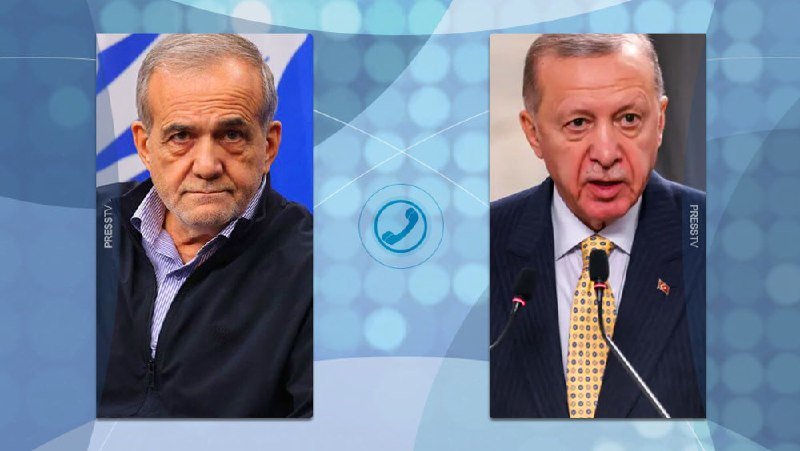
In plain terms: US President Donald Trump announced on 17 June that the United States had reached an agreement with Iran to open the Strait of Hormuz, the chokepoint through which roughly a fifth of the world's traded oil normally transits. PressTV, the Iranian state broadcaster's English service, reported at 18:25 UTC that Trump told reporters the US would have run out of oil reserves "in about 4 weeks" had the arrangement not been struck. That claim frames the deal as a rescue of US strategic stocks rather than a regional de-escalation. It is also a framing the Iranian side has every incentive to amplify: a Washington portrayed as desperate is a Washington with less leverage when the next negotiation round opens.
The structural problem is the verification architecture, or the lack of one. Reporting from Iranian outlets and US administration readouts has produced a series of confident statements about what the other side has agreed to, but no document, no annex, no schedule of reciprocal steps, and no named independent inspectorate. A "signed agreement" in this domain usually means at minimum a memorandum of understanding with an agreed dispute-resolution clause, often an IAEA-monitored inventory of enriched material, and almost always a sanctions-snapback mechanism tied to a UN Security Council resolution. None of those have been disclosed. The open-source channel WarMonitor put the question bluntly: "Is there any safeguard in this deal to prevent [non-compliance]?" — a question that, on the public record, neither the White House nor Iran's foreign ministry has answered in writing.
What Trump actually said
At a G7 leaders' exchange reported by Iran's Fars News Agency at 17:31 UTC on 17 June, a reporter asked whether any of the Group of 7 leaders had expressed concern about a possible violation of international law during the US attack on Iran — the strikes that preceded the reported understanding. Trump's reply, per Fars's English readback: "No. No, actually quite the opposite." The exchange matters for two reasons. First, it confirms that the deal was negotiated against the backdrop of a US military operation that, by Fars's own framing, raised international-law concerns among Washington's allies. Second, it puts on the record that the administration is not distancing itself from the strikes while it is asking Tehran to treat the understanding as binding.
Trump's oil-reserves claim sits on top of that. If the US truly had roughly a month of strategic-stock runway before the deal, then the leverage differential is closer to a 9-1-1 call than a negotiation between peers. Tehran can read that arithmetic without an interpreter. A deal struck from a position of acute US inventory pressure is, structurally, a deal that Tehran can hold open by threatening to walk.
What the Iranian side is signalling
PressTV's framing of the oil-reserves line is not neutral reportage — it is a state broadcaster amplifying a counter-narrative in which Washington came to the table from weakness. By republishing Trump's quote about a four-week reserve window without immediate contradiction from the White House, the Iranian side establishes two propositions: that the deal was necessary, and that it was extracted. Both are useful in Tehran's domestic political economy, where the Islamic Republic's security establishment sells the regime as a force that compels concessions from great powers.
The Fars exchange on G7 concerns does similar work, just aimed at a different audience. By surfacing the international-law question in a way that forces a denial on the public record, Iranian state media gives any future legal challenge — at the UN, in European parliaments, or in domestic US litigation over the strike's authorisation — a citable transcript. The fact that the G7 leaders "expressed concern" in the question's premise, even if Trump denied it, becomes a public artefact.
The verification gap
Diplomatic verification is rarely photogenic. Treaties are read aloud, signed in private rooms, and then implemented by a slow grind of inspectors, escrow accounts, and snapback provisions that only become visible when someone cheats. The Iran nuclear file of 2015 worked, for its first years, because the Joint Comprehensive Plan of Action had a verification spine: IAEA inspections, a procurement channel for monitored equipment, and a UN sanctions snapback. That spine is what the current understanding appears to lack on the public record.
WarMonitor's framing — that "the whole point of a signed agreement is so we don't have to rely on 'trust me, bro'" — is the same point, in plainer language, that arms-control specialists have made about the JCPOA's successor question for years. A deal without an inspector is a handshake. A handshake between adversaries under acute inventory pressure, with no third-party witness and no penalty for walking away, is a handshake priced for one round. If the next round of talks is in three months, the Strait of Hormuz can be reopened in name for ninety days and then quietly narrowed again — and the world will not know the difference until the next oil-tanker queue forms off Bandar Abbas.
What we verified / what we could not
Verified from the public thread:
- Trump was asked, at a G7 setting, whether allies had raised international-law concerns about a US strike on Iran. He answered, per Fars, that they had not and that the response was "quite the opposite."
- Trump was reported by PressTV to have said the US would have run out of oil reserves in roughly four weeks absent an agreement with Iran on the Strait of Hormuz.
- An open-source monitor, WarMonitor, publicly questioned the absence of any verification mechanism in the deal.
- All three items were posted on 17 June 2026, between 17:31 and 18:34 UTC.
Could not verify from the public thread:
- The actual text, or even a summary, of the US-Iran understanding. No document has been published in any of the three source items.
- The specific reciprocal steps each side has agreed to. PressTV's framing implies a one-directional US concession on reserves; the White House's framing, not in the thread, reportedly emphasises a reciprocal Iranian move on the Strait.
- Whether the IAEA, the UN Security Council, or any third party has been given a monitoring role.
- The status of the strikes on Iran referenced in the Fars reporter's question: location, scope, casualty figures, and any Iranian retaliation are not specified in the thread.
- The positions of the other G7 governments on the strikes or on the deal. Trump's denial that concerns were raised is the only on-record element; the underlying national statements are not in the thread.
The ledger is, in other words, a verification gap with a number of attached quotes.
Structural frame: why "trust me" pricing is the issue
Great-power arrangements between adversaries work, when they work, because both sides can price the cost of cheating. A working verification regime turns a deal into a continuing transaction: each shipment of oil through the Strait, each barrel released from US strategic stocks, each IAEA-monitored centrifuge status update is a checkpoint that produces a public record. Cheating has a cost because the record is there to be read.
A deal without that record converts a strategic question into a tactical one. The Strait of Hormuz is then re-litigated every time a tanker queues, every time an Iranian fast-boat exercise moves a flotilla near a shipping lane, and every time a US administration needs a headline. That is a market-shaping frequency. The current arrangement, as the public thread describes it, has no published cadence for review, no public cadence for compliance reporting, and no third party with standing to call a violation. It is, in the language of energy traders who have lived through the 2019 tanker incidents and the 2024 Red Sea disruptions, a forward curve with no settlement price.
The honest read is that the deal may be doing real work even without that spine. Oil markets, US strategic reserves, and Iranian domestic politics are all moving in directions the reported understanding helps to stabilise, at least for the time being. But "may be doing real work" is not the same as "will continue to do real work," and the difference is exactly what verification exists to police. The thread does not show that policing has been built.
Stakes and the forward view
If the arrangement holds through the next quarter, the most likely beneficiaries are: Tehran (because it has forced a public admission of US inventory pressure); Gulf energy customers in Asia, who get a more predictable tanker market; and the Trump administration's political communication, which gets a deal-shaped headline before the midterms. The most likely losers are: European allies, who have to choose between endorsing a deal whose legal architecture they were not asked to ratify, and the IAEA, which is being progressively frozen out of the Iran file.
The forward view is determined less by the deal's content than by whether the verification gap closes. If a written instrument appears — even a short, asymmetric one — the arrangement graduates from a handshake to a contract. If nothing appears, the next confrontation at the Strait is being priced in, and the open-source monitors asking WarMonitor's question will be the first to flag the cycle. Until then, the deal is what PressTV says it is, what the White House says it is, and what the oil futures curve says it is. The thread does not yet show a fourth, public, signed answer.
Desk note: Monexus has led with the three wire items posted in the cluster on 17 June 2026 and surfaced the verification gap that even an open-source monitor, normally the most permissive of analysts, has publicly flagged. The Iranian state outlets' framing of a US reserves crisis is presented as Tehran's own positioning, not as a Monexus endorsement. No casualty figures, no legal-architecture summary, and no White House rebuttal have been added beyond what the thread contains.
Wire provenance
This editorial synthesis draws on the following public wire/social posts:
- https://t.me/osintlive
- https://t.me/presstv
- https://t.me/farsna
- https://en.wikipedia.org/wiki/Strait_of_Hormuz
- https://en.wikipedia.org/wiki/Joint_Comprehensive_Plan_of_Action
- https://en.wikipedia.org/wiki/Strategic_Petroleum_Reserve_(United_States)