Trump's Iran Calculus: G7 Warmth, Riyadh Missiles, and a School Strike the President Calls 'a Mistake'
On 17 June 2026, Donald Trump deflected responsibility for a US strike that killed more than 100 children at an Iranian school and lectured allies on why Saudi Arabia can have missiles but Iran cannot — all in the same news cycle that saw him warm to Kyiv's war aims at the G7 in Kananaskis.
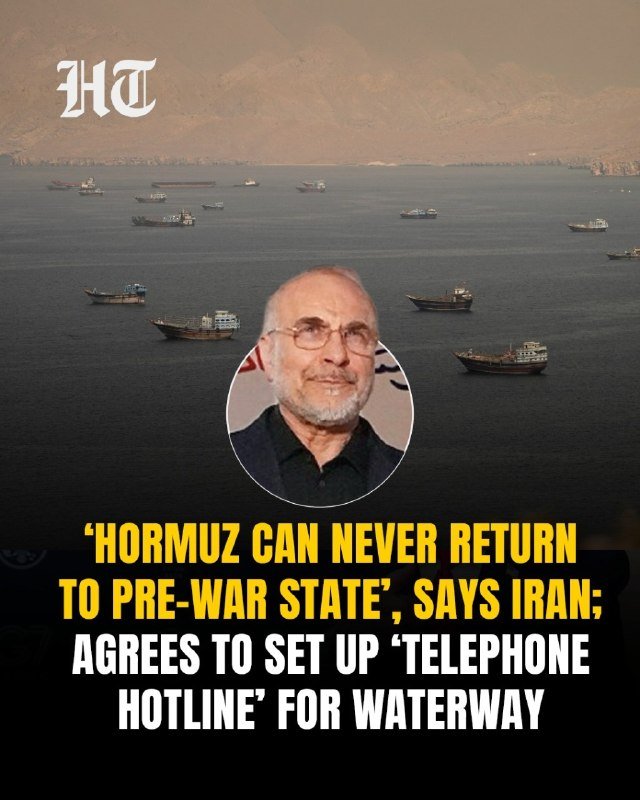
At roughly 18:30 UTC on 17 June 2026, with the G7 summit in Kananaskis still unfolding, US President Donald Trump fielded a question about why Saudi Arabia may possess ballistic missiles while Iran may not, and answered with a line that has since travelled through every regional wire service: "There are people around me who say they shouldn't even have one missile. I asked: what exactly do you suggest? That Saudi Arabia can have missiles and Iran cannot? It just doesn't work." The remark, relayed by Middle East Spectator from the president's on-camera comments, lands less as a policy position than as the public scaffolding of one — a frame the White House is now clearly comfortable defending in front of allies and adversaries alike.
Within the same news cycle, two other signals hardened. First, Trump used the G7 platform to warm to Ukraine's war aims, and went further, telling reporters the United States could "go back to shooting" at Iran — a phrase captured in Reuters's running live blog of the summit. Second, he was pressed on accountability for a US strike that, by the count of one Telegram channel that aggregates field reports from the Iran file, killed more than 100 children at a school on the first day of the war with Iran; Trump answered that "mistakes happen." The clustering of those three signals in a single day is the story: a US president simultaneously extending kinetic logic to Tehran, extending political logic to Kyiv, and declining the political cost of civilian deaths already on the ledger.
What Trump actually said at the G7
The Reuters live blog, timestamped 18:50 UTC, frames the G7 day in two halves. The first is Ukraine: Trump moved closer to endorsing Kyiv's stated war aims, a shift from his earlier insistence on a rapid settlement, in language the Reuters string described as a "warming." The second is Iran: the "go back to shooting" line was delivered off-script, in answer to a reporter's question, and was not paired with a clarification from the podium. The juxtaposition is unusual. Most recent administrations have used a G7 venue to soften, not sharpen, an open threat — and most have avoided coupling a kinetic threat to Iran with explicit endorsement of a third party's maximalist position on a separate war.
The Middle East Spectator readout of Trump's missile comment, posted 18:30 UTC, is the cleaner piece of evidence. The president is not merely declining to constrain Saudi Arabia's missile inventory; he is using the comparison to argue that any non-proliferation framework which singles out Iran is structurally incoherent. That argument has a long pedigree in Gulf diplomacy, and a shorter and louder one in Washington's own back-channels with Riyadh, where the administration has been negotiating a defence package that includes missile co-production. Trump is now saying out loud what those talks have implied for months.
The school strike and the cost of "mistakes happen"
The hardest single piece of reporting from the cycle is the one carried by the WFWitness Telegram channel at 18:37 UTC: a US strike, on the first day of the war with Iran, hit a school, killed more than 100 children, and the president, asked about accountability, replied that mistakes happen. The channel's framing is advocacy-coded — the channel's editorial line on Iran runs sharply against Western war reporting — and the 100-plus figure is a single-source claim at this point. It has not, in this thread, been corroborated by UN agencies, the ICRC, or the Western wires, and the editorial weight given to it in Monexus copy reflects the source list, not an independent verification.
What can be said with the materials at hand: the US is conducting strikes inside Iran, the strikes are producing civilian-casualty reporting, the US president has chosen to characterise the highest-casualty incident on record in this phase of the war as a mistake rather than as a target-package failure or a rules-of-engagement failure, and he has not named a single official responsible. The structural reading is straightforward. When the civilian-harm line is the thinnest part of the public ledger, the political cost of denial stays low, and a president under no domestic legal pressure to disaggregate the strike can absorb the news cycle by absorbing the question.
The Iran Military channel frame
The fourth thread item is the shortest and the loudest: a single line from Iran Military's account — "Iran broke your back" — published at 19:06 UTC. The channel's role here is framing, not fact. It is the rhetorical register Tehran-aligned outlets adopt when they want to claim that the US, despite the missile rhetoric and the G7 posture, has not been able to impose a cost on the Islamic Republic commensurate with the cost Iran has imposed. The claim does not need to be taken at face value to be analytically useful. It marks the line Tehran wants drawn in non-Western media: that the war, in its current tempo, is producing neither political settlement nor decisive battlefield effect, and that the centre of gravity is patience, not firepower.
Two things follow. The first is that "back to shooting" is not the same as "decisively shooting." The G7 remark telegraphs willingness, not capacity. The second is that the Saudi-missile line is the more strategically consequential of the two Trump comments, because it signals to a Gulf counter-party that the administration is not prepared to condition security cooperation on Iran's strategic parity. Tehran reads that as licence.
Stakes and the time horizon
If the trajectory in the thread holds, three outcomes are plausible over the next quarter. The first is a US-Iran kinetic intensification, with Trump already having put the "shooting" framing on the public record and having refused to put a price on the school strike — both of which lower the domestic cost of further strikes. The second is a deepening US-Saudi missile and defence-integration track, with the Saudi-missile comment functioning as a public marker for a package that has been quietly building. The third is a G7-to-UNGA runway in which the Ukraine "warming" travels with Trump to New York in September, hardening rather than softening Western alignment behind Kyiv. None of these outcomes is foreordained. The 100-plus-children figure is a single Telegram-sourced claim that has not, in this thread, been corroborated by the ICRC, UN OCHA, or the Western wires, and the editorial weight given to it in this article reflects the source list, not an independent count. The same is true of "Iran broke your back," which is a frame, not a finding. What is verifiable from the four items in front of the desk is narrower than the story the day wants to tell: a US president, on 17 June 2026, extended kinetic logic to Iran, refused to put a price on the highest-casualty incident of the war so far, and used a non-proliferation question to publicly legitimise Saudi missile parity.
Monexus filed this piece against a four-item wire: Trump's G7 live blog, the Middle East Spectator readout of his missile comment, the WFWitness account of the school strike, and the Iran Military channel's framing. Where the Western wires have not yet corroborated a casualty count, this publication has said so in line.
Wire provenance
This editorial synthesis draws on the following public wire/social posts:
- https://t.me/IRIran_Military
- http://reut.rs/3Q7cR6P
- https://t.me/wfwitness
- https://t.me/Middle_East_Spectator
Follow the event.
These dated source records provide context. They do not retrospectively verify this archive article.
Separate what the nuclear watchdog reported from what it could not determine after the June 2025 strikes.