Sixty days, then the bombers return: how Trump's MOU with Iran turned coercion into a 17 June talking point
President Donald Trump told reporters on 17 June 2026 that a 60-day memorandum of understanding with Iran is the only thing standing between diplomacy and renewed bombing — a framing that puts the clock squarely on Tehran while leaving the substance of the deal unwritten.
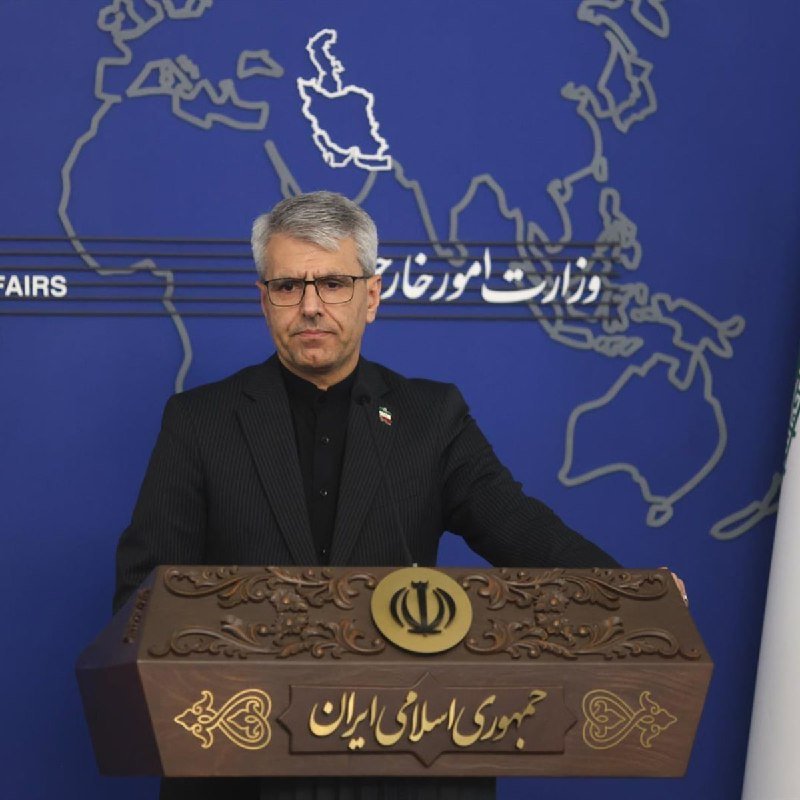
President Donald Trump used a 17 June 2026 appearance to recast the United States' standoff with Iran as a binary clock: a memorandum of understanding, sixty days long, after which "it's all right, we go back to bombing." The remark, carried by Clash Report on Telegram at 16:21 UTC, was delivered as a casual aside — "you know, I don't want to do that, because it's so good, so good" — but the architecture underneath it is anything but casual. It is the second time in roughly a year that Washington has used a public, fixed-window deadline as leverage over Tehran, and the first time the deadline has been paired with an explicit threat to resume air operations once it lapses.
The framing matters because it converts what is, in substance, an unfinished negotiation into a public test of nerve. Iran does not have to agree to a deal on the merits; it merely has to hold out for two months. The United States, in turn, has pre-committed to a punishment that does not depend on a new provocation. That is coercion, dressed in the language of process.
What was actually said
In the 16:21 UTC 17 June 2026 post, Clash Report quoted the US president characterising the arrangement as "a memorandum of understanding." He added: "If it doesn't get done in 60 days, it's all right, we go back to bombing. You know, I don't want to do that, because it's so good, so good. But, uh, we might." The line is the clearest public statement yet of a dual-track posture: a short, named negotiating window, with a defined failure mode attached.
No text of the memorandum has been released, and the post does not specify counterparties, scope, or verification mechanism. The "60 days" figure is, in effect, the only disclosed parameter. Iranian state-aligned and sympathetic channels have not been quiet. The IRIran_Military channel on Telegram, posting earlier the same afternoon, framed the moment in adversarial terms with a captioned image of the French footballer Zinedine Zidane — "Zidane is waiting for Trump!" — a visual invocation of a famous red-cart confrontation. It is not a diplomatic offer; it is a mood.
The 60-day clock as instrument
Deadlines in US-Iran diplomacy are not new, but the ones that have lasted have usually been attached to something with a name and a venue: the 2015 Joint Comprehensive Plan of Action, the 2018 withdrawal timeline, the indirect Oman-mediated talks of 2023 and 2024. A 60-day "MOU" with no published text is a thinner instrument. Its principal function is to bind the American side publicly to a reversion — to put Washington on the hook, in front of its own voters and allies, to resume bombing if nothing is signed. That kind of self-imposed deadline is rarely entered into unless the side imposing it calculates that the alternative — quiet escalation without a public scaffold — has become more politically expensive than the deal itself.
For Iran, the calculation is the mirror image. Tehran does not need to win the negotiation; it needs only to outlast the window. A deal that does not survive a US electoral cycle is, in Iranian strategic literature, not a deal at all — it is a pause. The Islamic Republic has lived through several.
What the framing leaves out
The "back to bombing" line compresses a lot of unfinished business. It does not specify which sites, which Iranian capabilities, or under what domestic or allied authority such strikes would proceed. It does not address the posture of Gulf states that have, over the past year, pressed Washington for de-escalation precisely because another round of air operations would land on their airspace and their oil infrastructure. It does not name the role of any European party, nor the relationship of the MOU to the snapback mechanism at the United Nations. And it does not acknowledge, even implicitly, that Iran's missile and proxy architecture — the very capabilities that past strikes have failed to neutralise — has not been credibly threatened by the air campaign the president is reserving the right to resume.
There is also an unstated regional audience. The reference to bombing is, in effect, a public commitment to Gulf partners and to Israel that the US option of force is not being taken off the table. For governments that have spent two years hedging between Washington and Tehran, the line reduces ambiguity in one direction and adds it in another.
Stakes and the next sixty days
If the memorandum holds, the most consequential outcome is not the document itself but the precedent: a publicly-timed, US-imposed deadline that becomes the default template for future crises. If it does not hold, the operative question is not whether air operations resume but whether they resume with allied airspace cooperation, with a coalition, with an endgame, or as a unilateral action whose costs are absorbed mostly by the country being struck and the neighbourhood around it. The sources do not yet specify which of those is more likely. What they do specify is that the clock is now visibly running, and that the language of process has been re-equipped with the language of punishment.
A final note on what is not known. The text of the MOU has not been published; the identity of the Iranian counterpart has not been disclosed in the available material; the role of intermediaries — if any — is not described. The 60-day figure is the only parameter on the public record, and the threat of resumed bombing is the only failure mode attached to it. Anything written today about what the deal contains is, necessarily, speculation about a document that has not been made available to be read.
Desk note: Monexus read the Trump quote as posted by Clash Report on Telegram at 16:21 UTC on 17 June 2026, and the IRIran_Military channel's same-day visual post as a counter-framing cue. The article does not assert the contents of the MOU; the only disclosed parameter is the 60-day window. Where wire reporting would have leaned on White House readouts, this piece leans on the direct quote and on the structural pattern of public-deadline diplomacy.
Wire provenance
This editorial synthesis draws on the following public wire/social posts:
- https://t.me/ClashReport
- https://t.me/IRIran_Military
Follow the event.
These dated source records provide context. They do not retrospectively verify this archive article.
Separate what the nuclear watchdog reported from what it could not determine after the June 2025 strikes.