Trump's Iran MOU Is a Master Class in Diplomatic Plausibility — for Both Sides
A Wednesday MOU between Trump and Iran's president is being sold as a breakthrough. The fine print — sequencing, missile asymmetries, a $300bn fund the US says doesn't exist — suggests the deal is more posture than product.
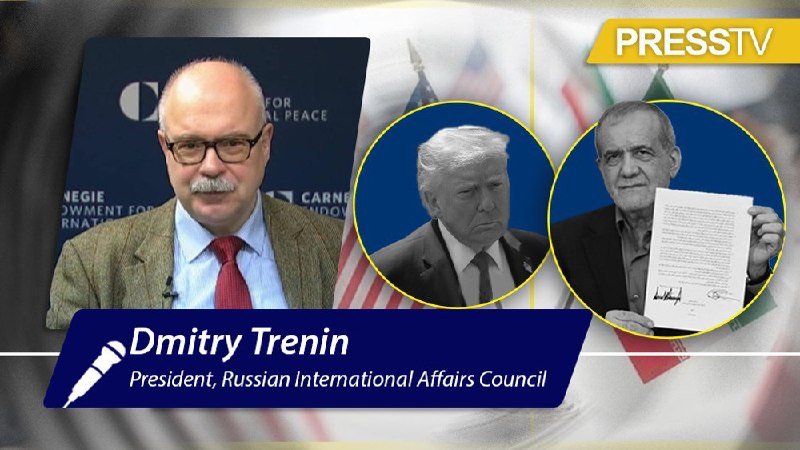
Donald Trump announced on Wednesday 17 June 2026 that the United States and Iran had signed a memorandum of understanding, and then spent the rest of the day quietly admitting nobody should take that as final. Asked at the White House whether the deal would actually be inked on Friday, he replied: "You never know with deals." A senior US official told Reuters that "parties can still walk away" and that "sequencing will be key." If this is a breakthrough, it is one written in disappearing ink.
The MOU is real, by every wire account, and it is also — on the evidence available by 23:15 UTC on 17 June — less than a deal. It is the choreography of a deal, performed in public, with the contract to be drafted later. Theatrical confidence has been Trump's diplomatic calling card since 2018, and the Iran file is now its most elaborate production.
The headline and the contradiction
The core claim is simple. Per Reuters, citing a US official, the MOU was signed on Wednesday by Trump and the Iranian president. Trump told reporters the agreement would avoid an "economic catastrophe" on par with the Great Depression, an unusually large claim from a White House that has previously framed its Iran posture as a maximum-pressure exercise. He added that sanctions on Iran would be removed "once they behave," a conditional so elastic it could mean almost anything from a token tranche this summer to nothing at all.
Within minutes, however, Trump undercut the same framework. He told the press it would be "a little bit unfair" for Iran to lack ballistic missiles while other regional states retain them, an extraordinary public position for a US president that essentially legitimises the core complaint of the Iranian hardliners who have built the missile programme as a non-negotiable red line. Iranian negotiators, having spent four years arguing exactly that point in European capitals, were handed the argument on camera by the American side.
What the MOU actually says — and what it does not
The first thing to flag is what is not in the public record. Trump told reporters on 17 June that reports of a $300 billion Iran fund are false and that the United States is not investing in it. The figure had been floating in regional media for 48 hours; his denial is categorical but does not say who floated it or what it would have paid for. The MOU's financial architecture is therefore opaque at the moment it is most needed.
The second thing is sequencing. The US official's caveat — that parties can still walk away, that sequencing will be key — is diplomatic code for: nothing is binding until everything is binding. In a normal arms-control file, that means the verification regime, the missile annex, the sanctions-relief timetable, and the nuclear-restraint commitments are all cross-conditioned. In the Trump-Iran file, where the principal negotiating partners have no functioning diplomatic channel beyond the Omani and Qatari intermediaries, cross-conditioning is a fuse, not a safety net.
The third thing is the missile question. Trump's stated openness to Iran retaining ballistic capability is not a tactical slip. It is the central substantive concession the Iranian side has demanded for two decades, and it is now being made in public before any of the reciprocal Iranian commitments have been nailed down. That is not how deterrence-for-concession trades are usually structured. The conventional pattern is: Iran freezes missile activity and provides a verifiable inventory, the US and Gulf states provide sanctions relief and a security architecture. What the public record shows is half of that, in the wrong order.
The Trump method: deals as content
The play here is familiar. Trump's first-term diplomacy ran on a similar engine: a 2018 Singapore summit with Kim Jong-un produced a vague denuclearisation commitment, after which Trump declared the nuclear threat "largely solved" and the formal work never produced a verified dismantlement. The Iran MOU follows the same template — a moment of theatrical finality, followed by a long twilight of negotiations in which each side can claim vindication. The MOU is not the end-state; it is the trailer.
Reporters at the White House on 17 June captured the mood in a single exchange. A reporter quoted back to Trump: "A wise man once said, 'Iran never won a war, but never lost a negotiation.'" Trump asked who said that. The answer: "Donald Trump." It is a useful line because it tells you what the Trump team thinks the game is. The wager is that Iran talks itself into concessions it would not accept under pressure, and that the spectacle of the MOU itself shifts Iranian domestic politics. Whether the wager pays depends on whether the Iranian negotiating team, which has now heard the same script in three different US administrations, treats this round as a familiar one.
What is still uncertain
The sources do not specify what, exactly, Iran has committed to in the MOU. Reuters reports the signing and the sequencing caveat but not the substantive annex. France 24 carried a parallel report citing US officials confirming the signing, but the same sequencing caveat. There is no public text of the document. There is no confirmed date for the formal deal. There is no Iranian Foreign Ministry readout that this publication can verify, only a string of Trump statements paraphrased by US reporters. The girls' school remark — Trump saying "nobody" attacked the Iranian school "on purpose," a reference to the strike widely condemned across the Iranian political spectrum — is a separate, unresolved matter that the MOU does not address and that will shape Iranian public opinion on whatever final document emerges.
If the deal does close, the winners are clear: the Omani and Qatari mediators who spent two years building the channel; the Iranian moderates who can point to sanctions relief as a deliverable; and the Trump White House, which can claim a foreign-policy trophy ahead of midterm politics. The losers are the Gulf states who were never consulted on the missile asymmetry Trump conceded in public, and the Israeli strategic community, whose assumption that a US-Iran deal would cap Iranian missiles has now been weakened on the record by the US president himself. The trajectory, on present evidence, is a deal that is real enough to take credit for and vague enough to disavow. That is, by now, the entire genre.
Wire provenance
This editorial synthesis draws on the following public wire/social posts:
- http://reut.rs/3SaG6pX
- http://reut.rs/3SfJWOz
- http://reut.rs/4gs2tB6
- http://reut.rs/4artfWL