Trump Turns on Netanyahu Over Lebanon: A Recalibration or a Routine Complaint?
The US president publicly rebuked Israel over its Lebanon campaign and accused its leader of disrespecting a sovereign neighbour. The dispute over an Iran deal has spilled into open daylight.
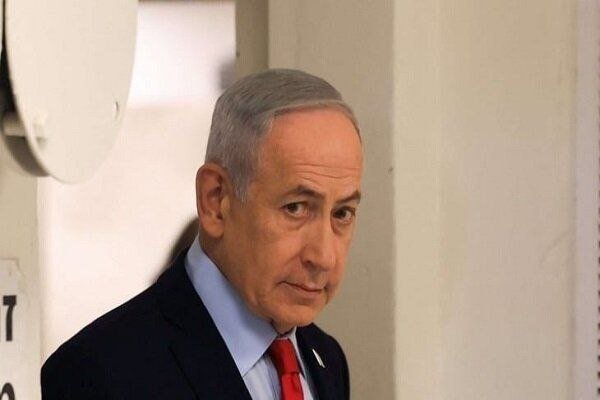
On 17 June 2026, the diplomatic fault line that has quietly governed US-Israel relations since the latest Middle East escalation moved from whispers into plain sight. Donald Trump publicly criticised Israel's tactics in Lebanon, accusing its forces of killing civilians, and told Benjamin Netanyahu to treat the country with respect. The rebuke, carried first by Reuters at 00:10 UTC, came hours after the New York Post reported that the Trump administration had refused an Israeli request to see the text of its emerging deal with Iran.
This is not a procedural row between allies. It is the visible collapse of an attempt to keep a regional ceasefire, a nuclear negotiation, and a Lebanese military campaign on separate diplomatic shelves. The US president is now arguing, in effect, that Israeli actions on the ground are undermining an American agreement. That argument, if sustained, rewrites the operating logic of the relationship — even if both sides move on by the weekend.
The complaint, and the timing
Trump's intervention is unusual in form. Public criticism of a sitting Israeli prime minister from the White House podium has historically been delivered in private, then leaked. The Reuters report at 00:10 UTC and the Al Jazeera wire a few hours later captured the comments in direct terms, with Trump quoted as saying Israel was killing civilians and that Netanyahu must treat Lebanon with respect. The phrasing matters: it echoes the language used about states that the US believes are overstepping, not the language used about partners whose tactics one disagrees with tactically.
The Lebanon campaign is the backdrop. Al Jazeera's breaking-news feed at 00:00 UTC on 17 June reported Israeli strikes that killed four people in Lebanon. Iran's armed forces, according to Middle East Eye reporting on 16 June, have accused Israel of violating the ceasefire in southern Lebanon 84 times since the US-Iran agreement was announced on Sunday. The number is contested — it originates with Iranian military channels and has not been independently verified — but the scale of the accusation is itself news, because it signals Iranian willingness to publicly inventory alleged Israeli violations and tie them to the diplomatic timeline.
The Iran deal in the room
The White House is not scolding Israel in a vacuum. The New York Post, as relayed by the unusual_whales X account at 17:39 UTC on 16 June, reported that the Trump administration had rejected an Israeli request to see the text of the deal with Iran. If accurate, that is a substantive exclusion. Israel has historically been treated as a stakeholder with a standing claim to review any nuclear agreement involving a regional rival. The reported refusal suggests the administration is determined to insulate the negotiation from Israeli veto power, even at the cost of a public rupture.
Iran's state-aligned outlets have spent the past 48 hours framing the deal as evidence that Iran's armed forces have compelled a regional adjustment. That framing deserves weight but not deference. Iranian readouts consistently overstate the gains Tehran secures and understate the constraints imposed. The interesting question is whether the deal actually constrains Iran meaningfully, or whether the White House is buying itself a quiet window for domestic political reasons and the nuclear file is largely parked.
Why the spat is structural, not personal
A charitable reading is that Trump is performing pressure on Netanyahu the way he performs pressure on most counterparties: publicly, briefly, and with an expectation of immediate movement. A more consequential reading is that the underlying deal architecture forces Israel into a position it has not accepted. If the United States has decided that an Iran arrangement is a higher priority than the Lebanon campaign, then Israeli operations that visibly embarrass the deal — by producing the kind of civilian-casualty reporting that Trump himself cited — become a direct problem for Washington.
That is the structural shift. For two decades, US-Israeli disagreements about military operations in Lebanon were managed by sequencing: Israel would act, the US would object privately, both sides would issue face-saving language, and the underlying alignment would hold. The reported refusal to share the Iran text, combined with a public presidential rebuke, suggests the sequence has broken. Whether the break is tactical (an attempt to extract Israeli restraint on a specific campaign) or strategic (a genuine re-prioritisation away from the maximalist Lebanon posture) is the question that will define the next 72 hours.
What remains uncertain
Three things are not yet clear, and Monexus flags them rather than guess. First, the casualty accounting on both sides of the Lebanese border is contested; the four killed reported by Al Jazeera on 17 June are a single incident, not a daily total, and Iran-aligned claims of 84 ceasefire violations since Sunday have not been corroborated by an independent monitor in the available sourcing. Second, the contents of the Iran deal have not been published; the New York Post's reporting on Israeli exclusion from the text is itself filtered through a single source and has not been on-the-record confirmed by either the White House or the Prime Minister's Office. Third, Netanyahu has not, as of the 00:10 UTC Reuters dispatch, publicly responded — and the gap between a presidential rebuke and an Israeli response is where this story will either defuse or escalate.
The plausible alternative read is straightforward: this is a familiar Trump-Netanyahu theatre cycle, designed to produce Israeli tactical restraint on Lebanon without changing the underlying alignment, and both sides will return to baseline by the end of the week. The less comfortable read is that the United States has decided the cost of an unconstrained Israeli campaign in Lebanon is now higher than the cost of an open argument in public, and that the argument is therefore a signal to other regional capitals, not a private dispute made visible. The next 72 hours will tell.
Desk note: Monexus has led on Trump and Netanyahu as named actors, sourced the criticism to Reuters and Al Jazeera English, treated the Iranian ceasefire-violation count as a contested Iranian-aligned claim rather than as fact, and flagged the New York Post's Iran-text report as unverified by either government. No structural-theory scaffolding has been used; the analysis sits inside the documented dispute.
Wire provenance
This editorial synthesis draws on the following public wire/social posts:
- http://reut.rs/3QJBJBK
- https://t.me/reuters/2067037077120712705
- https://t.me/middleeasteye/2066774034646245376
Follow the event.
These dated source records provide context. They do not retrospectively verify this archive article.
Separate what the nuclear watchdog reported from what it could not determine after the June 2025 strikes.